
 Select Language
 English
 Spanish
 Polish
 Japanese
 Italian
 French
EPS Foam Buoy Recycling with GREENMAX EPS Compactor in Chile
The United Nations Environment Programme (UNEP) recently released the report From Pollution to Solution: A Global Assessment of Marine Litter and Plastic Pollution, warning that marine plastic pollution is rapidly worsening worldwide. The report states that 85% of marine litter is plastic, and the amount of plastic waste entering the ocean could nearly triple by 2040. Every year, 23 to 37 million tons of plastic waste flow into the ocean, threatening human health, biodiversity, the global economy, and the climate environment. The report calls for immediate action to reduce plastic waste and strengthen global marine debris recycling and plastic pollution management.
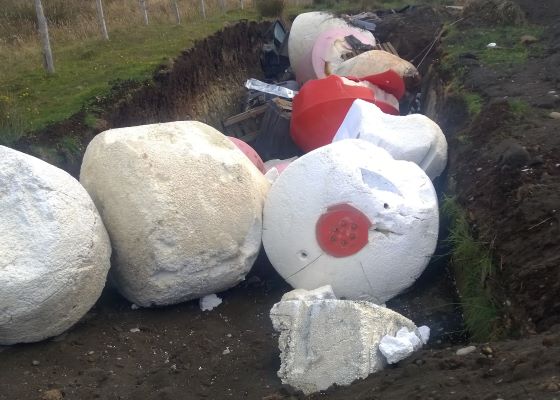
In Chile, there is a company called Full Pack that has been recycling and processing EPS foam buoys on the seaside for 5 years, helping local governments and environmentalists to reduce marine garbage pollution. Full Pack is a large-scale comprehensive recycling company in Chile, which mainly recycles various waste plastics, waste paper, and various electronic products. Since the establishment of the company, Full Pack has recycled a large number of waste plastics, contributing to the local environmental protection and sustainable economy.
During Full Pack’s operations, local environmentalists and government agencies raised concerns about recycling EPS foam buoys found along Chile’s beaches. These buoys, widely used in coastal fish farms as floating markers, are made of EPS foam with hard plastic parts. Although they can last for several years, exposure to seawater and weather conditions causes damage, requiring frequent replacement. As a result, large quantities of discarded buoys have accumulated on the coastline, and strong winds often spread the foam waste further along the shore. Local authorities and environmental groups are still seeking an effective solution to manage and recycle this growing waste problem.
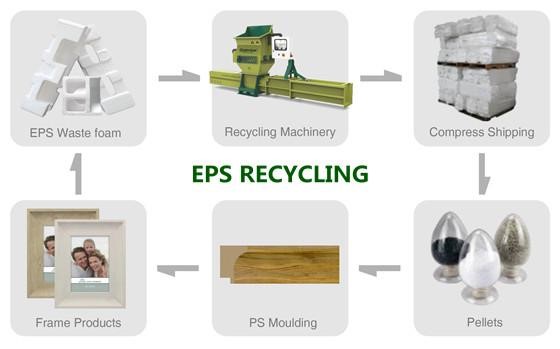
Full Pack knew that INTCO Recycling has more than 15 years of experience in the EPS foam recycling industry, has been exploring the latest foam recycling solutions, and has independently developed and manufactured GREENMAX EPS Foam Compactor. After understanding the needs, INTCO Recycling provided Full Pack with a professional recycling program: After the foam buoy is processed and crushed, it is compressed with a GREENMAX EPS Foam Compactor, and the volume can be reduced to 1/50 of the original. The compressed foam buoys can be transported to the terminal processing factory for processing, and finally made into renewable products such as photo frames, decorative picture frames, skirtings, and so on.
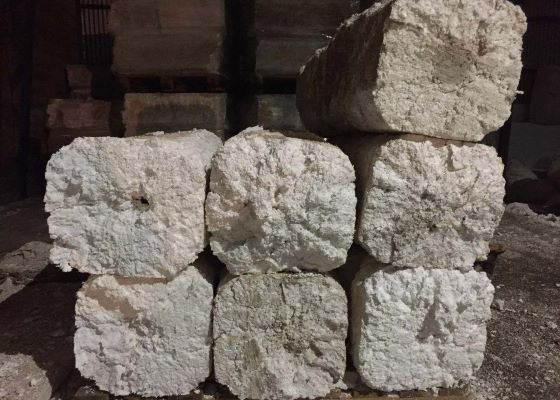
With the help of GREENMAX EPS Foam Compactor and the entire industry chain of EPS foam recycling, these EPS foam buoys can easily achieve a gorgeous transformation from marine debris to new products. After more than 5 years of project operation, Full Pack has recycled more than 1,000 tons of EPS buoys and solved the problem of white foam pollution on the Chilean coast. These recycled buoys have become a variety of decorative photo frames, dotted in our In daily life, it is used to record beautiful moments. INTCO Recycling not only helped Full Pack to perfectly treat the marine garbage on the Chilean coast, but also realized the transformation of the value chain of marine foam garbage with the help of the GREENMAX EPS Foam Compactor, and established a company image with environmental protection awareness and social responsibility for Full Pack in the local area.
FAQ
1. How does GREENMAX EPS Foam Compactor help recycle EPS buoys?
GREENMAX EPS Foam Compactor crushes and compresses bulky EPS buoys into dense blocks, reducing their volume to about 1/50 of the original size. This makes storage, transportation, and recycling much more efficient and cost-effective.
2. What can recycled EPS foam buoys be turned into?
After processing, compressed EPS materials can be reused to produce a variety of recycled products such as photo frames, decorative picture frames, skirting boards, and other renewable plastic products.