 Select Language
 English
 Spanish
 Polish
 Japanese
 Italian
 French
GREENMAX EPS Washing Line T-EPS
GREENMAX EPS washing line T-EPS processes contaminated EPS foam waste through crushing, washing, dewatering and compaction. It prepares loose foam for recycling and converts the processed material into compact EPS blocks for easier storage and transport.
For EPS waste carrying soil or other surface contamination, washing provides a preparation step before compaction. The system can be used for EPS horticultural trays and other contaminated foam waste, with the process configuration selected according to the condition of the incoming material.
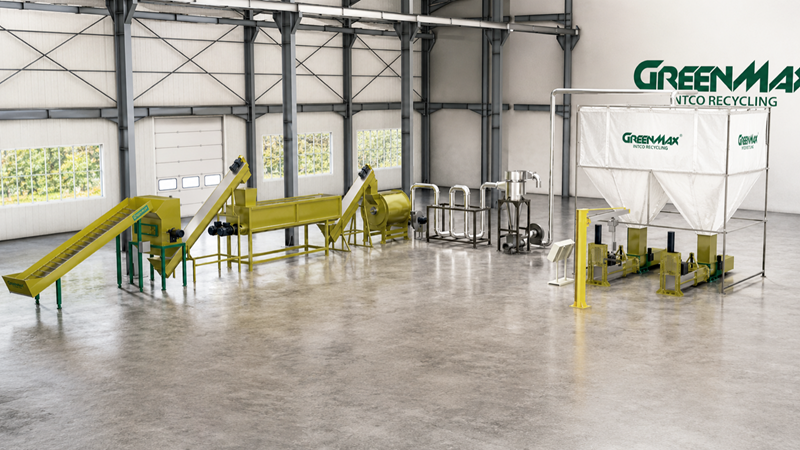
INTCO Recycling supplies the washing system and offers an EPS block buyback service, subject to material quality requirements. GREENMAX Triton washing systems have been supplied to customers in Italy and the United States.
How Does the EPS Washing Line Work?
1. Crushing
EPS waste is fed into the crusher and reduced to smaller pieces for washing and subsequent processing.
2. Washing
The crushed foam is washed to remove dirt and other contaminants. The washing requirements depend on the type and level of contamination in the waste.
3. Dewatering and Drying
Excess moisture is removed from the washed material to prepare it for compaction. Moisture control helps the processed EPS meet the requirements of the next recycling stage.
4. Compaction
The prepared EPS is compressed into blocks, reducing the space needed for storage and making the material easier to handle and transport to a recycler.
Technical Specifications
| Parameter |
Specification |
|---|---|
| Model | T-EPS |
| System name | Washing System Triton |
| Processing capacity for EPS | 200–300 kg/h |
| Conveyor motor power | 1.5 kW |
| Crusher motor power | 2 × 4 kW |
| Dehydrator motor power | 22 kW |
| Compactor motor power | 15.55 kW |
Actual throughput depends on the incoming EPS material and operating conditions.
Planning an EPS Washing System
Before selecting a system, provide details of the waste source, contamination, material size and expected processing volume. Representative samples can help determine the required washing and dewatering configuration, as well as the quality requirements for the finished EPS blocks.
GREENMAX Triton T-EPS in South American Video:
GREENMAX Trion T-EPS in Austraila Video:
FAQ
1. What is the GREENMAX EPS Washing Line?
It is a recycling system designed to clean contaminated EPS (expanded polystyrene) foam, making it suitable for reuse or further processing such as compaction or pelletizing.
2. What materials can it process?
The system mainly handles EPS foam waste, including food containers, trays, and packaging materials.
3. What is the processing capacity?
The typical capacity is 200–300 kg per hour, depending on the material type, contamination level, and system configuration.
4. What are the key benefits?
It helps improve material cleanliness, reduce waste volume, lower transportation costs, and increase the value of recycled EPS, making recycling more efficient and sustainable.
 T-EPS