 Select Language
 English
 Spanish
 Polish
 Japanese
 Italian
 French
Green Transformation of Irish EPE Packaging Manufacturers: GREENMAX Helps EPE Recycling Achieve Sustainable Development
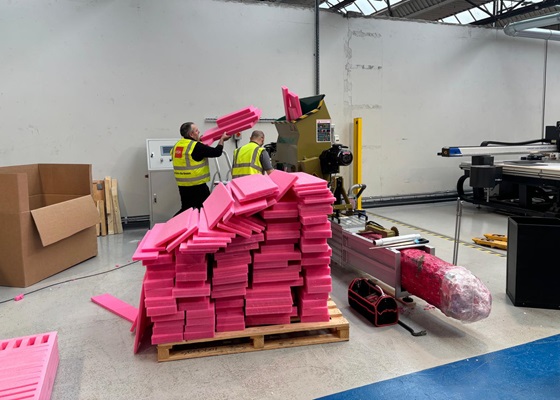
In Ireland, a leading EPE packaging manufacturer faces a common industry challenge: how to handle the large amounts of EPE scraps generated during production? These scraps not only take up valuable storage space but also incur additional waste disposal costs for the company. However, through collaboration with GREENMAX, the company not only solved the waste disposal problem but also achieved its sustainability goals, becoming a model of green transformation in the industry.
Ireland's Foam Waste Management Policies and Costs
The Irish government follows EU environmental standards, requiring companies to take responsibility for the waste generated during their production processes, including foam packaging waste. Companies must adhere to the principle of Extended Producer Responsibility and adopt compliant disposal methods. For processing foam waste such as EPE and EPS, companies usually need to pay high costs for waste collection, transportation, and disposal. If opting for landfill, they also need to pay landfill taxes (about €80 per ton) and potential environmental fines. Choosing professional recycling and disposal services, although more expensive, can help avoid environmental risks and legal issues.
Foam Waste Recycling Rate and Environmental Impact in Ireland
According to data from the Environmental Protection Agency (EPA) of Ireland, the country generates about 15.7 million tons of waste annually. The recycling rate of plastic packaging increased from 28% in 2021 to 32%, but it is still short of the 50% target set for 2025. The recycling rate for foam waste is about 30%, with approximately 75,000 tons of rigid plastic being recycled each year. Foam waste is difficult to naturally decompose; landfilling occupies land resources, incineration releases harmful gases that threaten air quality and health, and when it enters the ocean, it damages marine ecosystems.
The process and environmental benefits of EPE recycling
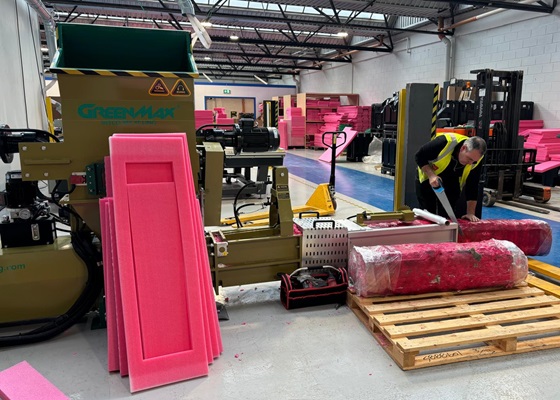
To address the high cost and environmental risks of foam waste disposal, this Irish EPE packaging company chose to collaborate with GREENMAX, using its EPE foam compactor and recycling equipment to recover and reuse EPE scraps.
EPE Foam Compactor Video:
Recycling and Reusing with EPE Foam Compactor
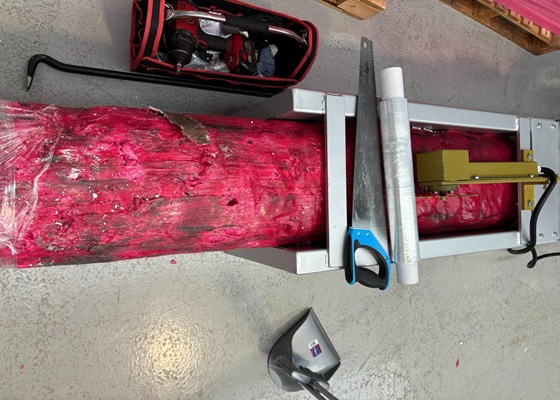
• Collection and Sorting: Companies collect EPE scraps from the production process and perform initial sorting to remove impurities.• Compression Processing: The sorted EPE scraps are placed into an EPE foam compactor for crushing and compression, forming high-density foam blocks, significantly reducing volume for easier storage and transportation.
• Transportation and Reuse: The compressed foam blocks are transported to recyclers, pelletizers, or packaging manufacturers for further processing into recycled pellets or direct use in producing new packaging products.
• Remanufacturing: Recycled pellets are used to manufacture new EPE products or other plastic products, achieving resource recycling.
Environmental Benefits
By partnering with GREENMAX, companies can achieve significant environmental benefits:
• Reduce Landfill Waste: EPE recycling allows for reuse, reducing the land occupied by landfill.
• Lower Carbon Emissions: EPE recycling is converted into regenerated products, reducing the need for raw material extraction and processing for new EPE products, thereby lowering carbon emissions. Recycling 1 ton of EPE can reduce approximately 3 tons of carbon emissions.
• Protect Marine Ecosystems: Reduces the likelihood of foam waste entering the ocean, protecting marine life from the threats of plastic pollution.
GREENMAX provided this Irish company with a complete EPE recycling solution. The core equipment is the EPE foam compactor, designed specifically for industrial environments, efficiently handling EPE foam waste and bringing multiple benefits to the company.
Advantages of the Z Series EPE Foam Compactor
• High Efficiency Compression: Utilizes advanced screw technology with a compression ratio of up to 50:1, significantly reducing the volume of EPE foam, making it easier to store and transport.• Safe and Reliable: The compressed EPE foam blocks have high density, reducing the risk of fire during storage and transportation, enhancing corporate safety.
•Cost-Effective: Reduces waste disposal volume and transportation costs, significantly lowering waste management expenses and achieving cost savings.
• Environmental Benefits: The compressed EPE foam blocks can be recycled and reused, minimizing environmental impact and aligning with corporate sustainability goals.
After using the EPE foam compactor, companies found that there was high market demand for the compressed EPE foam blocks. Some packaging companies, such as Sealed Air, began purchasing these compressed EPE foam materials for further processing to produce new packaging cushions and other products. This not only achieves recycling of waste materials but also brings additional economic benefits to the companies.
Case
Sealed Air, a globally renowned packaging material manufacturer, purchases compressed EPE foam blocks to produce new packaging cushions. These recycled products are reliable in quality, meet environmental standards, and are well-received in the market. Through this cooperation model, Sealed Air reduces raw material costs, enhances its environmental image, and achieves both economic and environmental benefits.
CASES
-
VIP Partner
-
EUROPE
- Netherlands
- Slovakia
- Belgium
- France
- Italy
- Poland
- Spain
- UK
- France
- Ireland
- C.T.C
- Hirsch Isolation
- Hungary
- Czech
- Germany
- Forcepol Sl
- ALBATERM
- Serbia
- PMT
- Telcam
- Muijs Seafood
- TBK
- Qualirec
- Britain
- PRO EPP
- ECOTEC Sàrl
- SOPREMA Tecsound
- GRUPPO YU SRL
- Airpol Italia
- Ados Sarl
- Poliembalajes
- Tecno Profili
- RGH
- Iberfibran
-
OCEANIA
-
AFRICA
-
SOUTH AMERICA
-
NORTH AMERICA
-
ASIA