 Select Language
 English
 Spanish
 Polish
 Japanese
 Italian
 French
GREENMAX Foam Densifier Helps Silicon Valley Electronics Manufacturer Recycle Foam
In the global electronics manufacturing industry, foam recycling and EPE packaging waste management have become critical topics for sustainable operations. This case comes from Leadman Electronics, an electronics assembly company based in Silicon Valley, USA. The company has long provided OEM electronic assembly services for technology firms and continuously generates large volumes of EPE and EPS foam waste during production and packaging, with EPE foam being the dominant material. As order volumes increased, waste volume and disposal costs rose rapidly, and traditional outsourced collection models could no longer meet cost control and environmental compliance requirements.
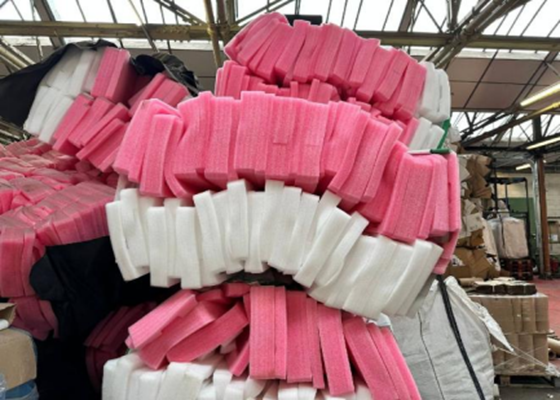
Leadman Electronics mainly uses EPE materials as protective cushioning packaging for electronic products to ensure the safety of precision components during transportation. However, both EPE and EPS foam materials have extremely low density and occupy large volumes, causing waste to accumulate rapidly inside the facility. According to company data, weekly waste generation can reach 1–2 trailers, occupying significant warehouse and production space and directly affecting 5S management efficiency and on-site operations.
In terms of cost, the company has long relied on third-party recycling services for waste collection and disposal, with costs of approximately 500–700 USD per truck. During peak waste periods, monthly disposal costs reached 2,000–3,000 USD and continued to rise annually. At the same time, large amounts of untreated foam waste accumulated on-site, further reducing storage space and increasing logistics and management pressure.
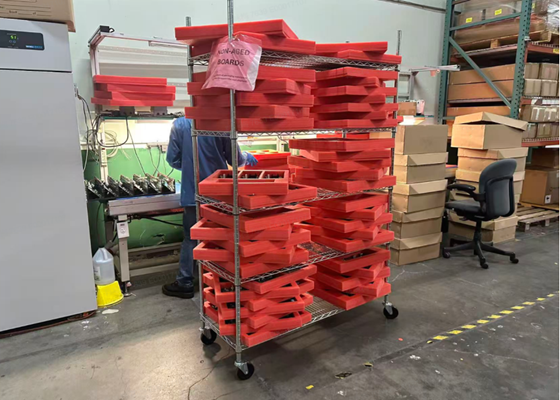
To solve this issue, Leadman Electronics searched online for an EPE foam recycling solution and ultimately partnered with GREENMAX, introducing a foam densifier model M-C200E. This equipment features a compression ratio of up to 90:1 and can process both EPS and EPE foam materials simultaneously. Through thermal melting and compression technology, bulky foam waste is converted into high-density standard ingots.
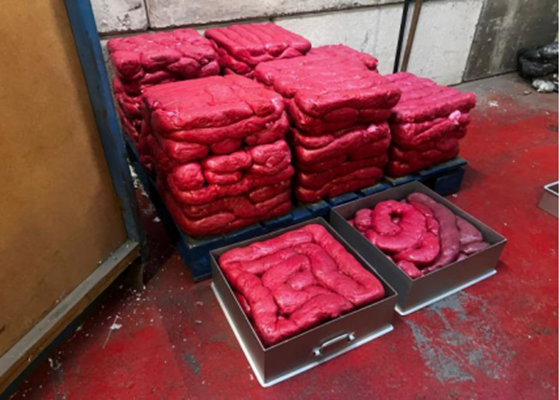
In actual operation, what originally filled one trailer of EPE/EPS waste is reduced to only about one pallet of compressed blocks after processing, significantly reducing transportation and storage costs. After deployment, the company significantly reduced waste collection frequency, saving approximately 2,000–3,000 USD per month in disposal costs and over 24,000 USD annually. At the same time, the compressed EPE blocks have strong market recycling value, generating an additional 1,600–1,800 USD per month in revenue, transforming waste from a cost center into a revenue-generating resource.
In addition to the economic benefits, the foam densifier significantly improves warehouse space utilization. The company can compress waste at any time, effectively eliminating storage congestion and creating a cleaner and more organized production environment, greatly improving overall operational efficiency. In terms of environmental compliance, the solution meets local U.S. environmental regulations, helping the company build a low-carbon circular system, reduce environmental risks, and enhance its green manufacturing image.
Currently, the equipment is operating stably at Leadman Electronics with excellent performance and low failure rates. The customer is highly satisfied with the foam recycling results and cost-saving benefits brought by the system. This fully demonstrates GREENMAX’s technological strength and mature application capabilities in EPE/EPS foam recycling for the electronics manufacturing industry, while also providing a replicable circular economy solution for more North American manufacturers.
FAQ
1. Why do electronics manufacturers generate large amounts of foam waste?
Electronics manufacturers use EPE and EPS foam packaging to protect products and components during production and transportation. Large volumes of foam waste are generated during unpacking, assembly, and shipping processes.
2. How much can foam densifier reduce foam volume?
Depending on the material and machine model, a foam densifier can reduce foam volume by up to 90:1, significantly lowering storage and transportation costs.
3. What are the benefits of recycling EPE and EPS foam on-site?
On-site recycling helps manufacturers reduce disposal costs, save warehouse space, generate revenue from recycled materials, and support sustainability goals.
CASES
-
VIP Partner
- Living Spaces
- The Brick
- GO TRG
- Sohnen
- J.B. Hunt
- FLEX
- QLS Group
- MBPJ
- Prime Wheel
- SAFEWAY
- WM
- GREE
- WEICHAI POWER
- Fairfax
- McArthur Furniture
- RAGN SELL
- RICOH
- Nefab
- COOP
- W.G.
- GE Logistics CEVA
- Whirlpool
- Ashley
- The Room Place
- L'oreal Paris
- WINCUP
- Polyrec
- Nestlé Waters
- Boulevard
- G.K RIZAKOS
- Melbourne market
- Lowe's
- Marine Harvest
- Novopol
- Jiffy
- GE LOGISTIC PREMIER
- Owens Corning
- UN1F1ED2 Global Packaging Group
- Transformados Water Cut
- Kauno Silas
- Isolfrance
- EMPRESAS BERRIOS INC
- Waste Control Services & Recycling
- Foam Products
- Leadman Electronics
- Toshikan
-
EUROPE
-
OCEANIA
-
AFRICA
-
SOUTH AMERICA
-
NORTH AMERICA
-
ASIA