 Select Language
 English
 Spanish
 Polish
 Japanese
 Italian
 French
How Marine Harvest Reduced Costs by Recycling EPS Fish Boxes
Marine Harvest (now known as Mowi) was one of the world's largest Atlantic salmon producers when this project was carried out. With global farming, processing, and distribution operations, the company relied heavily on EPS fish boxes to transport fresh salmon while maintaining cold-chain quality. The large volume of used fish boxes generated every day also created a growing need for an efficient EPS recycling solution.
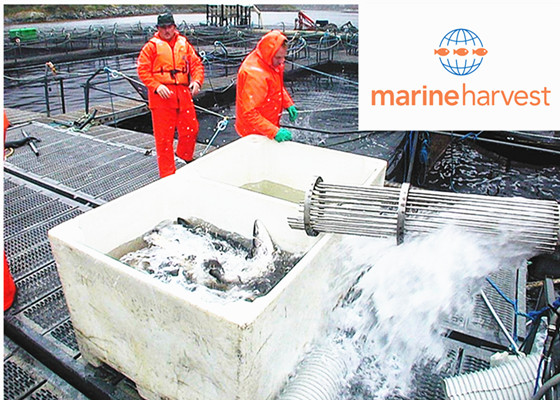
To ensure the freshness of salmon, Marine Harvest uses EPS fish boxes to deliver fresh salmon to the rest of the world. After fresh salmon is processed, these EPS fish boxes can no longer be used again and finally they will become industrial waste which actually deserves to be recycled.
Before, Marine Harvest's American branch company had been spending money on disposing these waste EPS fish boxes. And a local waste disposal company would then help it handle the boxes, which actually dumped the used fish boxes to the landfill site for landfill. However, whether for the factory production costs, or for the environment, landfill is not a reasonable and economic disposal method compared to EPS recycling.
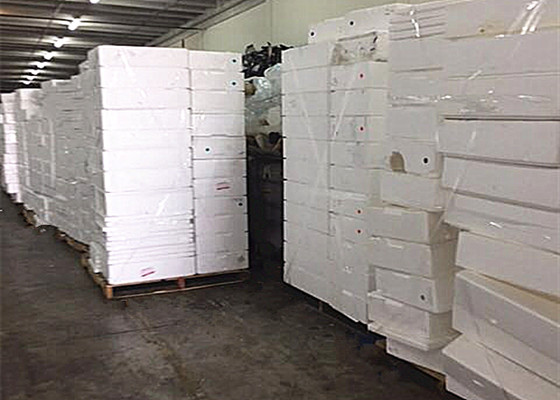
After knowing the “green recycling concept” of GREENMAX (belongs to INTCO Recycling), Marine Harvest decided to recycle its waste EPS fish boxes by contracting the recycling business to a third-party company so that it can save much extra costs - paying to landfill.
The third-party company uses GREENMAX EPS compactor A-C200 (Marine standard) to compress these used fish boxes into blocks. And it is worth mentioning that GREENMAX not only supply the recycling solution to them, but also monthly purchased back a 40HC cabinet of EPS blocks with good price.
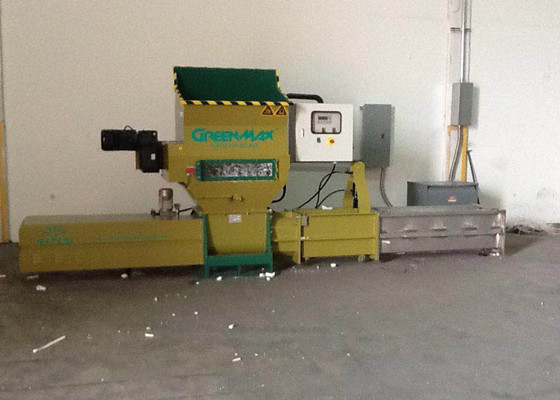
Such EPS recycling machines greatly helped Marine Harvest reduce the production costs, which also helped them make money with the EPS blocks. Marine Harvest enhanced its concept of sustainable green fisheries by the help of GREENMAX.
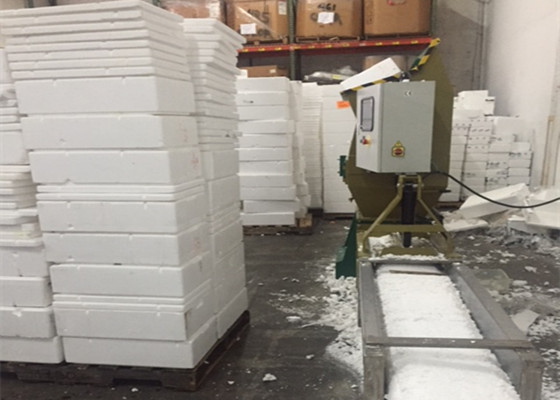
Marine Harvest's production environment is becoming more and more clean and tidy now, And more branches of it began to follow this reasonable way of recycling.
GREENMAX is always committed to working with more seafood companies around the world to help them recycle used EPS fish boxes, which finally can help reduce their production costs. What's more, the used EPS fish boxes can also be treated in a more environmentally friendly way.
FAQ
1. What is the best way to recycle used fish boxes?
A Styrofoam compactor or EPS compactor is one of the most efficient solutions. It compresses bulky fish boxes into high-density blocks that are easier to transport and recycle.
2. How does recycling EPS fish boxes reduce costs?
By compacting EPS on-site, companies reduce landfill fees, lower transportation costs, minimize storage requirements, and can generate revenue by selling compressed EPS blocks to recyclers.
3. Can wet or used seafood packaging be recycled?
Yes. After removing excessive water and contaminants, used EPS fish boxes can be compacted and recycled into raw materials for new plastic products.
CASES
-
VIP Partner
- Living Spaces
- The Brick
- GO TRG
- Sohnen
- J.B. Hunt
- FLEX
- QLS Group
- MBPJ
- Prime Wheel
- SAFEWAY
- WM
- GREE
- WEICHAI POWER
- Fairfax
- McArthur Furniture
- RAGN SELL
- RICOH
- Nefab
- COOP
- W.G.
- GE Logistics CEVA
- Whirlpool
- Ashley
- The Room Place
- L'oreal Paris
- WINCUP
- Polyrec
- Nestlé Waters
- Boulevard
- G.K RIZAKOS
- Melbourne market
- Lowe's
- Marine Harvest
- Novopol
- Jiffy
- GE LOGISTIC PREMIER
- Owens Corning
- UN1F1ED2 Global Packaging Group
- Transformados Water Cut
- Kauno Silas
- Isolfrance
- EMPRESAS BERRIOS INC
- Waste Control Services & Recycling
- Foam Products
- Leadman Electronics
- Toshikan
-
EUROPE
-
OCEANIA
-
AFRICA
-
SOUTH AMERICA
-
NORTH AMERICA
-
ASIA