 Select Language
 English
 Spanish
 Polish
 Japanese
 Italian
 French
A Standard Styrofoam Recycling Approach for EPS Fish Boxes in the Seafood Industry
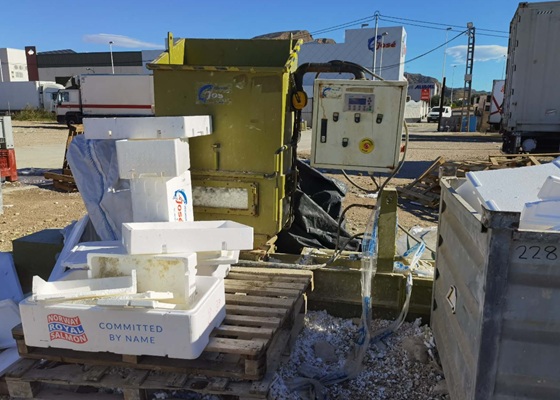
In seafood harvesting, processing, and cold-chain distribution, EPS fish boxes (foam insulated containers) are almost a must-have. But the more you use, the faster the waste piles up. They’re bulky and lightweight—the biggest headache isn’t that they can’t be handled, but that they take up warehouse space, trucking capacity, and labor. Warehouses get filled with foam quickly, and trucks are often “full by volume but not by weight,” which greatly increases hauling frequency and transportation costs.
For this kind of “high-volume, low-weight” foam, the most common and easiest-to-implement approach in the seafood industry is:
Use a foam recycling machine to reduce volume → cut transportation costs and free up storage space → sell the compressed blocks to downstream recyclers → enter Styrofoam recycling.
This turns foam from a disposal cost into a tradable recyclable material.
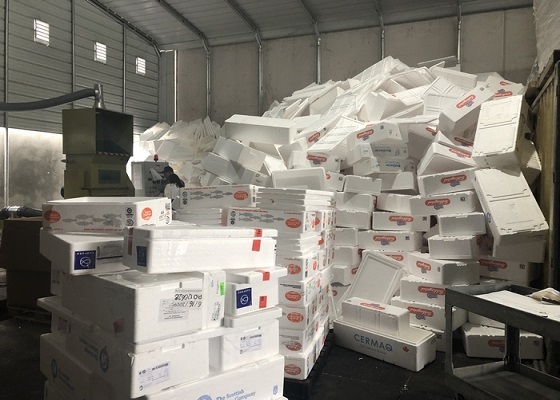
Why is “compressing first” the key step for handling EPS fish boxes?
1. Lower logistics costs: After volume reduction, each truck can carry more usable weight, which significantly cuts the number of trips.
2. Less piling up: Foam no longer takes over warehouses or docks, making on-site operations easier to manage.
3. More efficient recycling handoff: Compressed blocks are more uniform and easier to measure, which better matches how downstream recyclers prefer to receive material.
4. Value recovery: Compressed blocks can be sold directly to recyclers and enter the recycling stream.
GREENMAX example: GREENMAX purchases EPS compressed blocks globally for pelletizing, then reprocesses the material into products such as picture frames, outdoor decking, and acoustic wall panels—supporting a closed-loop approach. We also provide Styrofoam recycling solutions, offering seafood businesses a complete path from volume reduction to recycler connection.
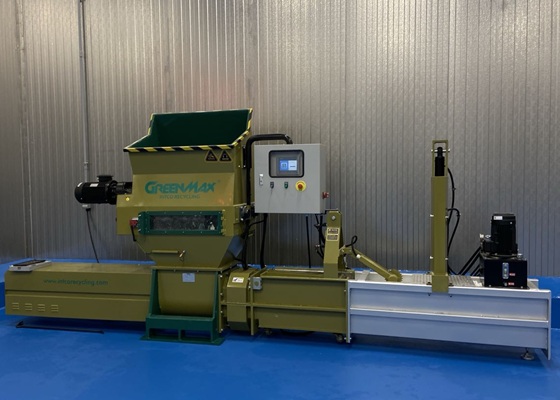
Two Types of Equipment: EPS Compactor vs. Foam Crusher
For handling EPS fish boxes, there are two common types of foam recycling machines:
1) EPS compactor (Shredding + Screw Compaction)
How it works: The foam is shredded first, then continuously compressed into dense blocks by a screw.
Volume reduction: Can compress foam to about 50:1.
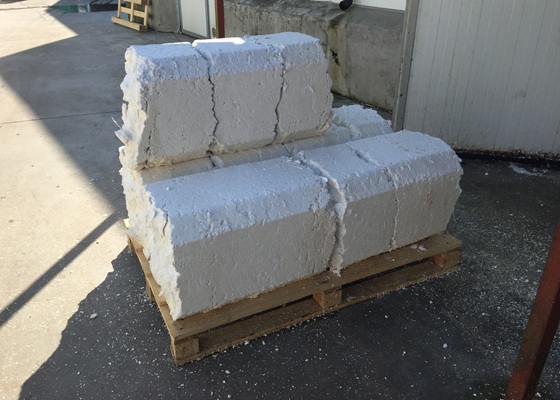
Output: Uniform compressed blocks, easy to stack, load, and sell.
Best for:
· High volumes of fish boxes and serious buildup that requires fast space relief
· High transportation costs and frequent hauling, where cutting logistics expenses matters
· Selling compressed blocks directly to recyclers or pelletizers to generate revenue
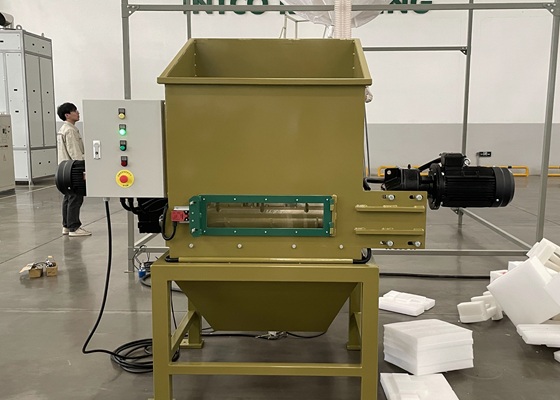
2) Foam Crusher (Shredding Only)
How it works: Shreds large foam into pieces about 1.2–2 in.
Volume reduction: Some reduction, but the material stays fairly loose, so transportation efficiency improves only slightly.
Output: Loose pieces, easy to bag and store temporarily.
Best for:
· Limited recycling budget and you want to start with basic “pre-processing”
· Your main need is turning large boxes into smaller pieces for easier handling
· You already have downstream compaction/melting equipment, and the crusher is used as a front-end step
Which one is a better fit?
· If your biggest issues are foam taking over your warehouse and hauling is too expensive → choose an EPS compactor (much better volume reduction, faster path to resale).
· If you mainly want to shred fish boxes for easier collection, and you have other processing methods later—or you already have compaction equipment and just need a higher-capacity shredder → choose a foam crusher.
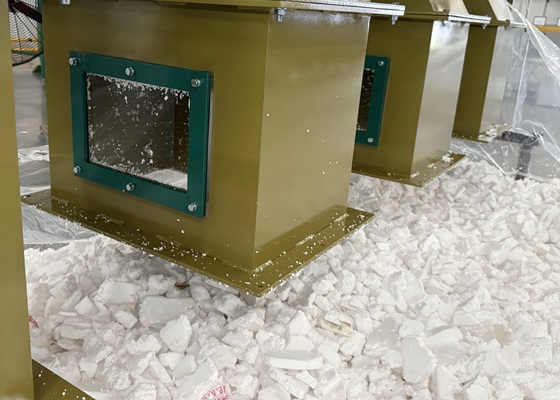
GREENMAX Recommendation: Apolo Marine Series Foam Recycling Machine (Built for wet, coastal conditions)
If your warehouse is already overflowing with fish boxes and you need a fast solution—or if your existing compaction equipment has been in service for years and is wearing out—GREENMAX recommends the Apolo Marine Series EPS compactor:
· Stainless-steel upgrades from the compression chamber to the discharge area, better suited for the wet, moisture-heavy conditions common in seafood operations
· More stable performance with wet material, helping reduce corrosion and maintenance pressure
· Low energy use and can be operated by one person, saving power and labor costs for seafood businesses
· Turns fish boxes from a space-consuming burden into deliverable compressed blocks faster, feeding directly into the Styrofoam recycling stream