 Select Language
 English
 Spanish
 Polish
 Japanese
 Italian
 French
Styrofoam Compactor: Turning Foam Packaging into Value
As Christmas approaches, appliance and electronics retailers are rolling out promotions, driving a sharp increase in inventory and outbound shipments. In this process, EPS foam packaging (Styrofoam) is everywhere—from shock-absorbing inserts to full-product protection during transport—running through every stage of manufacturing and logistics.
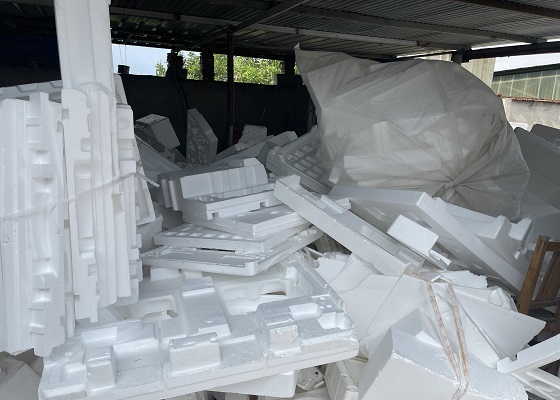
But the problems quickly surface: foam is bulky, produced in large volumes, difficult to dispose of, and expensive to transport. Take appliance manufacturers as an example—foam removed during assembly, repairs, or rework often piles up in warehouses, seriously affecting floor organization and production efficiency.
As a result, many companies that rely heavily on foam packaging end up asking the same question:
Is there a practical solution for EPS recycling?
The answer is yes—and it’s already being proven effective by a growing number of businesses.
In the global market, Styrofoam recycling is no longer just an environmental topic—it has become an essential part of business operations and waste management. The recycling pathway for EPS foam is already well established: compaction → pelletizing → reuse. Through this process, EPS is transformed from waste into valuable products such as outdoor decking, insulation boards, and other construction materials.
For most companies that rely heavily on foam packaging, a Styrofoam compactor is the key piece of equipment for effective EPS recycling—helping reduce disposal costs while maximizing the value recovered from waste foam.
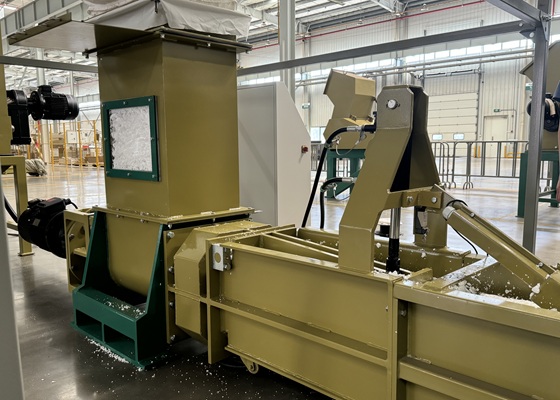
The GreenMax A-C300 foam recycling machine is a large-capacity volume reduction system designed for high-output foam waste scenarios. Built for enterprise-level Styrofoam recycling, it is ideal for appliance manufacturers, electronics factories, and large warehousing and distribution centers.
How does it address real-world challenges in high-volume foam usage?
1. High-volume foam, continuous processing with low energy consumption
Unlike small- to mid-capacity compactors, the A-C300 Styrofoam compactor is equipped with a silo featuring an integrated agitation system. This prevents material bridging and ensures a steady, continuous feed.
Shredding and compaction can operate independently: waste foam is first shredded and temporarily stored in the silo, then compacted in batches once the silo is full. This setup reduces peak energy demand, lowers electricity costs, and enables continuous handling of foam waste from production lines and warehouses.

2. High-efficiency compaction to free up warehouse space
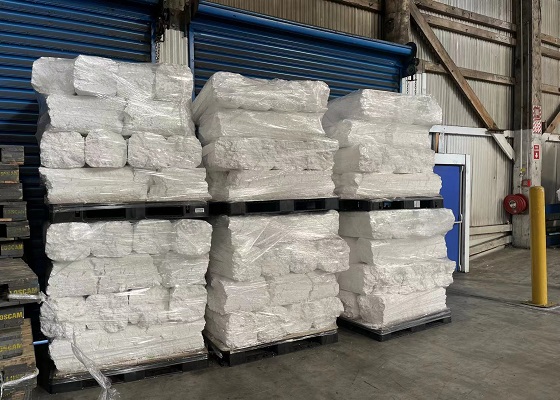
The GreenMax foam recycling machine achieves a compaction ratio of approximately 50:1, compressing bulky foam into dense blocks measuring 380 × 380 mm (W/H). With optional automatic cutting, block length can be adjusted as needed.
After EPS recycling, the compacted blocks are easy to stack, transport, and sell, reducing foam volume by up to 50 times, keeping warehouses organized, and significantly lowering logistics costs.
3. Immediate increase in recycling value
Once compacted, Styrofoam blocks can be sold directly. Current market prices are around €500 per ton, while traditional landfill disposal can cost approximately $200 per container. Through Styrofoam recycling, foam shifts from a disposal expense to a revenue-generating material.
There’s no need to worry about downstream markets—unlike conventional equipment suppliers, GreenMax also offers a buyback program for compacted blocks, which are used to manufacture eco-friendly products such as picture frames and decorative frames.
4. Meeting environmental and compliance requirements
Beyond waste accumulation and disposal costs, environmental compliance has become a key challenge for businesses. Through EPS recycling, companies can reduce landfill disposal and align with sustainable production goals and ESG standards.
For businesses that use large volumes of foam packaging, rather than letting foam take up space and slow down operations, a Styrofoam compactor offers a smarter solution—reducing volume, creating value, and enabling long-term, sustainable handling of foam waste.