
 Select Language
 English
 Spanish
 Polish
 Japanese
 Italian
 French
How to Handle PE Waste in Packaging, Logistics, and Similar Operations?
With the rapid growth of electronics manufacturing, logistics fulfillment, and medical cold-chain shipping, PE foam packaging is used more than ever. But once products are assembled or delivered, those protective materials quickly turn into bulky packaging waste that’s hard to store.
So how should PE packaging waste be handled?
The core answer is simple:
Use a foam compactor to reduce volume and compress PE foam, then sell the compressed foam blocks to downstream recyclers for reprocessing—achieving both compliance and financial return.
PE foam is lightweight and low-density, and the biggest recycling cost is transportation. That’s why on-site densification matters: turn “shipping air” into “shipping material.” When foam volume is reduced by 50x or even 90x, cost per load drops dramatically—so EPE recycling shifts from a burden to a sustainable business.
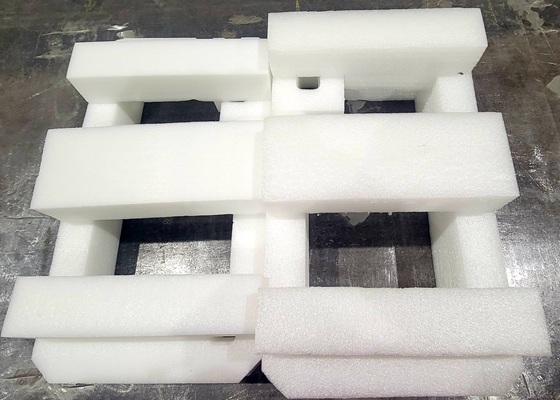
Today, downstream demand is already stable in many markets. For example, Sealed Air, a globally recognized packaging manufacturer, has begun purchasing densified PE foam blocks for further processing into new packaging inserts.
In Europe, some building-material companies and plastics recyclers (such as composite manufacturers) also purchase high-density PE foam blocks for regrinding and re-pelletizing, producing acoustic panels, insulation materials, and various industrial recycled-plastic products.
This means PE packaging waste is no longer just a “disposal cost”—it can be a recyclable resource that recyclers and end users can monetize directly. As environmental regulations continue to roll out, more businesses will need to participate in EPE recycling. Based on this, GreenMax summarizes three common scenarios and provides matching solutions for reference.
Electronics Manufacturing: Managing PE Packaging Waste as AI Demand Scales
In the production of computers, servers, and chip modules, PE foam is widely used for cushioning and shock protection. As AI-driven demand accelerates and high-value components continue to grow, PE packaging usage is rising fast.
But once assembly is complete, PE foam quickly becomes a high-volume waste stream that piles up quickly—often one of the most urgent space and handling challenges inside the plant.
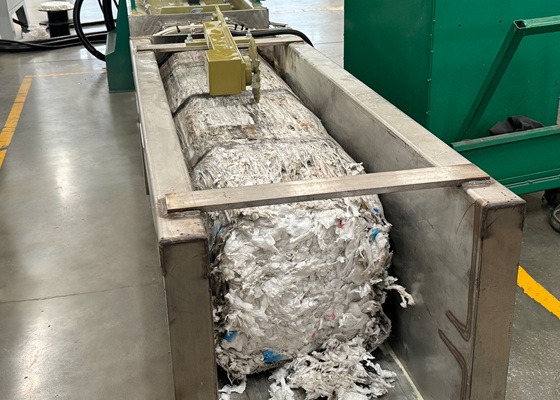
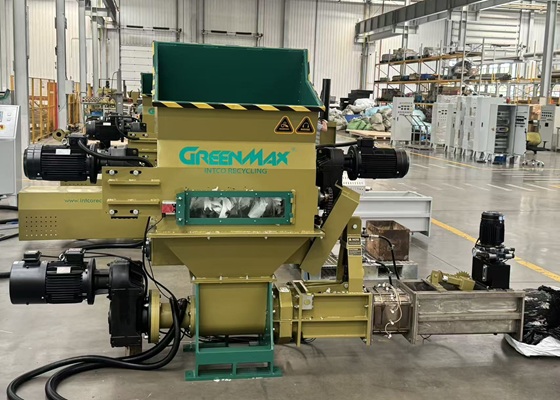
By installing the GreenMax Zeus series foam compactor near the warehouse area, businesses can densify PE packaging waste on-site and compress loose foam into high-density blocks at a 50:1 ratio. This frees up storage space and enables regular outbound sales, creating a steady polyethylene recycling workflow.
For this scenario, mid-size models such as Z-C100 or Z-C200 (throughput 100 / 200 kg/h) are typically sufficient. This EPE densifier uses a screw mechanism to shred and extrude the material, then heat-seals the surface of each block to help prevent rebound and debris. With low energy use and no strong odor, it’s well suited for on-site use in electronics manufacturing.
Warehousing & Distribution Centers: A Practical EPE Recycling Solution for Overflow
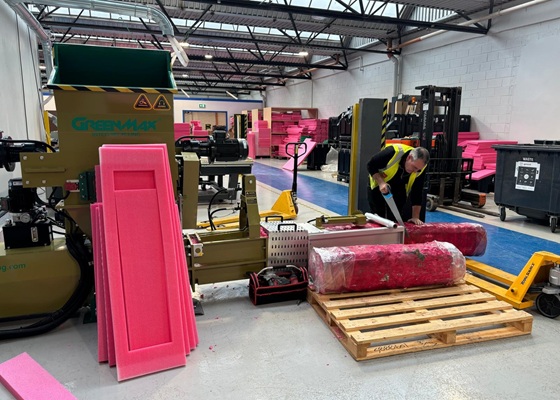
In warehouses and distribution centers, PE foam is commonly used to protect large appliances like refrigerators and washing machines, as well as other high-value equipment. Many retailers offer in-home installation; once installation is complete, the packaging waste is often returned to the distribution warehouse. Large volumes can build up in a short time—sometimes overwhelming storage capacity.
In this scenario, recycling success depends on processing speed and densification efficiency.
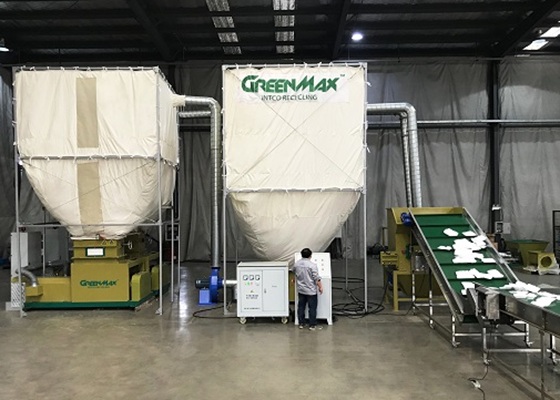
With the large-scale GreenMax Mars M-C300 foam compactor, distribution centers can run daily, continuous processing and quickly compress recovered PE foam by up to 90x. This significantly reduces hauling frequency and transportation costs. The system uses high-temperature thermal densification to remove air more thoroughly and deliver stable compression results. Operation is straightforward—after brief training, one operator can run the system.
The M-C300 EPE densifier includes a shredder plus a thermal unit with a silo. Waste can be fed by conveyor into the shredder and stored in the silo; once the silo is full, the thermal function can be started, improving energy efficiency. Simple operation, high throughput, and low labor requirements make it a strong fit for large-appliance distribution centers needing polyethylene recycling.
Medical Cold Chain: A Compliant Recycling Path for Single-Use PE Packaging
In medical cold-chain shipping, EPS and EPE packaging is often used once to protect pharmaceuticals and precision medical devices. Each shipment may generate a modest amount of waste, but monthly accumulation can create real storage issues. If disposed of directly, landfill costs add up—and environmental compliance requirements are becoming more stringent.
GreenMax recommends a mini EPE densifier Z-C50 for medical-related businesses. It’s compact (about the footprint of one and a half cardboard boxes) and can be placed flexibly in a warehouse corner. It offers low energy use, cleaner operation, and simple handling. With 50 kg/h densifying capacity, it can meet typical medical packaging waste needs.
In addition, the Z-C50 foam compactor has a relatively low upfront investment and can handle both EPS and EPE waste—making it a practical choice for organizations with smaller volumes that still want to reduce storage and hauling costs while aligning with environmental policies.
Whether in electronics manufacturing, warehousing and distribution, or medical cold-chain shipping, PE packaging use continues to grow.
The most workable, repeatable approach is to densify at the source with a foam compactor—so PE foam shifts from “hard-to-handle waste” to “valuable recycled feedstock,” and can move smoothly into downstream recycling and reuse.
That is the core value of EPE recycling—today and in the years ahead.