 Select Language
 English
 Spanish
 Polish
 Japanese
 Italian
 French
Turning PE Foam Waste into Revenue in the Growing AI Industry
With the rapid expansion of the AI industry, the use of servers, chips, sensors, and communication equipment continues to grow, driving more frequent use of PE foam (expanded polyethylene). Soft and resilient, PE foam offers excellent cushioning and shock absorption, effectively protecting delicate electronic components during transportation and storage.
In recent years, the United States has also seen strong growth in electronics manufacturing, for example:
· California & Texas: continued expansion of data centers, semiconductor, and consumer electronics production
· Arizona: rapid development of semiconductor and chip manufacturing
· Ohio & New York: increasing investment in high-value electronics assembly and precision components
To ensure packaging fits the complex shapes of electronic components, PE foam often requires extensive cutting and processing. This inevitably generates a significant amount of PE foam offcuts and scrap.
As a company focused on foam recycling, GreenMax has analyzed extensive customer cases and identified several core challenges that fabricators commonly face when handling PE foam waste.
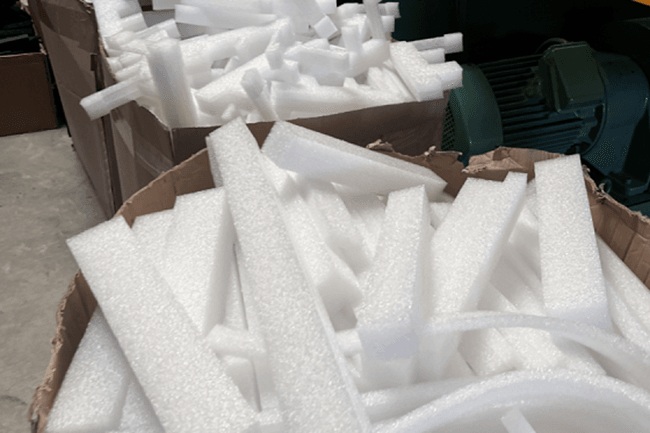
1. How should accumulated PE foam offcuts be handled?
The main characteristics of PE foam are its large volume, low density, and heavy space usage.
Common but low-efficiency disposal methods include:
· Temporary stockpiling that takes up valuable floor space
· High-cost hauling, often costing more than the material is worth
· Landfilling or incineration, which carries significant environmental risks
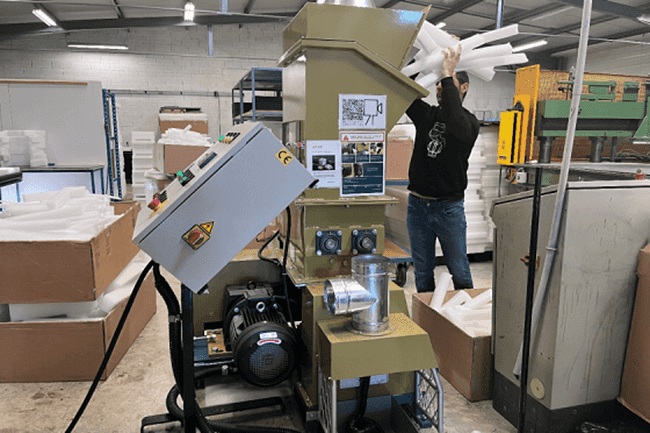
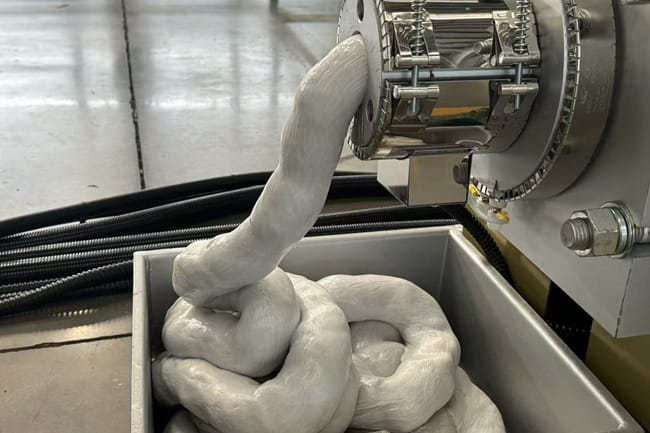
A more practical and economically viable approach is to build an in-house EPE recycling system. By reducing volume at the source and then selling the material to downstream recyclers, companies can regain control over PE foam waste.The key piece of equipment is an EPE densifier, which continuously compresses loose PE foam offcuts into high-density blocks at up to a 90:1 reduction ratio. This dramatically lowers volume and turns PE foam waste from a burden into a manageable, tradable resource.
2. Can EPE recycling cover waste handling costs?
The answer is yes—and in many cases, it can even generate surplus value.Waste handling costs mainly include the investment in a foam recycling machine, labor, and electricity. The GreenMax Mars series polyethylene densifier is easy to operate, requiring only start/stop controls and three temperature settings. With brief training, it can be run by existing staff, without the need for dedicated operators. In practice, one in-house employee operating the machine 1–2 days per week is usually sufficient, keeping labor costs minimal and power consumption low.
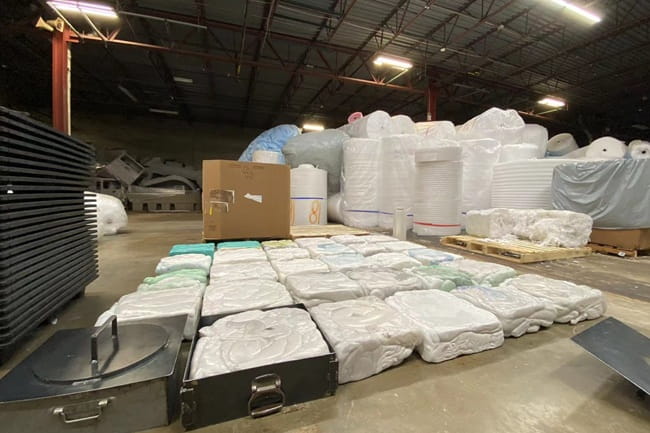
The equipment investment can be fully offset by selling the compressed PE foam blocks, and in some cases, this creates a profit stream. Densified PE foam can be recycled into various products such as protective packaging materials and sound or thermal insulation panels. Compared with loose foam scrap, high-density blocks are more widely accepted by downstream recyclers and reprocessing plants, with more stable and transparent pricing.
3. How should fabricators approach polyethylene recycling?
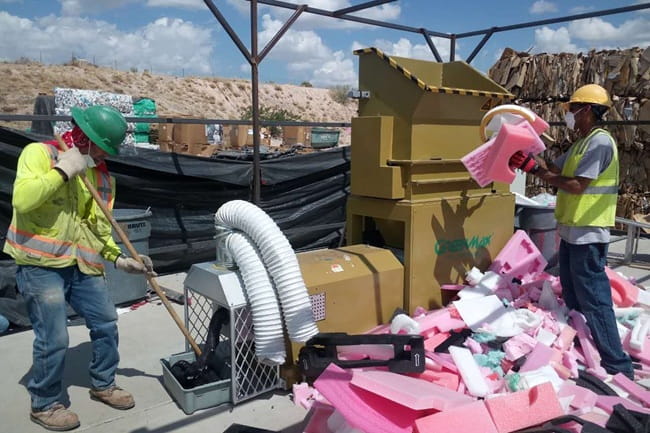
For fabricators, the most practical, controllable, and cost-effective approach is to:
1. Collect PE foam offcuts centrally from production lines or warehouses
2. Densify the material on site using an EPE densifier
3. Store the compressed foam blocks and sell them periodically
This model offers several clear advantages:
· Eliminates fixed weekly hauling and disposal fees
· Reduces transportation frequency and cost per shipment
· Increases the market value of foam waste, enabling economic recycling
· Better aligns with environmental and compliance requirements
4. Who should you contact to see real on-site recycling results?
Before making a decision, many fabricators want to know how this recycling approach performs in real factory conditions.
GreenMax has delivered proven solutions for fabricators and packaging companies across multiple countries and regions. We can share relevant customer case studies or help arrange site visits to nearby facilities where GreenMax foam recycling machines are already in operation.
We can also provide real operating videos from customer sites or live video demonstrations from GreenMax facilities. If needed, you are welcome to visit GreenMax factories in Vietnam or China to see the equipment in operation firsthand and gain a clear, reliable understanding of EPE recycling performance before investing.
5. How are after-sales service and warranty supported?
When selecting equipment, after-sales support and operational reliability are just as important as performance. GreenMax provides a comprehensive service system, including:
· 1-year warranty on EPE densifiers
· Installation support and operator training
· Long-term, reliable spare parts supply
· Remote technical support and upgrade recommendations
These services help ensure stable, long-term operation and support effective waste management and cost control.
As electronics and AI-related industries continue to expand in the U.S. and globally, the volume of PE foam offcuts will only keep increasing. For fabricators, building a stable, efficient, and sustainable EPE recycling system is not just an environmentally responsible choice—it is a practical and proven way to reduce costs and improve operational efficiency.
GreenMax will continue to use its professional expertise to help companies turn PE foam waste into sustainable value.