
 Select Language
 English
 Spanish
 Polish
 Japanese
 Italian
 French
Turning Polystyrene Packaging in Shipbuilding and Fisheries into Real Value
In coastal areas with intensive fisheries, such as Mexico and Chile, EPS foam (also known as polystyrene or Styrofoam) is widely used in boat construction, equipment transportation, and seafood harvesting and distribution for cushioning, protection, and insulation.
However, after use, these foams often accumulate rapidly, are difficult to handle, and may even enter the ocean. Therefore, for these fisheries-heavy regions, a polystyrene compactor is an essential piece of equipment. It not only prevents foam pollution in the marine environment but also converts polystyrene into reusable resources.
Compared with other regions, fisheries-intensive areas have a stronger need to establish a comprehensive foam recycling system. Here, polystyrene waste is generated in large volumes, from concentrated and stable sources, mainly in the following two aspects:
1. Boat equipment and parts packaging: During the construction and maintenance of fishing vessels, many components are transported with EPS foam packaging, which becomes disposable, batch-generated waste after use.
2. Seafood transport and turnover packaging: Fish, shrimp, shellfish, and other seafood leave behind large amounts of polystyrene insulation boxes and protective foam after transportation.
These polystyrene wastes usually accumulate at ports, shipyards, and processing areas, occupying large amounts of space. Relying solely on outsourced disposal is costly and often delayed, causing stockpiles that may even enter the ocean during storms.
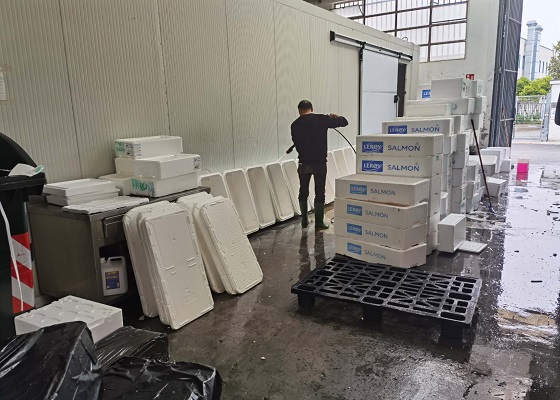
Foam recycling can turn foam waste into valuable material with a large market, making this recycled resource circulate and significantly reducing environmental pressure. The main challenges of this waste are its large volume, low weight, low transport efficiency, and high disposal costs. For medium-sized enterprises, 3–5 containers of waste may need to be transported monthly, with each container costing around 200 euros, resulting in a monthly expense of 600–1000 euros.
Installing a polystyrene compactor allows volume reduction and value-added treatment of waste at the source. This EPS compactor uses screw compression technology to compress waste foam up to 50:1, significantly reducing storage and transport costs. The equipment is highly suited to the EPS recycling needs of fisheries regions. Even if the waste contains high moisture, screw-type physical compaction does not affect recycling efficiency. The compressed foam blocks are clean and stable, ready for sale to downstream recyclers or GreenMax, turning “disposal costs” into “ongoing revenue.”
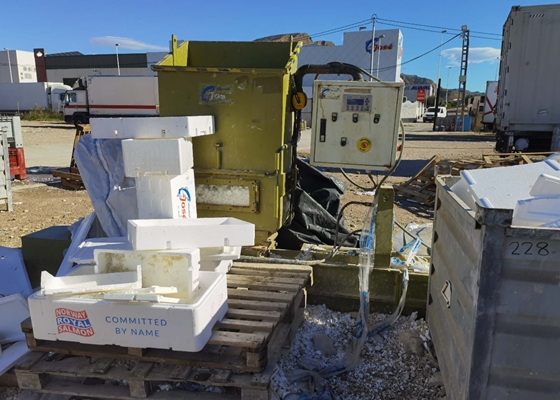
Once EPS foam enters the ocean, it is extremely difficult to degrade and can cause long-term impacts on marine ecology and fishery resources. Deploying a polystyrene compactor at ports, shipyards, and seafood processing areas enables on-site compression and handling, which can:
· Reduce uncontrolled EPS foam stockpiles at ports and shipyards
· Lower the risk of foam entering the ocean during storms
· Help vessels and fisheries-related companies meet environmental and regulatory requirements
For fisheries-heavy regions, this is not only a matter of foam recycling but also concerns environmental responsibility and the long-term sustainability of the industry. Recycled EPS can be remanufactured into construction panels, baseboards, insulation boards, and other products, providing clear reuse paths and tangible benefits for fisheries enterprises.
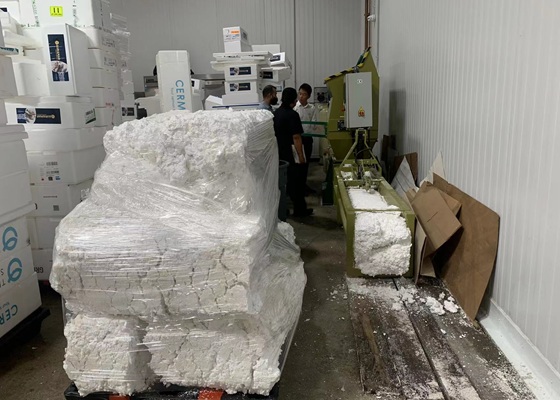
EPS foam is not an unsolvable burden. Through systematic foam recycling (simple waste handling methods, clear sales and reuse channels) combined with a polystyrene compactor, the accumulation of boat and fisheries packaging foam can be efficiently managed, and actual revenue can be generated from the sale of compressed blocks. For fisheries regions, this represents a feasible path that balances environmental protection, efficiency, and economic return.