
 Select Language
 English
 Spanish
 Polish
 Japanese
 Italian
 French
Wet Polystyrene Boxes After Seafood & Flower Shipping: How to Recycle Efficiently Without Piling Up?
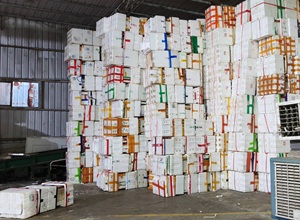
Polystyrene (also known as expanded polystyrene, or EPS) is widely used to package refrigerated products like seafood, flowers, and milk because it’s affordable, water-resistant, and provides excellent insulation. As a result, this type of EPS waste often contains a lot of moisture.
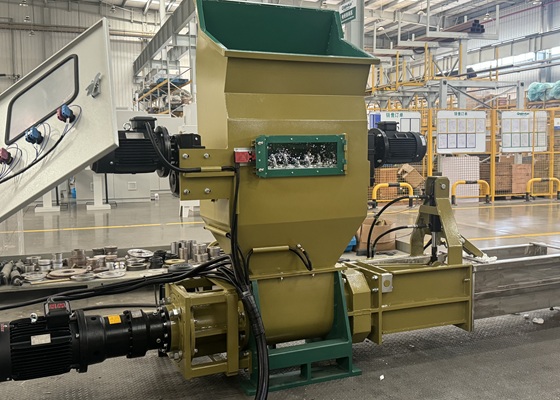
For wet foam boxes, GreenMax offers a standardized solution: the Apolo Marine Series cold-compression EPS compactor. It compresses bulky, wet EPS into dense blocks at up to 50:1 volume reduction, making downstream polystyrene recycling much easier to scale.
Built for wet EPS foam boxes
· Upgraded internal components with stainless steel for better resistance to moisture and salt air
· Reduced corrosion risk and longer machine lifespan
· Optional water-cooling system to reduce the risk of melt buildup from continuous screw compression
Common Wet EPS Scenarios (and the Right Recycling Setup)
Scenario 1: Fish Boxes (Seafood Foam Containers)
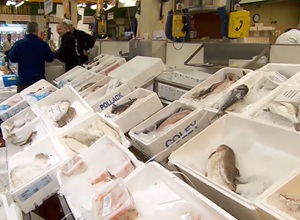
In the seafood supply chain, foam fish boxes are used for insulation and impact protection, often together with ice, seawater, or meltwater. After delivery to wholesale markets, docks, and processing facilities, these boxes can pile up quickly and create serious disposal pressure. GreenMax recommends different foam recycling setups depending on the site:
1. Wholesale markets: Multiple vendors generate a large combined volume. The GreenMax EPS compactor A-C100 (about 100 kg/h) is typically enough to cover daily EPS foam handling for a market.
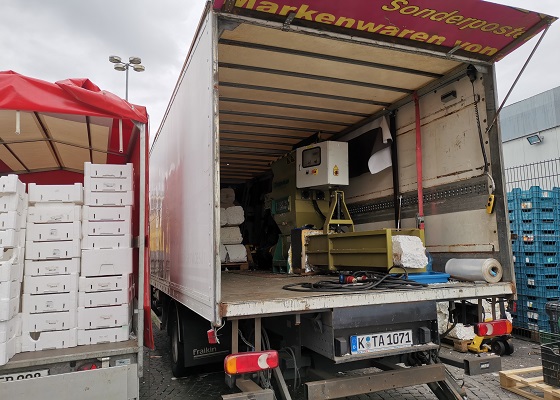
2. Docks: Equipment often needs to move between nearby dock locations, so mobility matters. The A-C50 is compact, just over 2 meters long, and weighs about 1,000 kg, making it suitable for transport on a truck or trailer to process accumulated polystyrene boxes across multiple docks.
3. Processing plants: For mid-to-large seafood processors, GreenMax recommends higher-capacity models like the EPS compactor A-C200 or A-C300. Many facilities generate roughly 2–20 tons of EPS waste per month, and loose foam can take up hundreds of cubic meters. Compaction reduces volume by about 50:1, producing stackable dense blocks for storage and resale—improving warehouse utilization while turning discarded fish boxes into value and reducing packaging costs.
Scenario 2: Flower Packaging (Insulated Foam Boxes)
Flowers require moisture control and temperature management during transport and retail. Common practices include using moisture materials or water packs, and cold-chain logistics often creates condensation. As a result, foam boxes are typically wet after unpacking and may also carry tape, labels, and other attachments—making recycling more difficult.
GreenMax recommends removing tape and debris before processing to increase the resale value of the compacted blocks. With a polystyrene compactor A-C100 or A-C200, lightweight, wet, loose foam boxes can be compressed into dense blocks around 300 mm × 300 mm (length adjustable). This helps shops and flower markets reduce pickup frequency and cut high disposal costs—making polystyrene recycling much easier to implement.
Scenario 3: Produce Crates (Fruit & Vegetable Foam Boxes)
Foam boxes are commonly used to protect produce and maintain freshness during sorting, circulation, and transport. Waste is typically caused by repeated use damage (cracks, broken corners), moisture left from washing/sanitizing, and condensation from moving in and out of cold storage. That’s why discarded produce foam boxes are often wet, bulky, and fast to accumulate.
After compaction, the overall volume drops significantly, making it much easier for farms and sorting centers to run efficient foam recycling programs.
Preventing melt buildup during wet foam compaction
With screw-based EPS compactors, continuous compression of wet foam can generate friction heat. In some cases, this may cause melt buildup that prevents the screw from pushing material consistently. To keep operations smooth, GreenMax adds melt detection and water-cooling options:
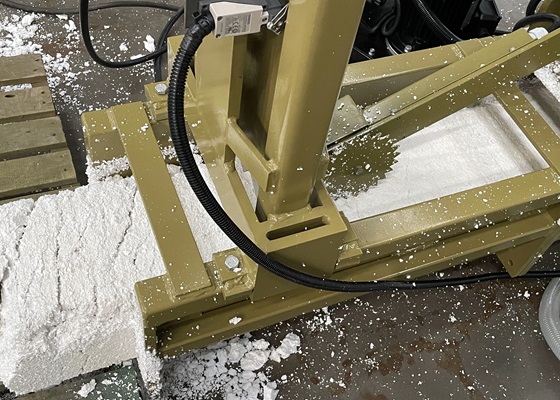
1. A rotating disc sensor at the discharge chute turns with the compacted block; if the disc stops, the machine triggers an alarm to indicate possible melt buildup.
2. A hollow octagonal cooling structure can be connected to a recirculating water system to provide continuous cooling and reduce melt risk.
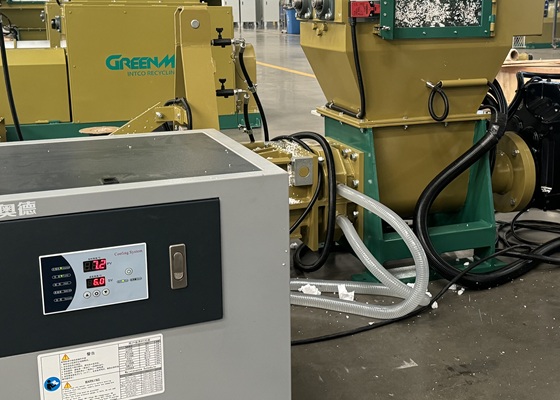
The GreenMax EPS compactor Apolo Marine Series is engineered specifically for wet foam applications. Stainless steel upgrades improve corrosion resistance and extend service life, while melt detection and a water-cooling circulation option help the recycling process run more smoothly and efficiently—supporting greener, more sustainable operations for industries like seafood and flower logistics.