 Select Language
 English
 Spanish
 Polish
 Japanese
 Italian
 French
3 Key Questions for Cutters Before Styrofoam Recycling
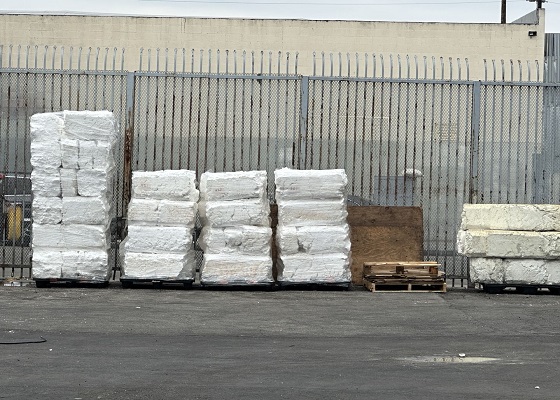
In the EPS foam (Styrofoam) cutting industry, offcuts and scrap are generated almost every day. Because EPS is bulky and lightweight, it takes up valuable floor space and leads to high transportation and disposal costs.
As a result, more and more cutters are turning their attention to Styrofoam recycling, but before investing in equipment, there are several key questions that need to be carefully considered.
1. How much EPS waste is generated each month?
This is the first step in foam recycling.
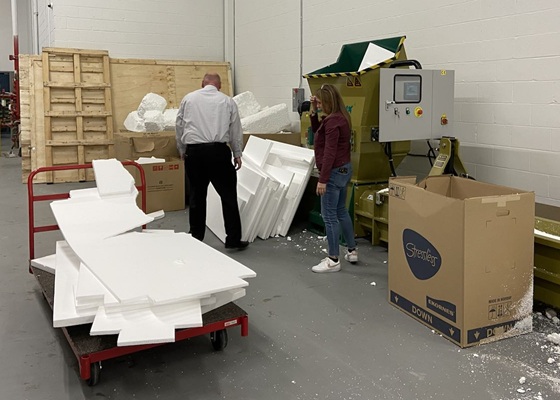
EPS cutting operations vary greatly in scale, and waste output can differ significantly. At the same time, each foam compactor has a specific processing capacity that must match actual production volume.
Take the GreenMax Apolo series EPS recycling machines as an example: capacities range from 50 kg/h to 100 kg/h, 200 kg/h, and 300 kg/h. Cutters should first evaluate their monthly EPS scrap volume before selecting equipment, to avoid undercapacity or idle machines.
Small cutting shops: 500–1,000 kg of EPS scrap per month
→ The GreenMax foam compactor A-C50 meets daily volume-reduction needs; A-C100 is also an option for future growth.
Mid-sized factories: Several tons of EPS waste per month
→ Mid-capacity EPS recycling machines such as A-C100 or A-C200 ensure stable, continuous operation.
Large cutting centers: High volumes of EPS scrap generated daily
→ A high-capacity automated system like the A-C300 is required to prevent backlog and deliver one-stop foam recycling from loose waste to high-density blocks.
2. Are your facility space and power conditions suitable?
GreenMax offers multiple machine sizes and power configurations to fit different operating environments:
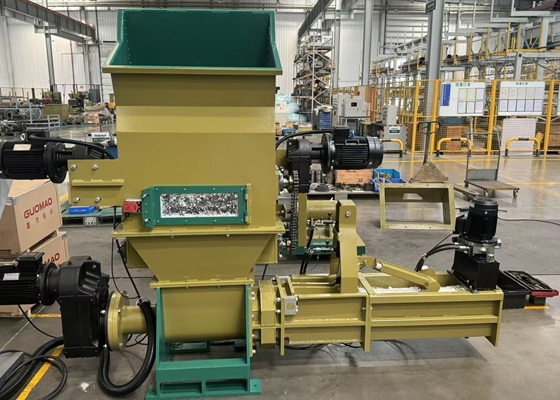
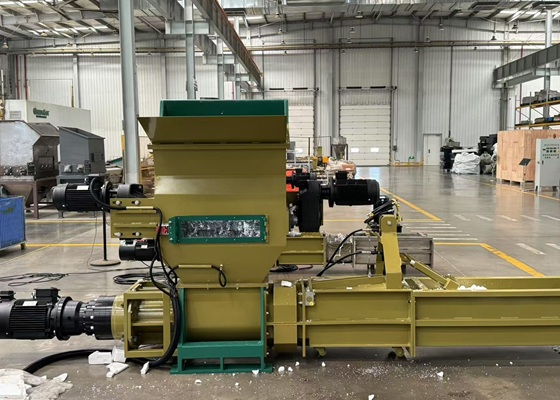
Mini EPS recycling machine A-C50: Compact footprint—about the space of one and a half cardboard boxes—easy to place in a workshop or corner.
Low power requirement: The A-C100 operates at under 11 kW, making it compatible with most standard industrial power supplies.
Even facilities with limited space can find a practical Styrofoam recycling solution.
In addition, the Apolo series foam compactors use a screw-based mechanical compression process with no heating required, resulting in lower energy consumption compared to other EPS volume-reduction systems.
3. Are you only handling waste, or planning to reuse it in production?
This is often overlooked by EPS cutters, but it directly affects equipment selection and utilization.
• If your goal is only waste handling:
A foam compactor is sufficient. Loose EPS can be compressed into high-density blocks at up to 50:1, making storage, transport, and resale much easier while quickly relieving space pressure. The GreenMax Apolo series EPS recycling machines use mechanical compression, which does not alter material properties, so the blocks retain strong resale value in the recycling market.
• If you plan to pelletize and reuse scrap in the future:
Equipment planning should be done in advance. EPS waste can be processed directly into recycled PS pellets on-site using a pelletizer, eliminating the need for a separate compression step and avoiding idle equipment later on.
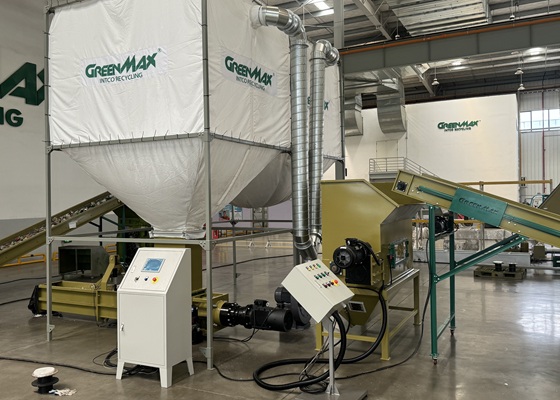
GreenMax has extensive experience in Styrofoam recycling and can help customers plan a step-by-step upgrade path—from volume reduction to material reuse—based on their stage of development.
For EPS foam cutters, recycling is not just an environmental choice but a practical way to reduce costs and improve efficiency. By addressing these three questions before investing in a foam compactor, foam recycling can be implemented more efficiently and sustainably.