 Select Language
 English
 Spanish
 Polish
 Japanese
 Italian
 French
5 Key PET Bottle Recycling Strategies for Recyclers
As beverage consumption continues to grow, PET drink bottles have become one of the most common—and most challenging—materials at recycling facilities. Residual liquid, strong odors, large volume, and high transportation costs can significantly increase operating expenses and create environmental risks if not handled properly.
As a result, more recyclers are shifting from simple stockpiling to systematic PET bottle recycling solutions, especially for scenarios involving full bottles.
Below, we break down five common challenges recyclers face and the corresponding solutions.
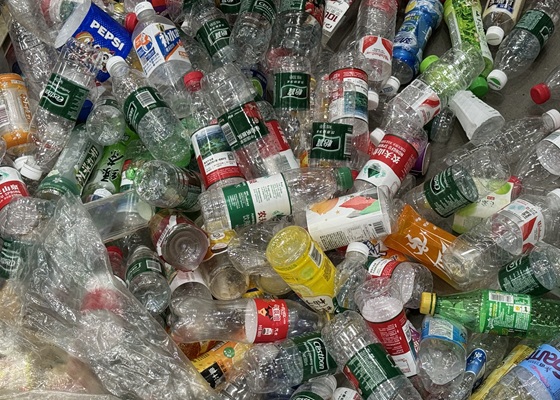
1. Residual liquid inside bottles: how to drain efficiently at low cost?
Collected drink bottles often contain leftover liquid. In some cases, recyclers also handle rejected products from beverage manufacturers. Manual cap removal and pouring is slow, labor-intensive, and unsuitable for large volumes.
A better solution is to use a plastic dewatering machine for automated bottle dewatering.
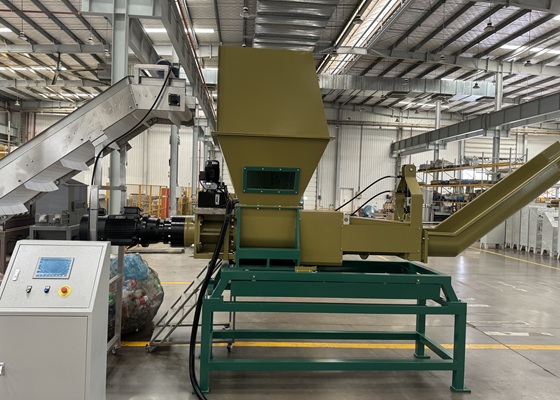
The GreenMax Poseidon Series PET bottle compactor is designed for full bottle recycling, significantly improving efficiency without increasing labor.
Its powerful screw compression and inclined discharge design allow residual liquid to flow smoothly into the collection tray, achieving up to 90% dewatering efficiency. Full bottles can be processed in batches, with caps automatically punctured or opened to quickly drain liquid.
2. Strict environmental requirements: how to reduce leaks, odors, and secondary pollution?
If liquid-filled PET bottles are not properly processed, leaks, fermentation odors, and even wastewater entering storm drains may occur, causing secondary pollution. With stricter regulations, PET bottle recycling must be more controlled and compliant.
The solution is equipment with enclosed dewatering and centralized liquid collection.
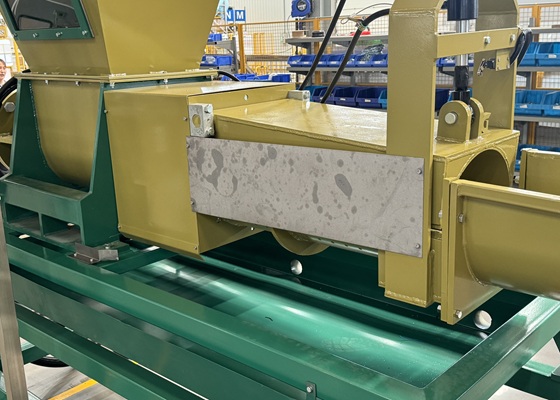
The GreenMax PET bottle compactor uses a closed bottle dewatering system that channels liquid into a collection tray, with optional piping for centralized discharge. This reduces leakage and odor spread. The stainless-steel tray resists low-pH beverages and offers long service life.
3. How to minimize transportation and logistics costs?
After dewatering, PET bottles still need to be transported for washing, shredding, and reuse. However, uncompressed bottles remain bulky, keeping transportation costs high. For recyclers paid by weight, compaction efficiency directly impacts profit.
The key is to complete PET bottle compaction during dewatering.
The GreenMax plastic dewatering machine continuously compresses bottles while draining liquid, achieving a compaction ratio of up to 10:1. This increases load density and significantly lowers cost per ton.
The machine can also be elevated and used with bulk bags, allowing processed PET bottles to be bagged directly for easier handling and transport.
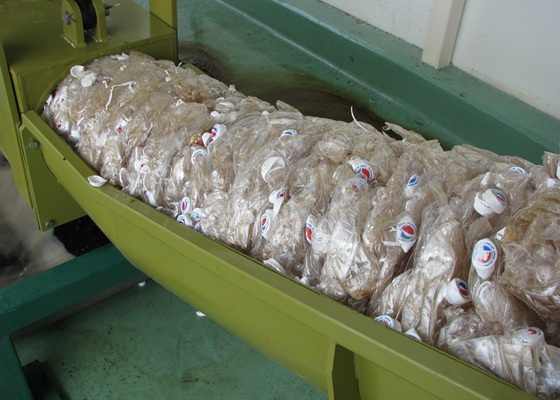
4. Not just PET bottles: how to handle more materials in the future?
Most recyclers do not stop at PET bottles. Many later expand into aluminum cans, Tetra Pak cartons, and other liquid-containing packaging. Planning for multiple materials at the lowest cost is essential.
A practical choice is multi-purpose full bottle recycling equipment.
In addition to PET bottles, the GreenMax Poseidon Series plastic dewatering machine can process aluminum cans, shampoo bottles, Tetra Pak packaging, and PE film, combining centralized liquid removal with simultaneous compaction. This supports current needs while leaving room for future expansion.
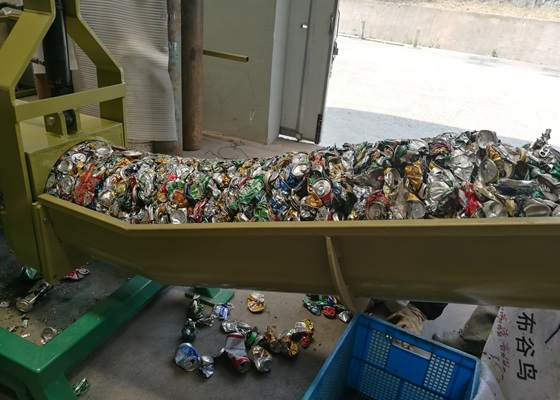
5. The key question: who buys compressed plastic bottles, and at what price?
For companies new to recycling, selling processed plastic bottles is the most critical issue.
Typical market conditions include:
· Main buyers: PET washing plants and plastic pellet producers
· Trading method: priced by the ton, with clear requirements for contamination, moisture, and compaction density
Compared with loose bottles, dewatered and compacted PET bottles are easier to sell and offer more stable pricing, making them essential for cash flow.
With years of experience in recycling, GreenMax has built a stable PET bottle recycling network. Beyond equipment, we help recyclers build end-to-end recycling pathways and access multiple sales channels—turning waste into real value and maximizing returns.