 Select Language
 English
 Spanish
 Polish
 Japanese
 Italian
 French
A Smarter Way to Large-Scale Aluminum Can Recycling: Efficient Drainage + High-Density Compaction
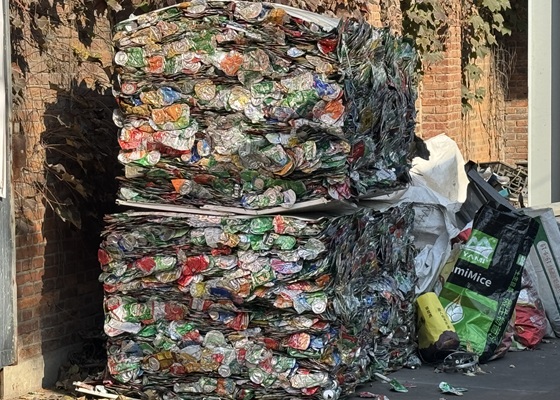
Empty aluminum cans are not just waste—they are valuable resources that can be recycled again and again. After recycling, aluminum cans can be remelted and made into new beverage cans, food packaging, construction materials, and automotive parts.
Looking at the source of aluminum can recycling, most scrap comes from beverage containers such as soda and juice cans. Both consumed containers and off-spec products from production can be recycled into new raw materials.
So what role should beverage producers, distributors, and even large supermarkets play in this recycling chain?
The answer is simple: fully drain the liquid, separate the empty cans, and compact them, turning discarded beverages into recyclable resources.
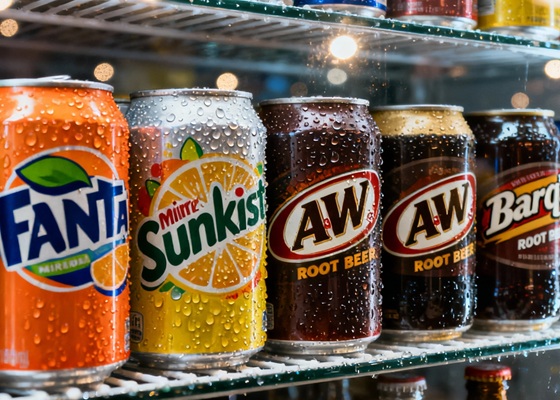
With a complete aluminum can recycling process, aluminum cans can be reused while the beverage liquid inside is handled in a safe and environmentally responsible way. At the same time, the volume per unit for transportation is significantly reduced, improving overall recycling profitability.
For large-volume recycling operations, the GreenMax aluminum can dewatering machine P-C900 is an ideal solution for processing liquid-filled aluminum cans, especially expired beverages or off-spec production rejects. The machine can handle up to 30,000 aluminum cans (330 ml) per hour, efficiently separating empty cans from the beverage liquid so both materials can be reused according to different applications.
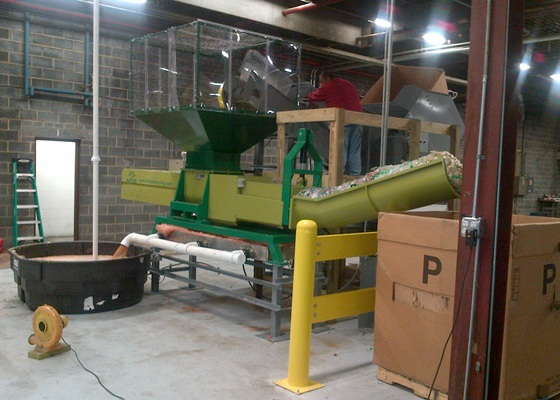
Liquid-filled aluminum cans are fed directly into the can compactor, where they first undergo dewatering and compaction to separate the can from the liquid. The output is clean, liquid-free aluminum cans compressed to about 1/10 of their original volume. After dewatering and aluminum can compaction, the material can be sold directly to downstream recyclers for reuse.
During the beverage can dewatering process, the liquid is collected in a sump and discharged through piping to a designated treatment point, minimizing environmental impact. The collected liquid can also be reused—for example, milk can be used as animal feed, while other beverages may be repurposed for food processing or industrial applications.
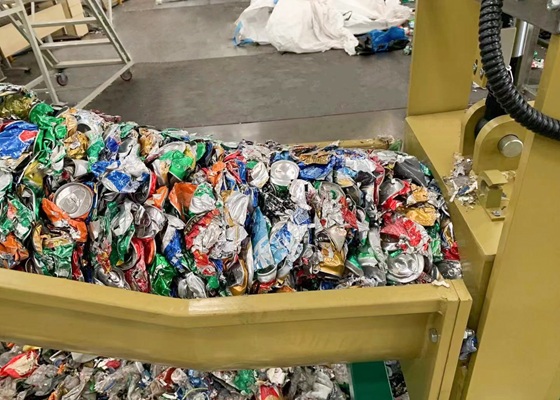
In addition, the aluminum can dewatering machine P-C900 can be integrated with the GreenMax beverage can baler to further compress drained aluminum cans into high-density bales. This significantly improves transportation efficiency and reduces logistics costs, enabling a one-stop aluminum can recycling solution:
• Bale size: 1400 × 700 mm, adjustable height approx. 700–1000 mm
• Bale weight: 350–500 kg per bale
• Output: 3–5 bales per hour
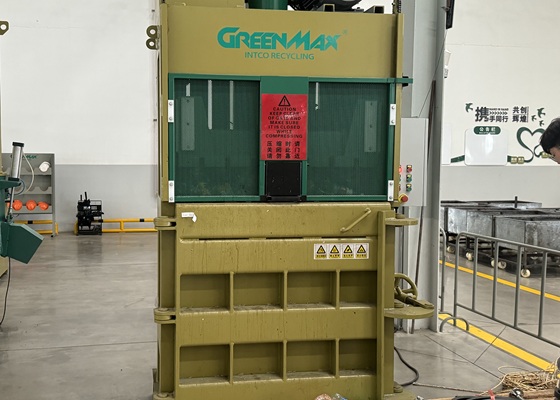
This can compactor system (aluminum can dewatering machine + beverage can baler) is designed for large-scale recycling operations, such as processing tens of thousands of aluminum cans per day, delivering an integrated solution for liquid removal and high-density compaction.
If the volume of aluminum can waste is lower but you want to start small- to mid-scale aluminum can recycling, especially for liquid-filled containers, the GreenMax aluminum can dewatering machine P-C350 is a practical option:
• Compact design with flexible operation
• Performs liquid removal and achieves 10:1 compaction
• Suitable for small and medium scenarios, such as processing several thousand cans per day
GreenMax supports one-stop recycling, enabling effective resource separation from discarded beverages—liquid drainage and collection, along with dewatering and compaction of empty aluminum cans—so both materials can be reused.