
 Select Language
 English
 Spanish
 Polish
 Japanese
 Italian
 French
Effective Solutions for PE Packaging Trim Waste
In the packaging industry, PE foam, often referred to as EPE foam, is widely used to protect electronics, automotive parts, and industrial equipment during shipping and handling. For packaging converters and foam fabricators, however, custom cutting and processing create a steady stream of trim waste. This material is bulky, lightweight, and highly resilient. Over time, it takes up valuable floor space, increases transportation and disposal costs, and creates ongoing operational headaches.
That is why more companies are paying closer attention to EPE recycling and looking for a practical way to manage PE foam scrap more efficiently. In most cases, their goals are straightforward:
· Reduce landfill and hauling costs
· Free up warehouse and production space by lowering foam volume
· Convert waste into a recyclable material with resale value
For many operations, these goals can be achieved by installing a polyethylene densifier directly at the facility. On-site processing reduces dependence on outside recyclers and offers a more efficient and controllable way to handle PE foam waste.
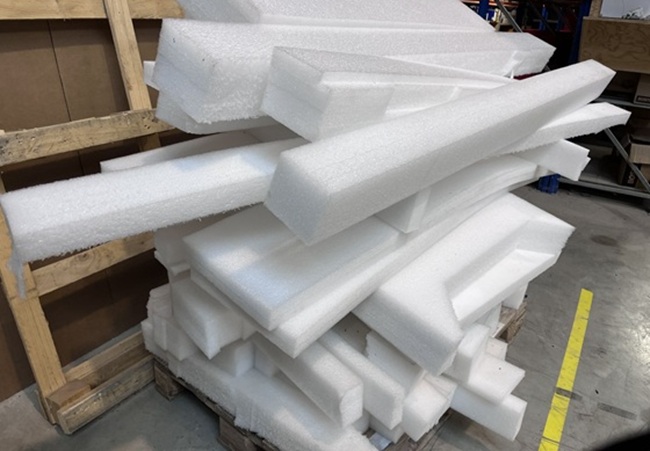
However, one common mistake is assuming that any foam compaction equipment can handle PE foam. Some converters see other companies using compression equipment for EPS or other foam materials and purchase similar machines, only to discover that those systems do not work well for PE foam. The result is often idle equipment, wasted capital, and the original trim waste problem still unresolved.
The reason is simple: PE foam has strong memory and rebound. Traditional cold compression methods often cannot deliver stable volume reduction because the material tends to spring back after being compressed.
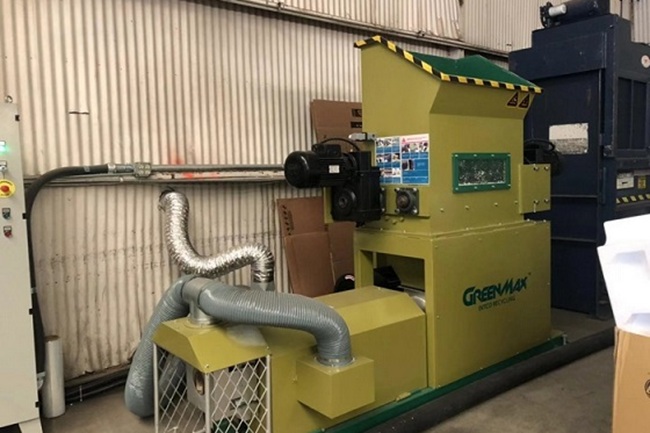
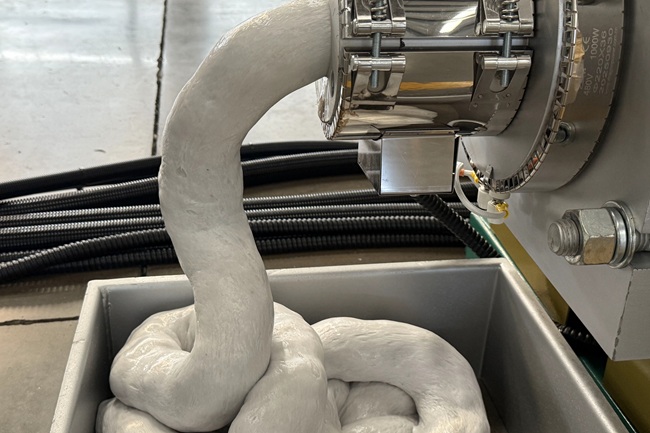
To address this challenge, GreenMax recommends a foam melting machine with thermal densifying capability. The machine first shreds the foam evenly, then heats it in a melting chamber until it reaches a softened or flowable state, and finally extrudes it through a screw system into dense blocks. Through this approach to polyethylene recycling, the material is fully melted and compacted into high-density output, which helps prevent rebound and expansion. This makes it a far more reliable solution for EPE volume reduction.
1. Lower Landfill and Transportation Costs
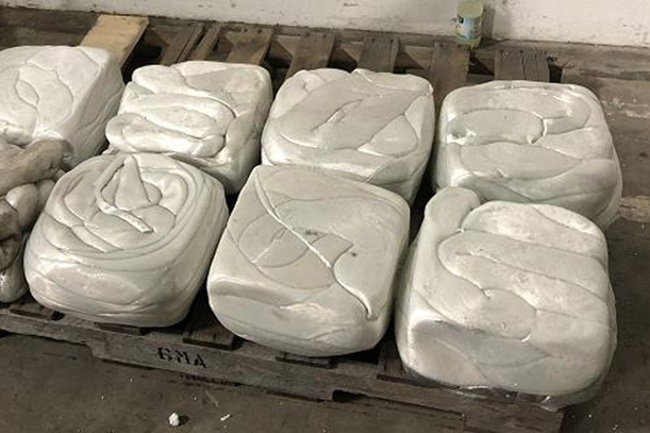
With the GreenMax Mars series foam melting machine, PE foam can achieve a volume reduction ratio of up to 90:1. Loose foam scrap is converted into neat, high-density ingots or blocks that are much easier to stack, store, and transport.
Once densified, the material can be placed directly on pallets, which significantly reduces shipping frequency and increases payload per load. This helps lower both logistics costs and waste handling expenses.
At the same time, EPE recycling can help companies reduce or even avoid landfill fees. After processing, PE foam is no longer just a waste stream. It becomes a recyclable raw material that can be used for re-pelletizing and the production of new packaging products. As a result, companies can cut landfill charges and reduce reliance on third-party disposal services. In many cases, revenue from selling densified blocks helps recover equipment investment in about one year.
2. Reduce Storage Needs and Free Up Valuable Space
Loose PE foam can pile up quickly and occupy a surprising amount of warehouse space. After thermal densification, its volume can be reduced by about 90 times, making a noticeable difference in day-to-day storage management.
For example, foam that originally occupies 9 cubic meters of space may be reduced to roughly 0.1 cubic meter after processing. That kind of reduction can immediately ease pressure on warehouse capacity and improve plant organization.
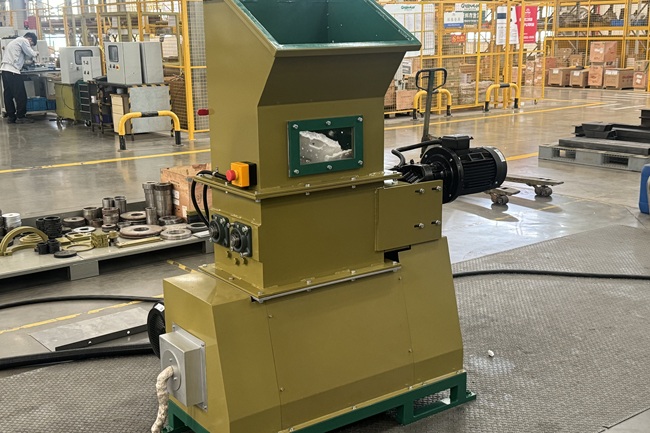
The GreenMax Mars series polyethylene densifier is also designed with a compact footprint. The M-C50, for example, is approximately the size of a cardboard box and can be placed flexibly in a corner of the warehouse or production area. It can continuously convert PE trim waste into dense blocks without taking up much room. For packaging converters with fast production cycles, this improves not only space utilization but also overall workflow efficiency.
3. Turn Scrap into a Revenue Stream
After processing, PE densified blocks have higher density and a stable form, making them suitable for sale to recyclers or manufacturers for re-pelletizing. These recycled materials can then be used to produce new packaging products and other plastic components.
Some packaging companies, such as Sealed Air, have already begun purchasing densified PE foam blocks for downstream processing into new packaging inserts and related products. This demonstrates that processed PE foam can have real value in the recycling market.
Foam treated by a foam melting machine generally has better marketability because it is easier to handle, store, and transport than loose scrap. It also costs less than virgin material. As environmental regulations become stricter, some regions now require plastic products to include a certain percentage of recycled content. Supported by both policy trends and cost advantages, recycled PE foam blocks are becoming increasingly attractive to downstream buyers.
Build an Efficient In-House EPE Recycling System
By establishing an internal EPE recycling process, packaging converters can turn bulky PE trim waste into a recycled resource with up to 90:1 volume reduction. This not only frees up a large amount of storage space, but also cuts disposal costs and creates a more stable source of income from material resale.
It is also important to note that, for PE foam converters, a thermal polyethylene densifier is generally more suitable than conventional screw-based cold compression equipment. Because PE foam is highly resilient, equipment with a melting function provides more stable processing and more reliable densification results.
Frequently Asked Questions
Why can’t standard cold compression equipment handle PE foam effectively?
PE foam has strong rebound characteristics. With mechanical screw compression alone, the material is difficult to keep in a compressed state and often expands again after processing. A machine with thermal melting capability solves this problem by heating the foam until it softens or flows, allowing it to be formed into a stable, high-density block.
Do PE foam densified blocks have market value?
Yes. Densified PE blocks are commonly purchased by recycling companies and raw material processors for re-pelletizing and reuse in the production of packaging products. Because of this, they typically have stable recycling demand and real resale value.