 Select Language
 English
 Spanish
 Polish
 Japanese
 Italian
 French
EV Battery Growth Makes EPP Packaging Recycling a New Priority
The rapid growth of China’s electric vehicle industry is driving the global expansion of the power battery supply chain. In 2024, China exported around 5.5 million vehicles, with electric vehicles accounting for nearly 40%. In 2025, China’s energy storage battery exports reached approximately 305.0 GWh. At the same time, battery manufacturers such as CATL, BYD, Gotion High-Tech, and EVE Energy are accelerating their presence in Europe, North America, and Southeast Asia.
Battery exports do not only move batteries across borders. They also create a growing demand for protective transport packaging. EPP foam is lightweight, impact-resistant, and highly resilient, making it an ideal “protective armor” for batteries during long-distance transportation.
However, once the batteries arrive at overseas assembly plants, the EPP packaging quickly completes its job. It is removed, stacked in warehouses, pallet areas, or even outdoor storage zones, gradually turning from a protective material into a waste management challenge.
With regulations such as the EU PPWR pushing packaging toward recyclability and circular use, plant managers are facing an important question: how can EPP packaging waste be handled in a compliant, economical, and efficient way?
The Common Solution for EPP Recycling
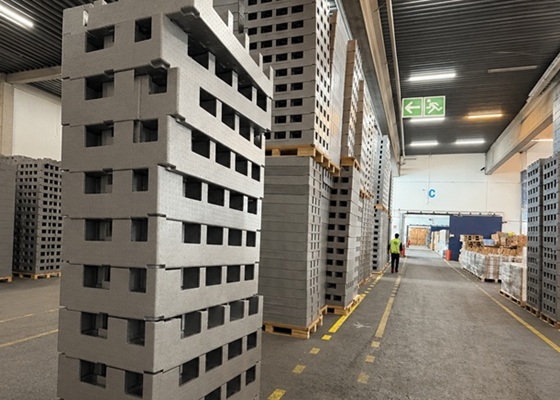
For EV battery-related plants, the most practical solution is to first reduce the volume of EPP waste and then sell the compacted EPP blocks to downstream pelletizing or material modification companies.
In the current market, black recycled EPP pellets may reach around 950 euros per ton, while compacted EPP blocks are usually priced at around 350–400 euros per ton. The actual value depends on material quality, color, density, cleanliness, and compaction level.
EPP foam has higher density and greater hardness than regular EPS, which makes it more difficult to compact. In addition, EPP packaging from different battery sources may vary in color, density, hardness, and impurity level.
If the blocks are not dense enough, transportation efficiency decreases. If the block shape is unstable, downstream sales may also be affected. Therefore, the key to EPP recycling is not simply “compressing” the foam, but making it denser, more stable, and more valuable.
GreenMax Customized EPP Foam Compactor Solution
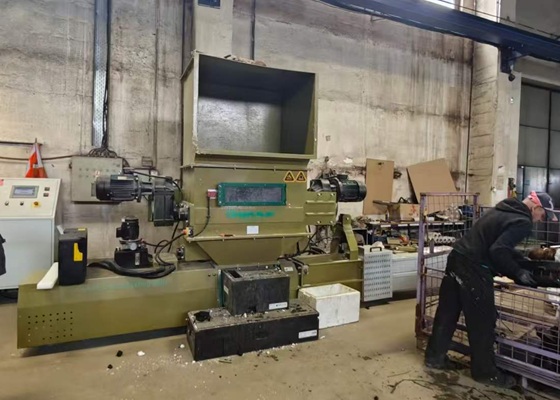
In European markets such as Germany, France, the Czech Republic, and Poland, the GreenMax Zeus series foam compactor has already been used in multiple EPP packaging recycling projects.
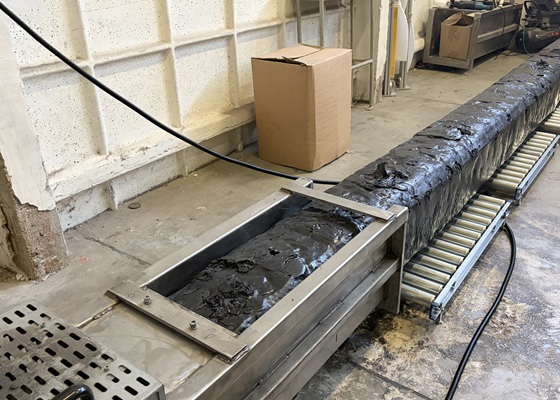
The machine uses screw extrusion combined with surface thermal bonding technology, allowing EPP foam packaging to be compacted into stable blocks of approximately 38×38 cm. This helps customers improve foam recycling efficiency while making storage, transportation, and sales easier.
Compared with fully melted foam blocks, cold-compacted EPP blocks are more widely accepted in the European downstream market. They are easier to crush, pelletize, and modify later. At the same time, cold compaction consumes less energy, making it a preferred choice for many European customers.
For example, a recycler in the Czech Republic selected the GreenMax EPP foam compactor Z-C200 to process EPP foam with a density of 40–70 kg/m³. To handle this high-density material, the machine was customized with two 5.5 kW motors in the crushing unit and a variable frequency system for the main screw, ensuring more stable processing performance.
Solving the Challenge of Mixed Densities
When EPP waste comes in different densities, using the same compaction parameters for all materials can easily result in loose or uneven blocks.
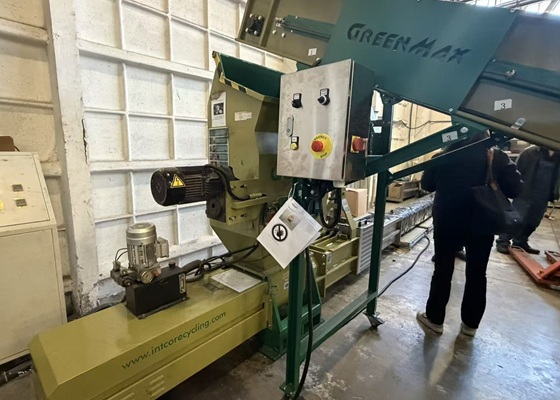
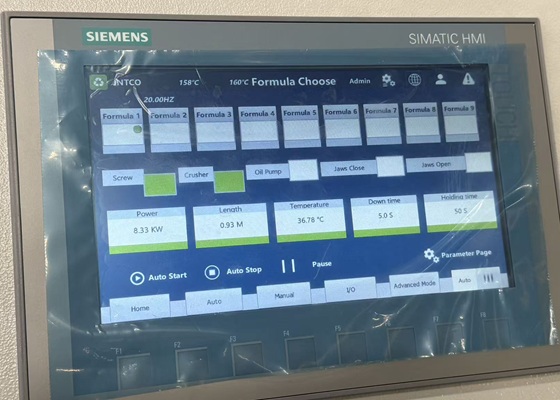
GreenMax foam compactor can be equipped with Industry 4.0 functions, allowing online monitoring and remote parameter adjustment. Before delivery, GreenMax can test the customer’s actual material and save suitable parameters into the system, making the machine easier to operate once it arrives on site.
In the Czech project, the machine had been running well for more than two months, but the customer encountered parameter adjustment issues when switching between materials of different densities. In May 2026, the GreenMax team visited the customer’s site, worked with engineers through remote support, and helped complete material testing, parameter optimization, and recipe saving. As a result, the compacted blocks became denser, more stable, and more suitable for downstream sales.
From Front-End Equipment to Downstream Reuse
In Europe, one container of compacted EPP blocks usually loads around 12–14 tons. With suitable parameters and proper maintenance, the GreenMax EPP foam compactor can help some customers reach approximately 18–20 tons per container, improving transportation value.
More importantly, GreenMax does not only provide foam recycling equipment. We have also built a closed-loop model that includes volume reduction equipment, global recovery channels, pelletizing in Malaysia, and downstream applications.
GreenMax can purchase compacted EPP blocks worldwide for pelletizing, modification, and the production of new PP products. Because GreenMax is directly involved in the downstream side of EPP recycling, we better understand what types of compacted blocks are easier to sell and what materials are more suitable for pelletizing and modification.
FAQ
1. Is hot melting or cold compaction better for automotive battery EPP packaging?
Most European customers prefer cold compaction. Cold-compacted blocks keep the material condition clearer, making them easier to crush, pelletize, and modify. They also tend to have better market acceptance.
However, hot melting equipment can also process EPP foam packaging. If the customer wants higher container loading weight and maximum volume reduction, GreenMax can also provide a hot-melting foam recycling solution.
2. What after-sales support does GreenMax provide?
GreenMax compacting equipment comes with a one-year warranty and long-term spare parts supply. Our team visits customers regularly to inspect equipment, optimize parameters, and provide operation guidance.
In many regions, GreenMax also works with local partners to provide faster on-site service. In addition, the equipment can be equipped with Industry 4.0 functions, allowing remote adjustment of compaction programs and quick support for operation issues.