
 Select Language
 English
 Spanish
 Polish
 Japanese
 Italian
 French
Expired Beverage Bottle Handling | Recycling Solutions for Liquid, Labels, and Plastic Bottles
For beverage co-packers and packaging manufacturers, expired drinks in plastic bottles are not an occasional problem. They are a type of waste that continues to appear throughout production and product turnover. Filling errors, labeling mistakes, damaged packaging, near-expiration inventory, customer returns, and failed inspections can all lead to a steady buildup of bottled beverages that need to be handled. Especially when production lines are running steadily and order volume is high, this type of waste often becomes a long-term and recurring issue in daily plant operations.
These bottles filled with liquid are not easy to handle. They take up space, increase material handling work, and put more pressure on storage capacity. For beverage co-packers, the more practical question is how to process expired bottled drinks quickly while minimizing production losses. As a leader in plastic bottle recycling, GreenMax explains the recycling approach for each part of the bottle so beverage plants can better understand the process and build a practical foundation for recovery and reuse.
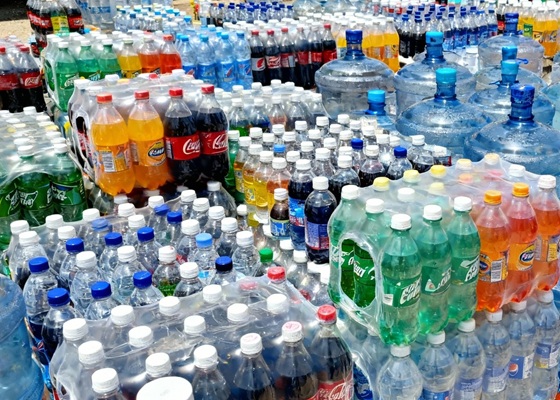
Beverage Liquid: Drain First and Centralize Handling
The first step in filled bottle recycling is liquid separation. If the liquid is not removed first, it will affect downstream volume reduction, increase transportation weight, and add more pressure to on-site cleaning and handling.
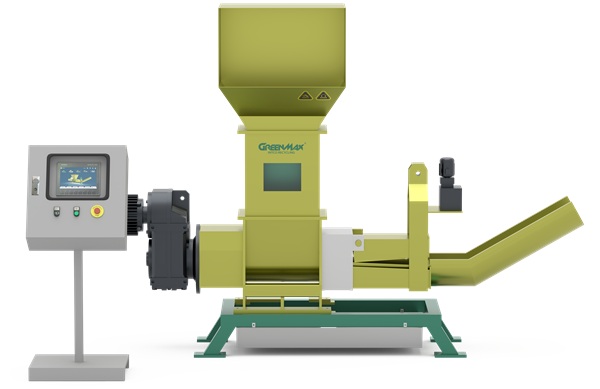
At this stage, a plastic dewatering machine can be used to squeeze and separate whole bottles, splitting the liquid from the plastic packaging. After large volumes of beverage bottles enter the machine, the screw continuously compresses them and separates the liquid from the bottles. The extracted beverage liquid is collected in a drain pan and then discharged through piping into a storage tank.
After separation, the plastic bottles continue moving through the screw and are pushed toward the discharge chute. Because the chute is designed with an upward incline, any remaining liquid can flow back into the collection pan for secondary draining, helping the system achieve an overall dewatering rate of about 90%. The separated liquid can then be directed to feed, fermentation, or organic treatment systems, while the remaining bottle packaging can continue into the recycling process.
Bottle Labels: Delabeling to Improve Material Purity
The label on the bottle is also an important factor affecting recycling value. Proper label removal helps improve incoming bottle quality, makes downstream washing easier, and allows the material to be sold at a better price to washing plants or pelletizing facilities.
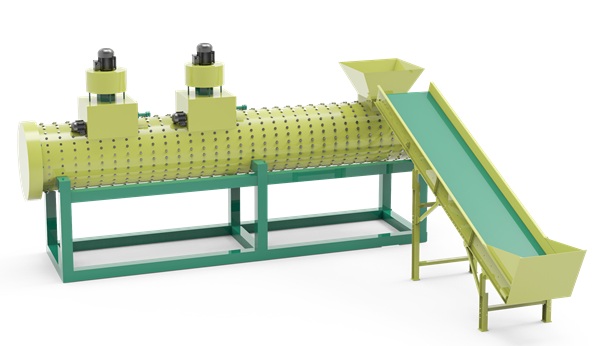
Inside a PET bottle delabeler, the drum is equipped with rotating blades fitted with alloy plates. As the machine runs, the blades continuously rub against the bottle surface labels and the inner wall of the drum, stripping the labels away. The bottles then move into the air separation chamber, where airflow from the fan blows the labels out while the PET bottles drop downward, completing the separation of labels from the bottle body.
Bottle Compression: High-Density Baling to Lower Storage and Freight Costs
After liquid separation and delabeling, the remaining bottle bodies still take up a large amount of space. Without further densification, they continue to consume storage space and increase hauling frequency. At the same time, downstream recyclers generally prefer to receive high-density PET bottle bales, so the bottles usually need to be compressed before sale.
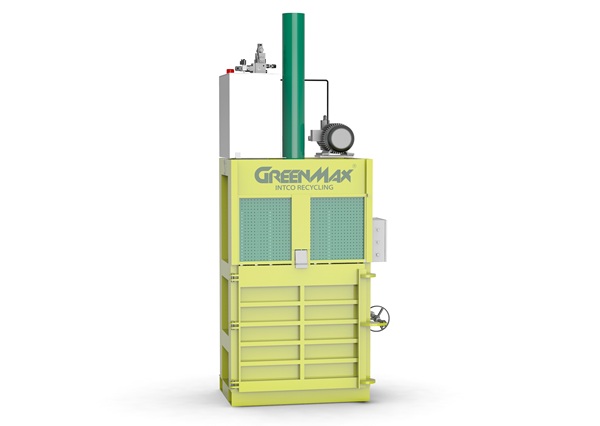
A vertical PET bottle baler can bundle the processed bottles into dense bales measuring about 1150 × 650 × 900 mm, with a bale weight of about 300 kg. The machine footprint is about 2.2 × 0.95 m, and it can produce about two bales per hour. This makes it suitable for placement in a corner of the plant, where it can compress large volumes of empty beverage bottles into dense bales for easier storage, transportation, and resale.
How Different Types of Factories Can Choose the Right Solution
For beverage plants of different sizes, plastic bottle recycling solutions can also be matched more precisely to actual needs.
If the plant only handles small quantities or deals with expired bottled beverages on an occasional basis, it may make sense to start with a plastic dewatering machine. Basic liquid separation can already reduce weight and volume to some extent and help ease on-site storage pressure. As the business expands and waste volume increases, a PET bottle baler can be added later for more flexibility.
If the plant generates large volumes of expired bottled beverages on a long-term and stable basis, then a combined dewatering + baling solution is usually more suitable. This allows the facility to complete filled bottle recycling in one integrated process and is better suited for continuous operating conditions.
In addition, if the plant is handling empty bottle recycling rather than expired beverage bottles that still contain liquid, then a delabeler + baler setup may be the better option. Removing labels first and then compressing the bottles can lower transportation and storage pressure while also improving material purity and added value for downstream recycling.
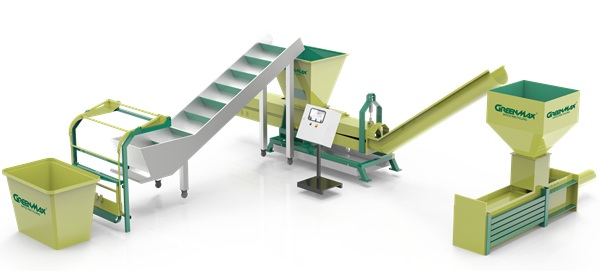
For beverage co-packers and packaging manufacturers, expired plastic beverage bottles are not a temporary problem. They are a steady and recurring production waste stream. Instead of relying only on outside hauling, companies can build a more suitable recycling process based on waste condition and volume, making handling more efficient and improving the value of the recovered material.