 Select Language
 English
 Spanish
 Polish
 Japanese
 Italian
 French
GreenMax at the Tokyo Environmental Exhibition: New J-C50 Supports Automotive EPP Packaging and Agricultural Film Recycling
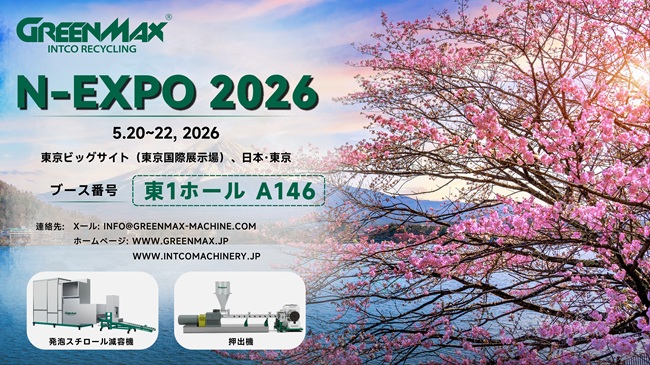
GreenMax has successfully wrapped up its presentation at the Tokyo environmental exhibition. During the event, GreenMax introduced the new J-C50 model, developed around the Japanese market’s demand for compact equipment, safer operation, and stable long-term performance.
In addition to the new machine, GreenMax presented practical recycling solutions for automotive EPP foam, EPS packaging waste, agricultural film, and other plastic film materials, helping automakers, recyclers, and waste-generating factories find workable recycling paths.
J-C50 Debuts as a New Option for Multiple Foam Waste Streams
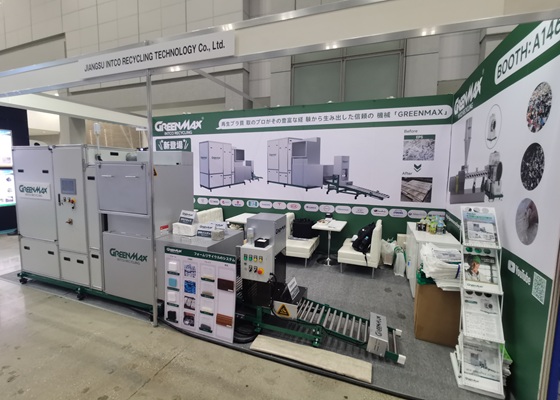
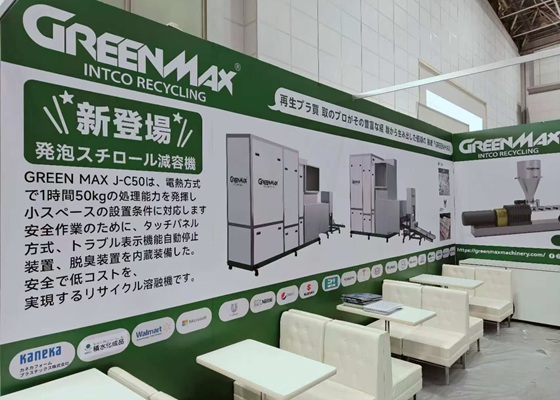
The J-C50 uses electric heating and can process EPS, EPP, EPE, and XPS foam waste, making it suitable for multiple materials in one machine. Compared with older hot-melt densifier models, the J-C50 uses a safer melting method: the melted material does not come into direct contact with the heater, and the heater can be replaced without disassembling the melting section, making maintenance easier.
The machine is also equipped with a touch-screen control system, fault display, automatic shutdown device, and built-in activated carbon deodorization unit. The feeding inlet, crushing chamber, crushing blades, and extrusion screw are all made of stainless steel, improving corrosion resistance and making the equipment better suited to Japan’s expectations for safety, cleanliness, and stable operation.
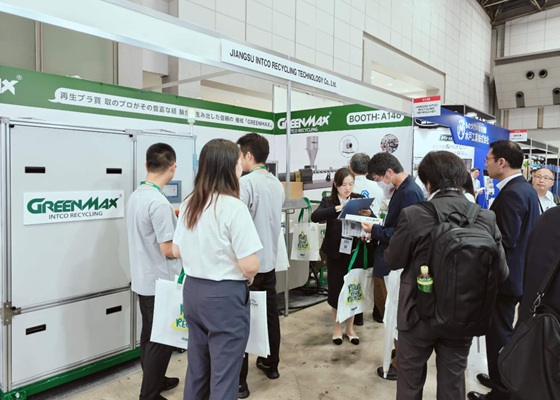
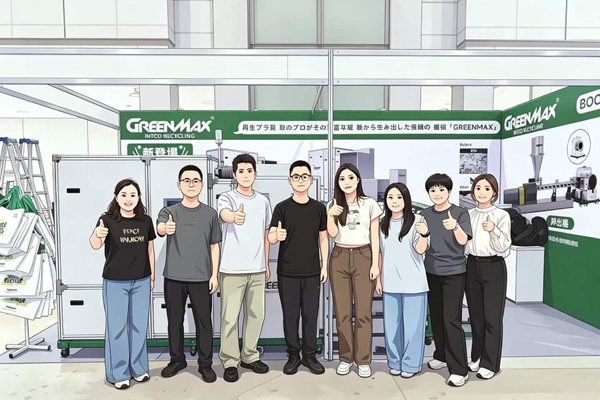
At the exhibition, live J-C50 testing, touch-screen operation demonstrations, and displays of the color and shape of processed Styrofoam output attracted many visitors to the GreenMax booth. GreenMax engineers, the sales team, and the Japanese machinery agent worked together to explain the operating principles, demonstrate the machine, and run multiple trials so customers could clearly see the foam volume reduction effect.
For Automotive Manufacturers: How Can EPP Packaging Waste Be Recycled?
For automotive manufacturers, assembly plants, and auto parts suppliers, EPP foam waste was one of the key topics at the exhibition. EPP is commonly used in bumpers, cushioning parts, toolboxes, seat supports, and protective packaging. Because it is bulky and lightweight, untreated EPP takes up significant storage space and creates high transportation costs.
For this type of waste, GreenMax can provide an EPP foam compactor as well as guidance for downstream pelletizing and material modification. The J-C50 shown at the exhibition is one of the available options. It can efficiently reduce the volume of EPP foam by up to 90 times, helping customers lower storage and transportation pressure.
GreenMax can also provide recommendations for pelletizing and modifying EPP packaging waste. Some recycled EPP pellets can be reused directly, while many materials require modification before being made into new products. Backed by INTCO Recycling’s experience in recycled materials, GreenMax can help downstream customers explore more complete application routes.
GreenMax currently also offers a purchase service for compacted EPP blocks, helping customers connect foam waste treatment with a reliable downstream recycling channel.
For Recycling Companies: Film Waste Also Needs a Professional Solution
In addition to Styrofoam and EPP foam recycling, many recycling companies and waste-generating factories at the exhibition showed strong interest in agricultural film, packaging film, and other flexible plastic waste. Film waste often contains heavy contamination, soil, organic matter, or moisture. It is also loose in volume and difficult to pelletize directly. Agricultural film in particular usually requires shredding, washing, dewatering, and drying before it can be recycled effectively.
As regulations and industry expectations for agricultural plastic waste management continue to rise in Spain, Central America, and South America, standardized recycling, washing, and reuse have become increasingly important. To meet these needs, GreenMax can design a film washing recycling machine according to each customer’s actual material condition.
A film washing recycling machine can include shredding, friction washing, rinsing, dewatering, drying, and connection to downstream pelletizing. Whether the material is agricultural film, packaging film, or PE/PP flexible plastic, GreenMax can configure the right film washing line based on contamination level, required capacity, site conditions, and final product requirements, helping customers improve material cleanliness and recycling value.
GreenMax can also help customers visit local recycling case sites to see actual equipment performance and processed material results. Customers are also welcome to visit the GreenMax factory for material trials, making it easier to evaluate whether the proposed solution fits their needs.
Strong Recycled Material Demand Creates Clear Opportunities
During the Tokyo environmental exhibition, GreenMax not only introduced the new J-C50 model, but also showcased EPP foam compactor solutions and film waste treatment options. GreenMax also held in-depth discussions with suppliers of compacted PS blocks, clean PET flakes, and recycled trading pellets.
Due to recent international market conditions and recycled material trends, demand for recycled materials remains strong, and some markets are seeing tight supply and active competition for available materials. This makes now an important time for companies to participate in the recycling industry.
With the right recycling equipment, companies can process foam and film waste in a more environmentally responsible way while also selling compacted blocks, recycled pellets, and other materials at higher value. GreenMax offers EPS and EPP foam purchasing services. For more information, please contact us by email or WhatsApp.
FAQ
1. What services can GreenMax provide?
GreenMax provides not only foam compacting, pelletizing, and film washing recycling machine equipment, but also solution design based on customer materials, material testing, visits to real project sites, equipment commissioning, and downstream buyback or recycled application suggestions. These services help customers build a more complete recycling chain.
2. What equipment is suitable for automotive EPP packaging waste?
If the main goal is to reduce volume and lower transportation costs, customers can choose a GreenMax EPP foam compactor or a foam volume reduction machine such as the J-C50. Compacted EPP foam blocks are easier to store, transport, and send for downstream pelletizing or material modification.