
 Select Language
 English
 Spanish
 Polish
 Japanese
 Italian
 French
GreenMax Hydraulic Polyethylene Compactor: A Real Factory Test and a New Option for PE Foam Recycling
In polyethylene recycling, traditional cold-press machines usually achieve a compression ratio of around 50:1. For some customers, this density is still not ideal, especially when storage and transportation costs need to be further reduced.
To explore a better solution, GreenMax recently conducted a PE foam compression test in its factory using the GreenMax hydraulic polyethylene compactor H-C200 series. The test achieved a satisfying result: PE foam waste was successfully compressed to approximately 70:1, providing a more efficient option for PE foam recycling.
Advantages of the H-C200 Hydraulic Compactor
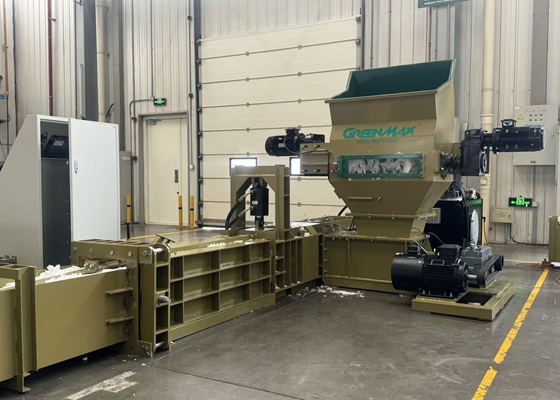
The GreenMax H-C200 series can process up to 200 kg of foam waste per hour. Its compressed density can reach 300–380 kg/m³, with a compression ratio of around 70:1. The machine combines screw feeding and hydraulic compression, making it suitable for EPS, EPP, PU foam, PE foam, and other foam materials.
Compared with traditional cold-press equipment, it offers a higher compression ratio without the risk of material melting. Compared with a hot-melting PE foam densifier, it consumes less energy and does not produce odor. In this way, the machine combines some of the advantages of screw compaction and hot-melting volume reduction: wider material compatibility, better compression performance, and lower energy consumption.
Another important advantage is the value of cold-compressed material. Cold-pressed foam generally has better market value because the original material properties are better preserved. When used for recycled pellet production, cold-pressed material often performs better than melted material, making it a better choice for customers with downstream recycling requirements.
How the Hydraulic Polyethylene Compactor Works
The main working process is: feeding → shredding → screw feeding ⇆ hydraulic compression → forming → cutting → storage.
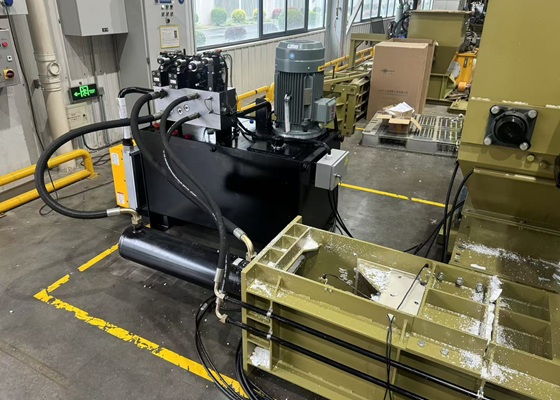
After PE foam waste enters the machine, it is first shredded into smaller pieces. The shredded material is then transported by the screw to the hydraulic compression area. Once the hydraulic system starts, the hydraulic pump generates high pressure, pushing the hydraulic plate to repeatedly compress the foam pieces inside the chamber. Under strong pressure, the foam volume is greatly reduced and finally formed into compact blocks.
It is worth noting that the feeding system and hydraulic system work alternately. When the screw moves forward to feed material, the hydraulic system does not compress. When the hydraulic system is compressing, the screw feeding pauses. This alternating operation helps reduce energy consumption while keeping the PE foam recycling process more stable.
Challenges During the Factory Test and GreenMax Solutions
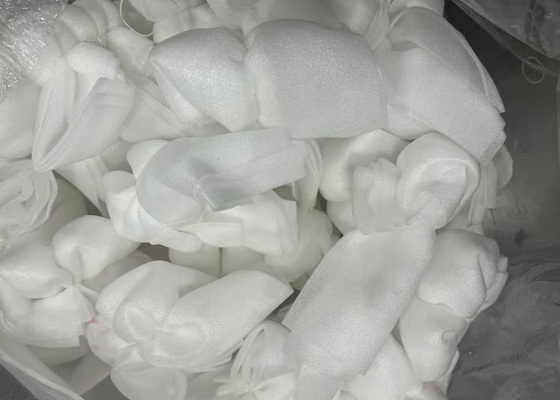
The material tested this time was PE foam film. This type of material is flexible, lightweight, and tough, so it can cause two common problems during shredding and compression.
The first problem is wrapping. Because the film is soft and flexible, it can rotate with the cutter shaft and wrap around the shredding blades. To solve this issue, GreenMax engineers recommend increasing the number of blades on the shredding shaft to improve cutting frequency. The shredding chamber can also be designed with an openable door and removable blades, making it easier to clean and maintain if wrapping occurs.
For manual feeding, a continuous, even, and small-batch feeding method is recommended. For automatic production lines, a variable-frequency conveyor can be used to control the feeding speed and keep the shredding system under a stable load.
The second problem is bridging. Since shredded PE foam film is very light, it can easily accumulate at the inlet of the compression chamber and block the material flow. To prevent this, an agitator can be added between the shredding chamber and the compression chamber to continuously stir the foam pieces and prevent them from forming an arch.
A forced screw feeding device can also be added to actively push lightweight material into the compression area, reducing dependence on gravity feeding. If necessary, the inlet structure of the compression chamber can be optimized and slightly enlarged to help the material enter more smoothly.
A New Option for PE Foam Recycling
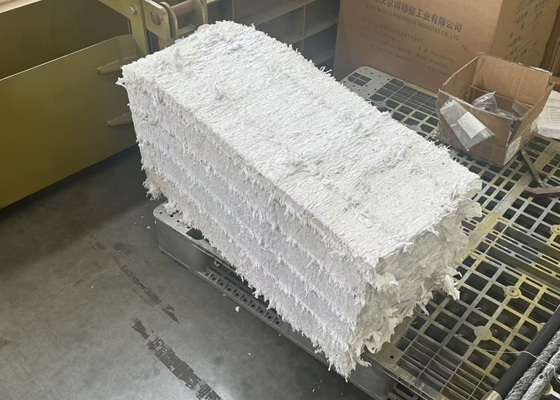
The GreenMax factory test was successful. The compressed PE foam blocks were dense and stable, with a size of approximately 420 mm in height and 390 mm in width. The compression ratio reached around 70:1.
In many cases, when a cold-press PE foam densifier processes PE foam, an additional surface heating device is needed to improve block forming. However, in this test, the hydraulic compactor achieved stable forming without any extra surface melting treatment.
This shows that the GreenMax hydraulic polyethylene compactor can provide a new option for PE foam recycling: higher compression density, lower energy consumption, and better preservation of material properties.
At the same time, this factory test also helped GreenMax summarize practical experience in handling PE foam film wrapping and bridging problems, offering a more reliable technical reference for future polyethylene recycling projects with similar materials.
Below is the video of the PE foam hydraulic compression test conducted in the GreenMax factory.