 Select Language
 English
 Spanish
 Polish
 Japanese
 Italian
 French
How a Foam Densifier Turns Appliance EPS Foam Packaging from a Cost Burden into Revenue
In the U.S., online appliance sales, home delivery, installation, and haul-away services have become a normal part of the customer experience. For large household appliances such as washers, refrigerators, and TVs, retailers and distributors are increasingly expected to deliver the unit, install it, remove the packaging, and leave the customer with a ready-to-use product.
That also means distribution centers and installation teams are constantly bringing back large amounts of EPS packaging waste. To protect appliances during transportation, manufacturers use large quantities of EPS foam for cushioning, impact protection, and product stabilization. This foam is usually quite clean, but it is extremely bulky. It may not seem heavy, yet it quickly takes up warehouse space. In many cases, companies end up paying third parties to haul it away or sending it directly to landfill.
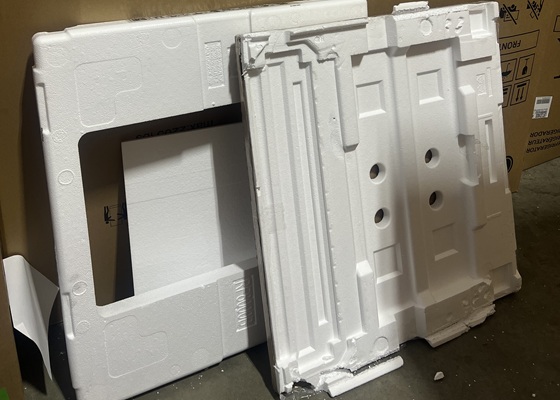
That approach is becoming less practical. In the U.S., sustainable packaging expectations are rising, more states are adopting EPR-related legislation, and businesses are under greater pressure to manage packaging waste more responsibly. For appliance distribution centers that continuously generate EPS or PE foam packaging waste, simply treating it as trash no longer fits the direction of the market.
Because of that, appliance delivery operations can turn this waste stream into a new EPS recycling project. Appliance packaging is usually clean, which makes it more attractive in the recycled foam market. Instead of paying ongoing costs to handle loose foam, companies can reduce the material volume directly in the warehouse and then sell compressed foam blocks to downstream recyclers. This can lower hauling and storage costs while also creating an additional revenue stream.
How a Foam Densifier Supports Polystyrene Recycling
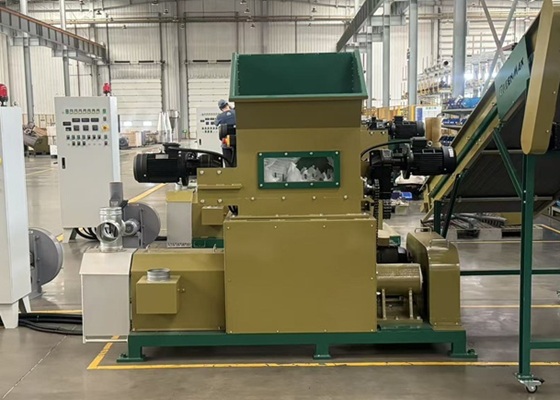
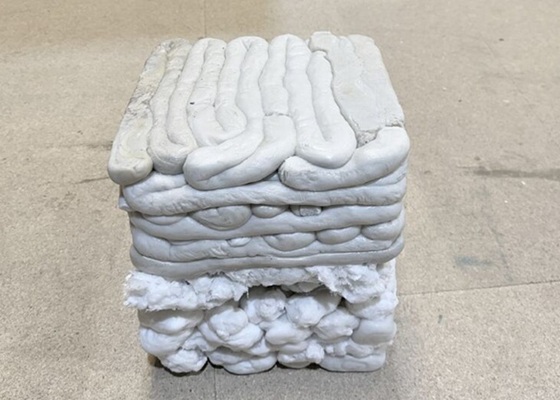
This kind of polystyrene recycling project is usually carried out with a foam densifier. The working principle is straightforward. EPS waste enters the machine, where heat and continuous screw pressure soften the material into a semi-fluid state. The air inside the foam is removed, and the material is then extruded into a dense block.
As a result, loose and bulky foam is converted into compact, uniform blocks. The volume can be reduced by up to 90:1, making storage, loading, transportation, and resale much easier. This is one of the most common and practical forms of EPS recycling today.
These compressed EPS blocks are typically sold to plastic product manufacturers or EPS packaging producers and then reprocessed into new materials. In GreenMax’s case, as a manufacturer of polystyrene recycling system equipment under INTCO Recycling, the company also purchases EPS compressed blocks globally. The recovered material is sent to INTCO pelletizing plants, processed into recycled pellets, and then made into products such as outdoor decking, acoustic wall panels, and picture frames.
Will a Foam Densifier Create Odor Problems?
Many appliance companies worry about one practical issue. A foam densifier offers a higher reduction ratio and keeps the work area cleaner because it does not create excessive loose fragments, but will high-temperature processing create odor and affect the work environment or employee health?
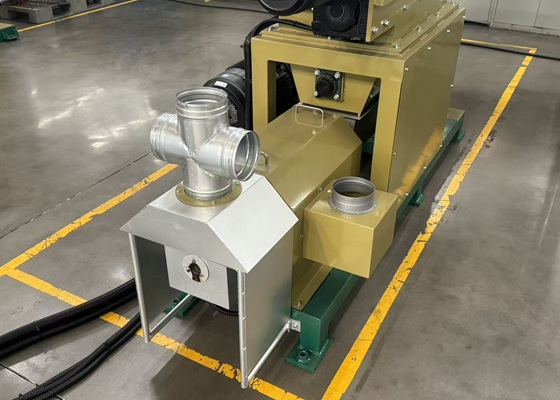
This is a common concern with hot-melt style polystyrene recycling system equipment. To address it, GreenMax has made several improvements. First, the machine can be equipped with a professional exhaust system and activated carbon odor control to direct and reduce emissions. Second, the system includes a larger hopper and a soft protective cover to help limit odor spread in the working area. Third, the machine has passed SGS odor testing. SGS is an independent third-party testing organization, and this report helps companies evaluate equipment emissions and better assess their impact on the workplace environment.
A U.S. Case: TL Furniture
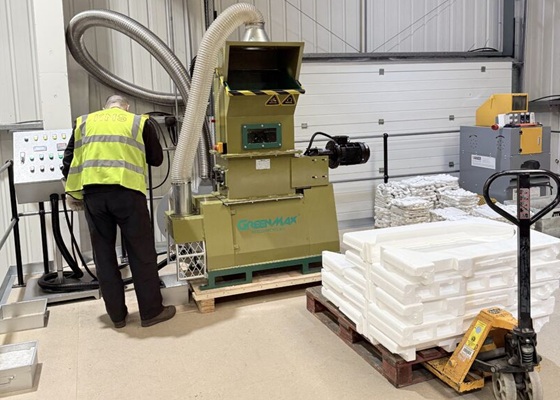
GreenMax provided this type of EPS recycling solution to TL Furniture, a U.S. furniture distribution company serving retailers. During furniture delivery, the company generated a steady amount of polystyrene packaging waste but did not have an efficient way to process it. Because TL Furniture already valued recycling and environmental responsibility, and had been recycling cardboard for years, it did not want to keep landfilling EPS foam packaging.
Since TL Furniture’s foam volume was not extremely large, GreenMax recommended the compact M-C50 foam densifier. This machine has a footprint about the size of a carton, is easy to move, and can still process about 50 kg of waste per hour with a reduction ratio of up to 90:1. It is also simple to operate, so even delivery drivers can learn to use it quickly.
Today, the company not only handles its own packaging waste, but also collects foam from downstream retail stores and sells the compressed blocks to downstream recyclers. The market price is around USD 580 per ton, although it changes with market conditions. GreenMax follows up regularly on equipment usage, and since purchasing this polystyrene recycling system in 2021, TL Furniture has continued using it and remains satisfied with the results.
From Waste Cost to Recycling Revenue
This kind of polystyrene recycling project does more than solve a packaging waste problem. It can also improve a company’s public sustainability image and strengthen its market position.
If your distribution center generates large amounts of foam waste every month, it is worth seriously considering a recycling investment. With e-commerce, home delivery, and installation services continuing to grow in the U.S., EPS waste is not going away. It will continue to appear steadily over time.
The earlier a company builds its own EPS recycling process, the easier it becomes to turn a handling burden into a more controllable and more profitable operation. GreenMax can also purchase compressed EPS blocks to help companies build a more stable downstream sales channel.
Common Questions
1. Is EPS waste from appliance distribution centers suitable for recycling?
Yes. In most cases, this type of foam comes from the packaging of new appliances, so it is relatively clean, contains fewer impurities, and is more widely accepted by downstream recyclers.
2. Why not just keep using a third-party waste handler?
That is still possible, but over the long term it is usually more expensive, and the service pace may not always be stable. By comparison, a one-time investment in a foam densifier to reduce volume can lower warehouse pressure and transportation costs while also turning waste into saleable foam blocks. In many cases, companies can recover the investment within one to two years and then continue generating value.