 Select Language
 English
 Spanish
 Polish
 Japanese
 Italian
 French
How to Choose the Right Stage of EPS Recycling: Shredding, Densifying, or Pelletizing?
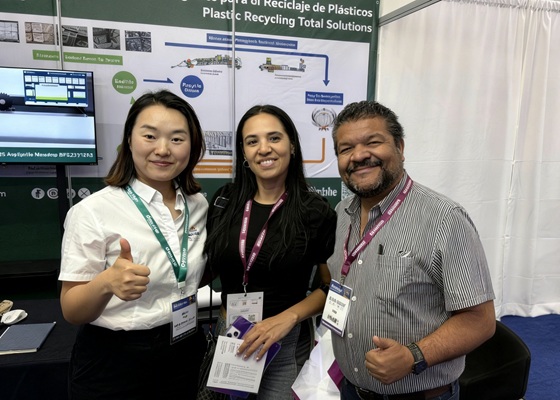
GreenMax officially concluded its exhibition in Guadalajara, Mexico, on March 26, 2026. During the event, many visitors came specifically to ask about solutions for handling EPS waste. The reason is straightforward: Guadalajara is an important electronics manufacturing hub in Mexico, and EPS foam remains one of the most widely used packaging materials for electronic products. As a result, there is strong and practical demand in the local market for reliable EPS recycling equipment.
As a professional brand in the EPS recycling industry, GreenMax believes it is important to use this opportunity to explain the three main stages of EPS recycling more clearly. Different companies have different waste volumes, budgets, and recycling goals, so the best solution depends on where they are starting and what they want to achieve.
Understanding the Local Market in Mexico: Why Is Processed Foam More Valuable?
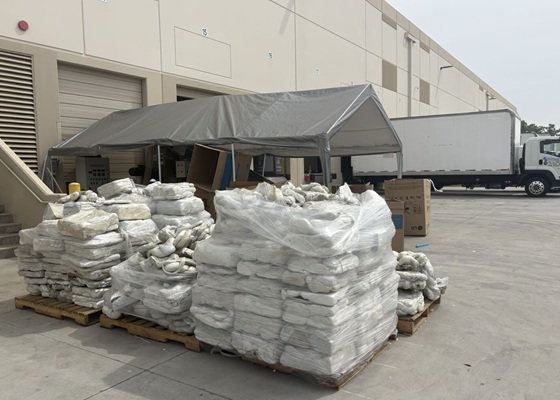
In the Mexican market, unprocessed EPS foam usually has little to no resale value. In many cases, companies must pay to have it hauled away or sent to a landfill. But once the material goes through even basic recycling processing, its value can increase significantly. At that point, it is no longer just waste. It becomes a recyclable commodity.
Locally, cold-compacted EPS blocks typically sell for about $650 per ton. EPS foam that has only been shredded can sell for approximately $554 to $777 per ton. The key difference between these two products is volume and transportation cost. After cold compaction, foam volume can be reduced by about 50:1, while shredding provides only limited volume reduction.
Stage 1: Shredding
The Lowest Investment, the Lowest Barrier to Entry, and a Good Starting Point for New Recyclers
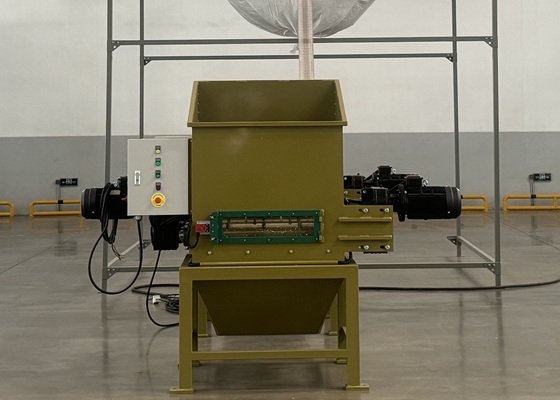
A GreenMax foam shredder can process large EPS waste pieces into uniform flakes of about 1.2 to 2 inches, which can then be bagged for storage or sale. Compared with loose, bulky foam, shredded material is much easier to bag, stack, and transport. In practical terms, its volume can often be reduced to about one-third to one-fifth of the original bulk.
Shredding is almost always the first and most basic step in the recycling process. Because of that, even if a company has not yet decided whether it will later move into densifying or pelletizing, a foam shredder remains useful. It can easily connect to downstream recycling equipment later, which means there is less risk of the machine becoming idle.
This stage is especially suitable for:
· Companies trying recycling for the first time
· Businesses that do not want to invest too much upfront
· Factories that do not generate very large volumes of waste
For example, for smaller electronics assembly plants or logistics and packaging companies that mainly generate packaging waste, want some initial volume reduction, and have a limited budget, starting with a foam shredder is a practical and lower-risk way to begin EPS recycling. It helps control initial investment while also allowing the company to test local sales channels for processed foam.
Stage 2: Densifying
The Most Common and Most Balanced Recycling Solution
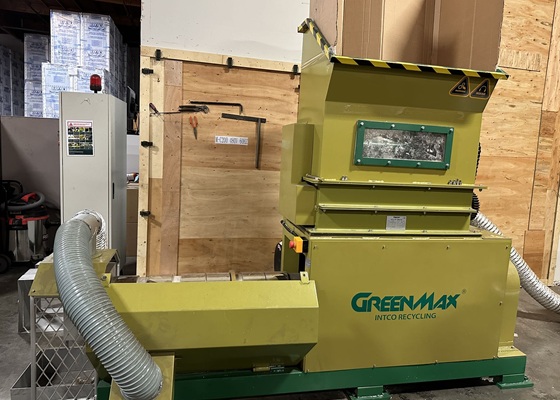
The core idea behind this stage is simple: convert loose EPS foam into high-density blocks at a reduction ratio of 50:1 or 90:1, then sell those blocks to downstream recyclers or material recovery companies. Compared with shredded foam alone, densified material is easier to transport, easier to stack, and easier to trade. It also tends to be more widely accepted in the market.
At this year’s Plásticos Expo in Guadalajara, one of the most popular solutions on display was the GreenMax Mars series polystyrene densifier. GreenMax also successfully sold one M-C100 unit during the event. The Mars series uses hot-melt densification technology and can achieve up to 90:1 volume reduction. It is also easy to operate and has relatively low labor requirements.
Densifying remains so popular because it offers a strong balance between cost and return:
1. It quickly frees up storage space
2. It significantly reduces transportation frequency and logistics costs
3. Densified blocks have higher market value and lower freight cost than shredded foam
4. Compared with going directly to a pelletizing machine, the investment and operating requirements are more manageable
This stage is especially suitable for:
· Electronics assembly plants with relatively large volumes of packaging waste
· EPS packaging manufacturers
· Recycling companies that already handle EPS packaging recovery
For most businesses, densifying is the most balanced step. A polystyrene densifier requires a moderate investment, but the return can already be attractive. That is also why it was one of the most discussed solutions at the exhibition.
Stage 3: Pelletizing
The Most Complex Technology and the Highest Investment, but Also the Highest Added Value
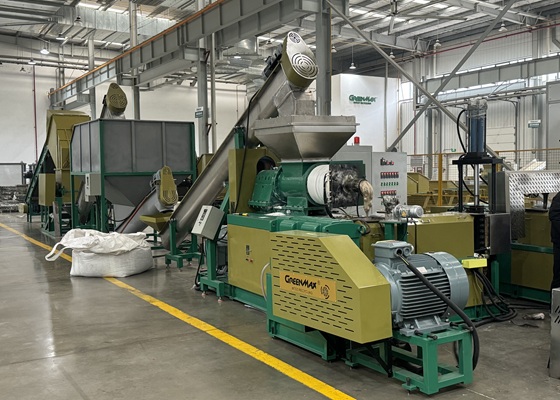
A pelletizing machine works by first shredding EPS foam waste and then converting it into uniform recycled PS pellets through a series of processes including melting, extrusion, filtration, cooling, and pellet cutting. These pellets can then be reused as plastic raw material in new production systems and processed into picture frames, construction materials, insulation boards, and many other downstream products.
Compared with shredded foam or densified blocks, recycled PS pellets have much higher added value and offer stronger profit potential.
According to local market information, recycled PS pellets are typically priced at about:
· White pellets: about $783 per ton
· Brown and black pellets: about $626 per ton
This stage is especially suitable for:
· Large packaging manufacturers, which can convert their own production scrap back into raw material more quickly and reduce material loss
· Large professional recyclers, which have more stable access to high-volume waste streams and are better positioned to turn recycled pellets into a long-term profit center
GreenMax: Local After-Sales Support in Mexico
Another important advantage is that GreenMax has local agents and service support in Mexico. For many customers, this matters a great deal. EPS recycling is not just about purchasing a machine. It also involves installation, commissioning, operator training, after-sales support, and technical assistance.
With a local team in place, customers can receive faster support during installation and long-term operation. It also becomes easier to match the right recycling solution to the material type and the customer’s business goals.