 Select Language
 English
 Spanish
 Polish
 Japanese
 Italian
 French
How to Handle Expired Milk in Bulk? Waste Liquid Treatment + Carton Recycling in One Step
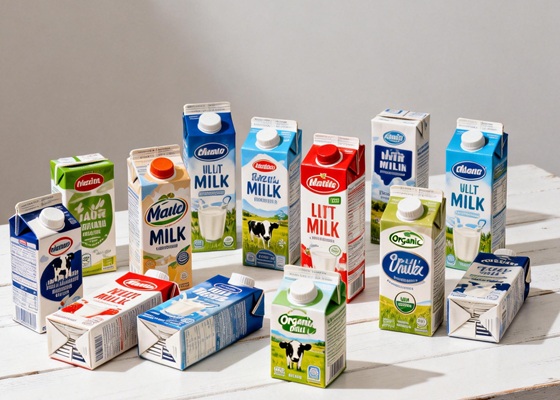
In the dairy industry, milk and other dairy beverages are often sold in Tetra Pak cartons. For large producers, thousands of defective or expired products can be generated daily, requiring timely processing to free up warehouse space.
Efficient and safe disposal of these Tetra Pak cartons has become a key part of daily operations. The GreenMax Poseidon series plastic dewatering machine is designed for Tetra Pak recycling, enabling dewatering, environmentally safe liquid discharge, carton compaction, and drainage—significantly reducing space usage and improving overall recycling efficiency.
1. Carton and Liquid Separation
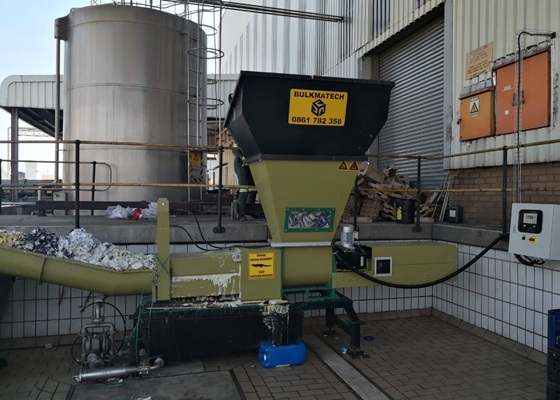
In the beverage carton recycling process, waste is divided into two parts. The plastic dewatering machine uses pressing to completely separate the cartons from the liquid: the cartons move to the next processing step, while the liquid is collected in a stainless steel tank. The tank is resistant to various low-pH liquids, ensuring long service life.
This process achieves Tetra Pak dewatering, lays the foundation for subsequent beverage carton compaction, and prevents liquid leaks that could cause on-site contamination.
2. Liquid Discharge
The collection tank has three round discharge ports that can be connected to pipelines, safely releasing the liquid into the sewer system in compliance with environmental regulations. Alternatively, the liquid can be collected for energy production or animal feed, enabling resource reuse and further enhancing environmental benefits.
3. Solid Carton Compaction
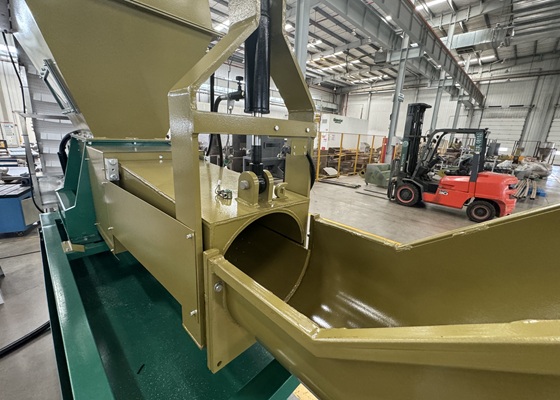
Next, the Tetra Pak cartons are continuously compressed by the screw, forming high-density blocks with a 10:1 volume reduction. The compacted cartons take up much less space, making storage, stacking, and transport easier, providing an efficient, low-cost Tetra Pak recycling solution for businesses.
4. Liquid Dewatering
During continuous compression, residual liquid in the cartons is fully drained. The upward-tilted discharge chute of the plastic dewatering machine allows the compressed blocks to naturally release remaining liquid during transport, further reducing moisture content, achieving up to 90% dewatering. The final cartons are drier and cleaner, making them easier for downstream recyclers to accept.
After Tetra Pak dewatering, the solid cartons can be sold directly to downstream recyclers, while the separated liquid is either treated in an environmentally safe way or used for animal feed, helping dairy producers reduce losses. Once fully dewatered and compacted, the blocks are closer in weight to the original cartons, allowing more waste to fit into a single container and increasing revenue per unit volume.
Food production has strict hygiene requirements, so recycling must be separated from production areas. The GreenMax plastic dewatering machine P-C350 is compact and easy to install, meeting daily Tetra Pak recycling needs. For facilities with ample space and high waste volumes, GreenMax also offers automated systems with conveyors and high-capacity equipment.
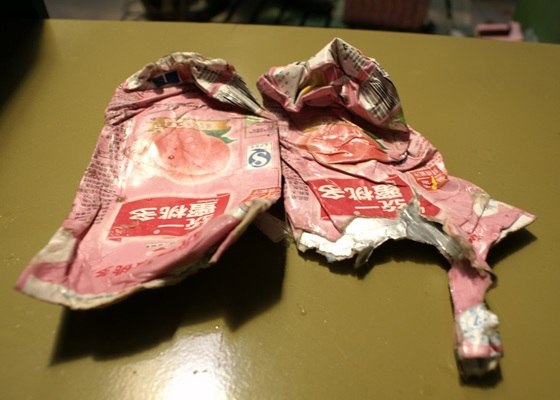
The GreenMax Poseidon series plastic dewatering machine helps dairy producers efficiently process large volumes of waste Tetra Pak cartons, quickly free up warehouse space, and achieve safe, compliant recycling and reuse. The equipment not only improves production and on-site management efficiency but also reduces production losses, supporting companies in achieving ESG and sustainability goals.