
 Select Language
 English
 Spanish
 Polish
 Japanese
 Italian
 French
How to Recover Production Losses from Expired Tetra Pak Packages?
In the beverage and dairy industries, Tetra Pak packaging is widely used for products like milk and juice thanks to its lightweight design, hygienic properties, and ability to extend shelf life.
However, during production and operations, companies often face challenges such as product returns, expired beverages piling up, and packaging materials rendered unusable due to printing or process errors. All of these issues create significant financial losses and storage pressures for producers.
So, how can these “losses” be turned into value?
The answer is simple: first remove the liquid contents, then carry out Tetra Pak recycling. The recovered cartons can be sold to downstream recyclers, helping companies offset production and operational losses.
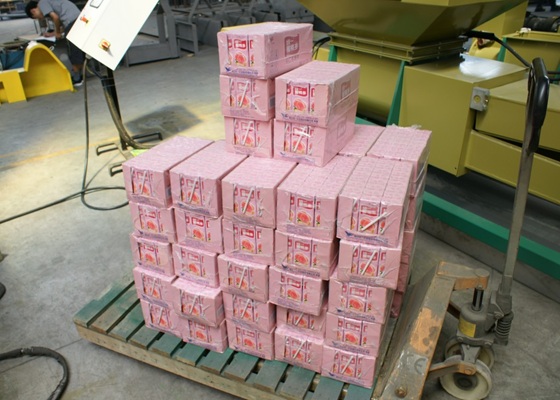
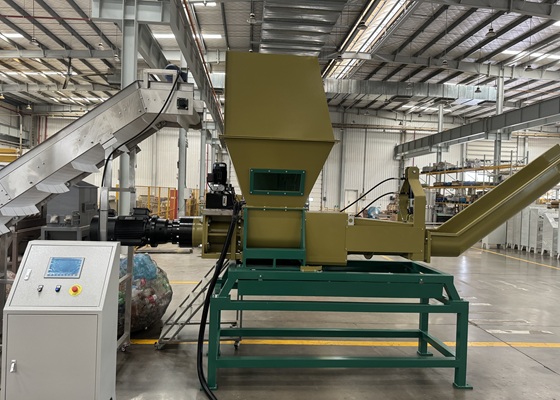
Automated Recycling — Liquid Removal + Compaction in One Step
With the GREENMAX plastic dewatering machine, returned or expired beverages can be processed automatically through the following steps:
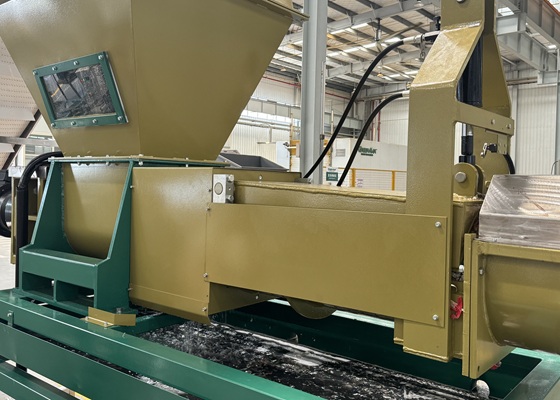
1. Liquid removal: The dewatering machine uses a screw and perforated barrel to quickly discharge milk or juice from the cartons, collecting the liquid in the tray below.
2. Tetra Pak compaction: While dewatering, the screw simultaneously compresses the empty cartons into high-density blocks (10:1), greatly reducing volume and cutting transport and storage costs.
3. Wastewater discharge: The stainless-steel tray resists corrosion from low-pH beverages and extends equipment life. It can be connected to piping to discharge liquids to designated areas, preventing secondary pollution.
4. Profit recovery: The compacted Tetra Pak blocks can be sold directly to downstream recyclers, helping companies recover part of their losses, turn waste into profit, and strengthen their environmental image through Tetra Pak recycling.
Handling Defective Packaging in Production
In the production of Tetra Pak cartons, printing errors or other process issues inevitably occur, leaving some packaging materials unusable. These defective cartons can be compressed and baled using Tetra Pak compaction technology, then sold to recyclers to avoid resource waste.
Beyond Tetra Pak, the GREENMAX plastic dewatering machine can also handle aluminum cans, PET bottles, yogurt cups, and other beverage containers. By adjusting parameters such as screw extrusion speed and plate compression time, these containers can likewise be dewatered and compacted, giving producers more recycling options. Compression modes for different container types can be preset and saved directly on the control panel, making operation simpler and more efficient.
Dual Value — Economic Benefit + Sustainable Image
Economic benefit: Returned and expired beverages are no longer a burden but can be turned into recyclable resources for resale.
Sustainability: By actively engaging in Tetra Pak recycling, companies not only reduce operating costs but also strengthen their ESG profile with a greener, more circular image.
It’s not just specialized recyclers — beverage producers, large supermarkets, and the entire supply chain can also recover and reuse unsellable Tetra Pak packaging. Through Tetra Pak compaction, these cartons are no longer waste but valuable resources, generating extra revenue while reducing production and operational losses.
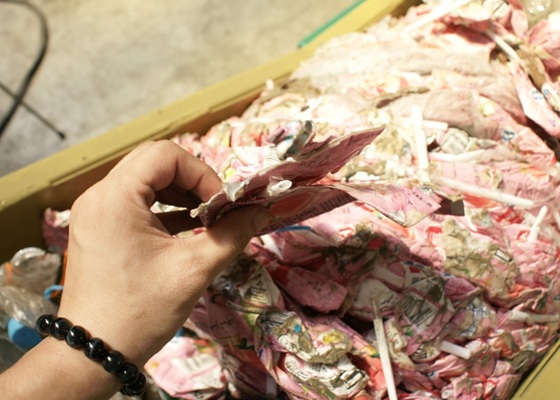
Whether it’s returned or expired products from beverage production, or defective packaging from manufacturing, the GREENMAX plastic dewatering machine helps businesses reuse resources, reduce losses, and enhance competitiveness.
Tetra Pak recycling — where the green circular economy begins!