
 Select Language
 English
 Spanish
 Polish
 Japanese
 Italian
 French
Manufacturers, Distributors, and Recycling Centers: Aluminum Can Recycling for Expired Canned Beverages
Expired, damaged, or returned canned beverages are a major hassle for manufacturers, distributors, and recycling facilities. Because the cans still contain liquid, they are expensive to transport, take up valuable storage space, and are difficult to handle cleanly. GreenMax provides a practical aluminum can recycling solution by combining the dewatering machine P-C350 with a vertical baler, creating a system that matches different recycling needs.
In the beverage industry, expired, damaged, or returned canned drinks such as beer, soda, and energy drinks are a common and challenging waste stream. These materials usually still contain liquid, remain in fully sealed packaging, and can no longer be sold. When not handled properly, they occupy warehouse space, increase disposal costs, and can create environmental and sanitation problems.
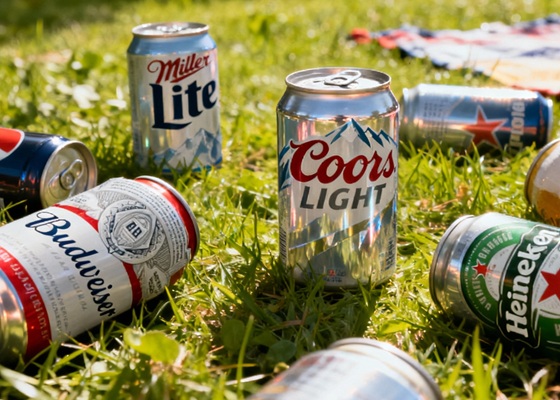
General Recycling Process for Liquid-Filled Aluminum Cans
For this type of waste, the industry generally follows a process of liquid separation + compression + sorted resale.
1. Dewatering and Liquid Separation
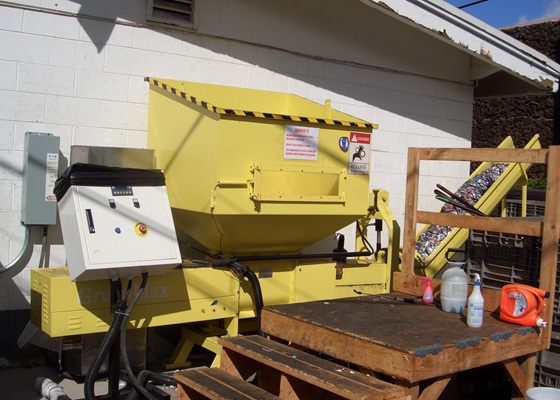
The GreenMax dewatering machine P-C350 can batch crush or squeeze full beverage cans to separate the liquid from the aluminum packaging. The extracted beverage flows into a collection tray below the machine and can then be discharged through a pipeline into a storage tank. This design helps keep the site clean and reduces leakage, odor, and insect issues.
2. Aluminum Can Compression
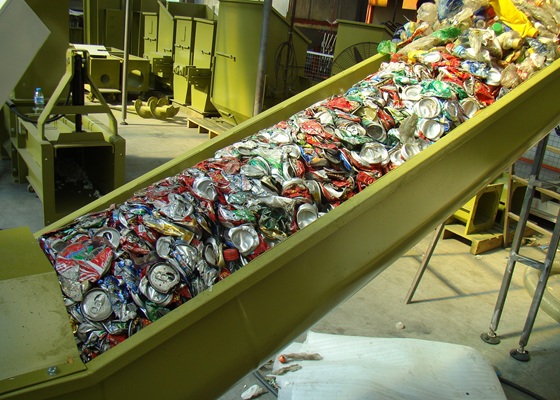
After dewatering, the aluminum cans are compressed by the screw system inside the beverage can recycling machine P-C350, achieving a volume reduction ratio of about 10:1. During discharge, the machine also continues to remove residual liquid, with dewatering efficiency reaching approximately 90%. At this stage, each can is significantly compressed, but the output material is still relatively loose and has not yet formed dense bales.
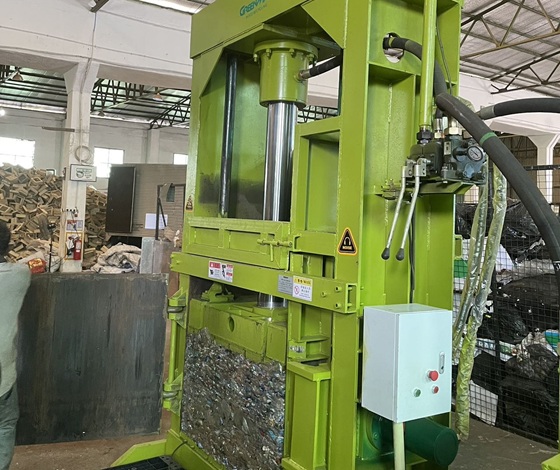
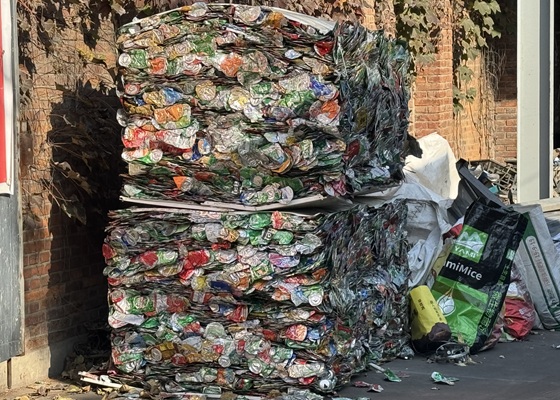
For this reason, larger factories usually add a vertical baler to further compress the material into high-density bales weighing around 300-500 kg, making transportation and resale much easier.
3. Sorted Resale
The compressed aluminum can blocks can be sold directly to metal recyclers or smelters for secondary aluminum production. The separated beverage liquid can be supplied to farms for animal feed blending or sent into anaerobic digestion systems for biogas production. This creates a more complete aluminum can recycling loop.
Challenges and Equipment Choices for Different Customers
1. Beverage Manufacturers / Filling Plants
Beverage manufacturers often generate a steady volume of defective products, expired inventory, or returned goods. This waste is typically produced in large quantities, in concentrated batches, and must be removed quickly.
Common Challenges
· Liquid-filled aluminum cans cannot be compressed directly and must be dewatered first.
· Manual can opening is inefficient and increases labor costs.
· Waste accumulates quickly, taking up warehouse space on an ongoing basis.
Recommended Solution
GreenMax recommends an aluminum can recycling system that combines a dewatering machine with a vertical baler. The first step removes the liquid so the cans can be processed effectively. The second step performs aluminum can compression, improving storage efficiency, reducing transportation costs, and producing bale formats that are easier for downstream buyers to accept. The separated beverage liquid may also be resold through secondary channels, helping reduce product losses.
Used together, this system provides automated liquid removal and bale formation with strong continuous processing capacity, making it ideal for large-scale recycling operations.
2. Beverage Distributors / Distribution Centers
Well-known beverage brands often rely on third-party distributors and distribution centers. These businesses also deal with returned products, damaged packaging, and slow-moving inventory. If the brand owner does not provide a take-back solution, the distributor must manage the waste independently.
Common Challenges
· The waste volume is not very large, but it is generated continuously.
· Beverage cans take up significant storage space and are expensive to haul away.
Recommended Solution
For distribution centers, the waste volume is usually moderate, so the main goal is to reduce storage space and handling costs. In this case, dewatering + volume reduction is often enough.
GreenMax recommends the dewatering machine P-C350 to remove liquid and reduce the volume of full beverage cans, without necessarily adding a vertical baler. Since the waste stream is limited, investing in a separate baling machine may lead to underused equipment.
After processing with the beverage can recycling machine P-C350, the material will not form high-density bales, but each can will still be compressed by about 10 times. The output can then be bagged and sold directly, which is often sufficient for basic aluminum can recycling needs. In addition, the machine can also process plastic bottles and other beverage packaging, making it a practical choice for multi-brand distributors.
3. Recycling Centers / Scrap Processing Companies
These businesses make profits by collecting and reselling recyclable materials such as aluminum cans and plastic bottles. In most cases, the aluminum cans arriving at recycling centers have already been consumed and contain only a small amount of residual liquid. For these operators, the key issue is how to increase the value of collected materials.
Common Challenges
· Most cans are empty, but transportation costs are still significant.
· The waste stream is mixed and may include aluminum cans, plastic bottles, and other recyclables.
· Profit margins are limited.
Recommended Solution
GreenMax recommends using only a vertical baler to carry out high-density aluminum can compression. This converts loose scrap into dense bales weighing about 300 kg, with dimensions of approximately 45 × 26 × 35, improving transport efficiency and increasing value per load.
A vertical baler also has a smaller footprint, which helps recycling centers save floor space. In addition, the machine can process plastic bottles, cardboard, and other recyclable materials, making it suitable for a wide range of applications.
Why Must Full Canned Beverages Be Dewatered and Compressed?
Untreated canned beverage waste creates several problems:
· Contains liquid - cannot be recycled efficiently in its original form
· Bulky volume - leads to high transportation and storage costs
· Leakage risk - creates sanitation and environmental concerns
By using dewatering and aluminum can compression, companies can gain several advantages:
· The beverage liquid and aluminum packaging are separated into two sellable streams.
· Packaging volume is greatly reduced, improving storage and transportation efficiency while lowering logistics costs per unit volume.
· The recycling value of expired products is increased, helping businesses recover more value through aluminum can recycling.
· Waste is transformed into recyclable resources, supporting sustainability goals.
· Environmental compliance is improved by reducing leakage, seepage, and insect problems.