 Select Language
 English
 Spanish
 Polish
 Japanese
 Italian
 French
Mobile Foam Compactor Makes Polystyrene Recycling Profitable and Easy
Amid increasingly strict global environmental regulations, polystyrene recycling has become an essential part of the fisheries supply chain.
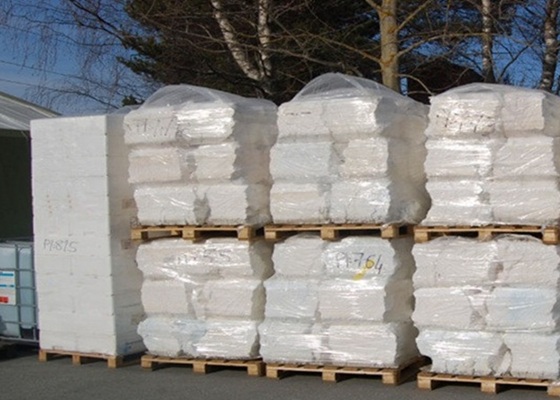
For fish traders, a large number of used expanded polystyrene (EPS) fish boxes often pile up in warehouses, taking up valuable space and affecting daily operations and hygiene management.
Even worse, sending this foam waste to third parties for landfill disposal is extremely costly—a medium-sized fish trader spends about $5,000 per month—and it causes secondary pollution, with the risk of fines for non-compliance with environmental standards.
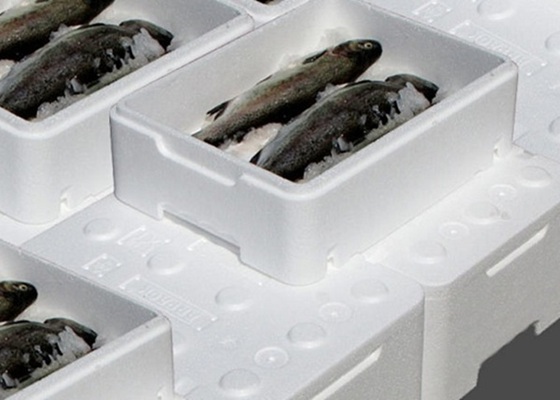
As a result, many fish traders are now focusing on building their own foam recycling systems.
With just one foam compactor, all foam waste problems can be solved directly at the source. The machine compresses and densifies the foam, and the resulting recycled EPS blocks can be sold directly to downstream recyclers for reuse, significantly reducing logistics and transportation costs.
Since fish boxes come from various sources—such as restaurants, supermarkets, and ports—the collection process is often complex. To help businesses not only handle their own foam waste efficiently but also create new income opportunities, GreenMax developed a mobile, vehicle-mounted foam compactor.
This polystyrene compactor can operate directly at warehouses or docks, enabling on-site compression and volume reduction of EPS fish boxes, cutting storage volume by up to 50 times and greatly improving polystyrene recycling efficiency.
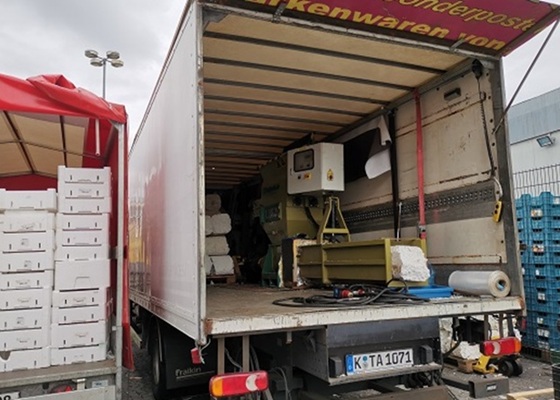
Its flexible operation offers investors two profit models:
1. Mobile service model: Drive the vehicle-mounted foam compactor to different fish traders’ warehouses and charge based on the amount of material processed. This not only solves nearby businesses’ foam recycling problems but also turns waste into valuable resources for significant profit.
2. Rental model: Lease the equipment to fish traders and charge a daily or monthly rental fee.
The recycled EPS blocks produced are small in volume and high in density, and can be sold directly to GreenMax or local recycling companies at around $580 per ton, providing a stable additional income.
Within 1–2 years, investors can typically recover the polystyrene compactor cost and continue earning long-term profits from polystyrene recycling.
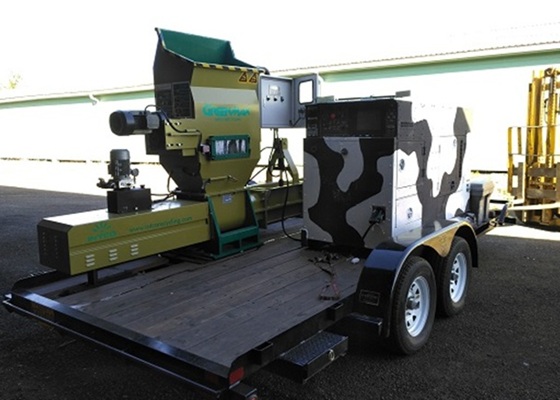
Unlike other foam waste, fish boxes absorb large amounts of water and ice during use, which affects the melting process and makes them unsuitable for hot-melting equipment.
GreenMax mobile screw-type foam compactor uses anti-melting material design and physical compression technology, allowing dehydration and volume reduction to occur simultaneously during compression. This ensures uniform, high-density, and non-rebounding output.
This technology is especially suitable for polystyrene recycling needs in fish processing plants, seafood markets, and fishing ports where humidity levels are high.
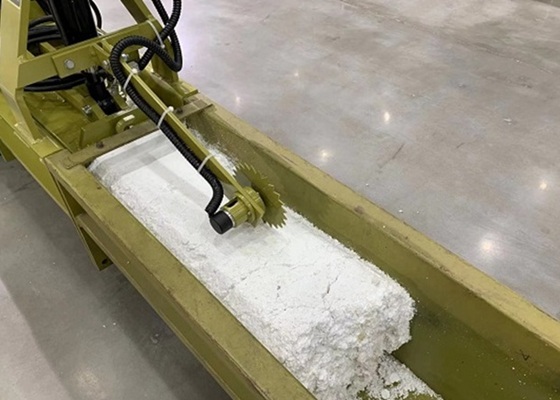
Building an in-house foam recycling system not only significantly reduces operating and waste disposal costs but also aligns with EU and local government policies promoting the circular use of recycled EPS blocks.
With the mobile foam compactor, fish traders can turn waste into valuable recycled resources, achieving a truly green and sustainable fishing industry.
GreenMax — specializing in foam and plastic densification and recycling solutions, helping every foam fish box return to the recycling loop.