 Select Language
 English
 Spanish
 Polish
 Japanese
 Italian
 French
PE Foam Recycling Opportunity for Energy Storage Battery Plants | From Paid Disposal to Resource Sales
The energy storage and lithium battery industries generate a steady stream of PE foam packaging waste. Instead of relying on third-party haulers and paying for regular disposal, battery plants and energy storage integrators can build an internal PE foam recycling system. With the help of a foam densifier, bulky packaging waste can be turned into compact, sellable material.
Across Latin America, solar power, wind power, grid flexibility, and commercial and industrial electricity demand are driving the growth of energy storage. By 2025, Latin America and the Caribbean had reached about 2.5 GW of installed energy storage capacity, with roughly 60% coming from BESS battery energy storage systems. At the same time, the “lithium triangle” formed by Argentina, Chile, and Bolivia continues to strengthen the lithium battery supply chain in the region.
Battery modules, energy storage cabinets, PCS units, inverters, and sheet metal components all require PE foam protection during transportation. PE foam is commonly used as inner liners, corner protectors, separators, and cushioning pads to prevent impact, scratches, and vibration damage. However, once these components arrive at energy storage integration plants or battery assembly factories, the packaging is removed, and the foam waste quickly begins to pile up in warehouse corners, aisles, and loading areas.
PE foam is lightweight, loose, and bulky. If it is not handled in time, it can become a site management problem within just a few days. Many factories prefer not to spend too much time dealing with it, but environmental regulations and waste management requirements no longer allow this material to be landfilled or discarded casually. As a result, the common solution is to contact a nearby recycler or waste management company and pay for regular collection.
This means many factories are still treating PE foam packaging as “waste” and continuing to pay for removal and disposal.
PE Foam Is Not Waste. It Is a Recyclable Resource.
GreenMax believes this mindset should change. PE foam packaging waste is not valueless trash. It is a recyclable material that can enter the PE foam recycling system and be reused in new applications.
Recycled PE foam can be used for foam pads, protective packaging, sound insulation, thermal insulation materials, and other plastic products. Packaging companies such as Sealed Air have also continued to invest in protective packaging and recycled material applications. In other words, once the right downstream buyers are identified, energy storage integrators and battery assembly plants may no longer need to pay for disposal. Instead, they can sell their PE foam packaging waste as a recyclable resource.
The key question is simple: how can loose foam waste be turned into a tradable recycling material?
The answer is to reduce its volume first.
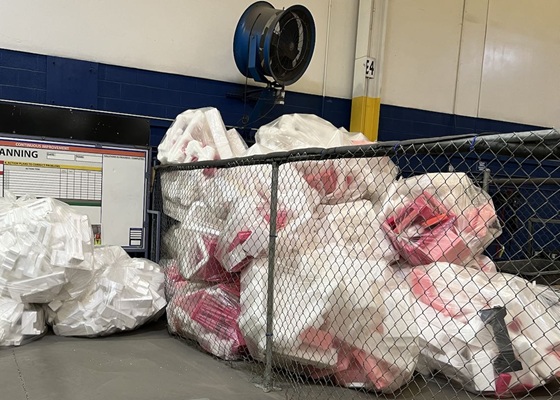
Why PE Foam Must Be Densified Before It Can Be Sold
In the recycled foam market, materials such as EPS, EPE, and EPP are usually traded in compacted blocks. The reason is straightforward: foam is large in volume but light in weight. If loose foam is shipped directly, the truck fills up quickly, but the actual loading weight remains very low. Transportation costs can easily consume most of the material value.
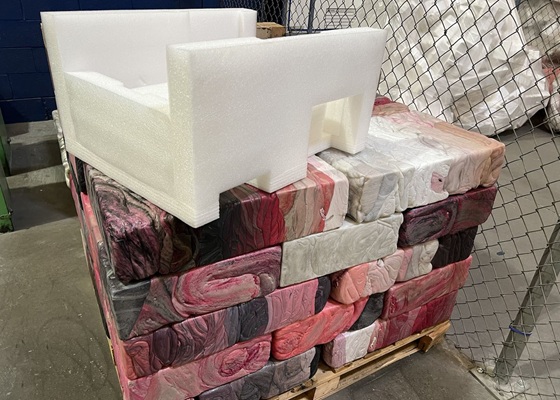
That is why factories need a PE foam recycling machine to compress loose EPE foam into dense blocks. This increases truck loading efficiency, reduces transportation cost per unit, and makes the material easier to sell to downstream recyclers or pelletizing plants.
After densification, the warehouse becomes cleaner, transportation becomes more economical, and the recycled foam blocks are more acceptable in the market.
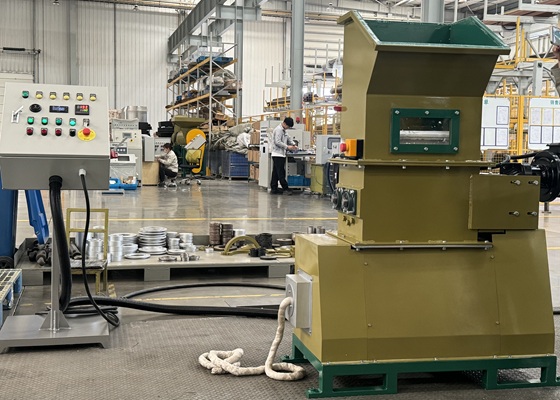
GreenMax M-C50: A Compact PE Foam Recycling Machine for Battery Plants
The GreenMax Mars Series M-C50 foam densifier is a mini foam volume reduction machine designed for factories with limited space. It can be placed in a warehouse corner or near the packaging waste collection area. Although it has a compact footprint, the M-C50 can achieve a compression ratio of up to 90:1, making it suitable for battery assembly plants and energy storage integration factories that generate packaging waste continuously but have not yet reached the waste volume required for a large-scale recycling line.
The M-C50 mainly processes PE foam through hot melting densification. For operators, the basic operation is simple. The machine can be controlled through start-stop buttons and temperature control buttons, so it does not require highly skilled labor.
A factory can choose a fixed time each week, such as one afternoon, to process the accumulated PE foam packaging waste. Loose foam waste can then be converted into compact blocks that are easier to store, transport, and sell.
For many small and mid-sized energy storage integrators, this type of PE foam recycling machine offers a practical balance of low investment, small footprint, and flexible operation. By selling compressed PE foam blocks, many factories may be able to recover the equipment investment in about one year, depending on local recycling prices, waste volume, and collection costs.
After that, packaging waste that once required paid disposal can become a recurring revenue source while also reducing monthly waste hauling expenses.
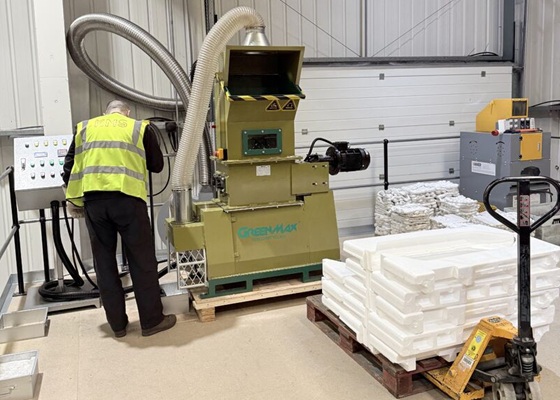
Benefits of Building an Internal Expanded Polyethylene Recycling System
First, an internal expanded polyethylene recycling system can help reduce monthly waste collection costs. Factories no longer need to keep paying to have “waste” removed.
Second, densified PE foam blocks can be sold to suitable downstream buyers, turning recycling into a project with long-term return potential.
Third, a well-organized PE foam recycling system supports today’s environmental direction. For energy storage integrators and lithium battery companies, this is not only a cost optimization strategy but also a way to build a more responsible green factory image.
Continuing to pay third parties for PE foam disposal is becoming a less cost-effective option. Choosing the right recycling equipment can help factories turn PE packaging waste from a cost item into a revenue-generating resource for years to come.
If customers are concerned about downstream sales, GreenMax can help connect them with suitable recycling channels based on the local market. For customers expecting business expansion and increasing waste volume in the future, GreenMax also recommends considering the standard foam densifier M-C100 to better match future processing needs.
FAQ
1. Why are energy storage integration plants suitable for PE foam recycling?
Energy storage integration plants and battery assembly factories usually generate PE foam packaging waste on a continuous basis. If they rely on third-party collection for a long time, they must keep paying disposal and hauling fees.
For factories with a stable source of PE foam waste, it is more practical to use a PE foam recycling machine for regular processing and then sell the compacted blocks to downstream pelletizing plants or recyclers. This allows the factory to shift from paid disposal to resource sales.
2. What types of waste can a GreenMax foam densifier process?
A GreenMax foam densifier can process PE packaging blocks and EPE foam sheets. It can also be used for EPS foam, EPP foam, and other foam packaging materials. One machine can support the volume reduction of multiple types of packaging waste, helping reduce the need for additional equipment.
To maintain the quality of the densified blocks and avoid material contamination, factories are advised to sort different foam materials before densification.