 Select Language
 English
 Spanish
 Polish
 Japanese
 Italian
 French
Rising Coastal EPS Pollution: How Can Fish Boxes, Floats, and Buoys Be Recycled Efficiently?
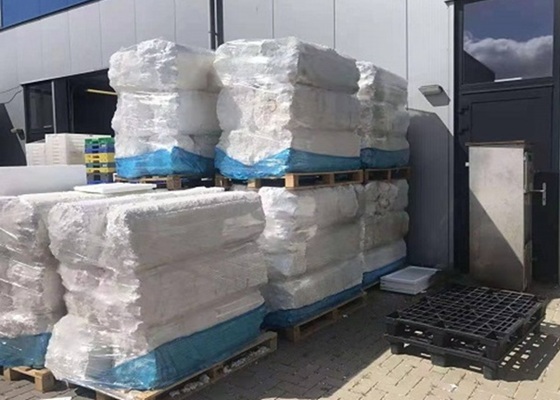
Coastal EPS foam pollution often does not appear overnight. In most cases, it builds up over time. Along the coast, common items such as fish boxes, insulated boxes, and buoy materials are often made from Styrofoam. The purpose of floats and buoys is simple: they help keep aquaculture systems, fishing operations, or marine facilities afloat and in position. Fish boxes and insulated boxes, on the other hand, are widely used to preserve, store, and transport seafood.
The problem is that these foam products are used frequently in coastal areas, replaced quickly, and exposed for long periods to sunlight, sea wind, and humid conditions. As they age, they are easily damaged, cracked, and broken into fragments, eventually becoming scattered waste. In coastal regions, fish vendors, wholesale seafood markets, cold chain distribution sites, and seafood processing plants are often concentrated in the same areas. To move seafood to other destinations quickly, large numbers of EPS fish boxes are used on a regular basis. Once they are discarded, if they are not collected and recycled in time, they begin to pile up around docks, market areas, and shorelines. When old floats, damaged insulated boxes, and other foam materials are added to the mix, Styrofoam recycling becomes an increasingly urgent issue along the coast.
Why Coastal Foam Is Harder to Recycle
Standard EPS recycling usually focuses on physical compression and volume reduction. However, coastal foam waste is very different from ordinary packaging waste, which makes it harder to process.
1. High moisture content. Many fish boxes and buoy materials are exposed to seawater or humid environments for long periods. As a result, they often contain water and salt when they are collected for recycling. If this type of waste is processed for a long time in a regular Styrofoam compactor, it can accelerate rusting and reduce the service life of the machine.
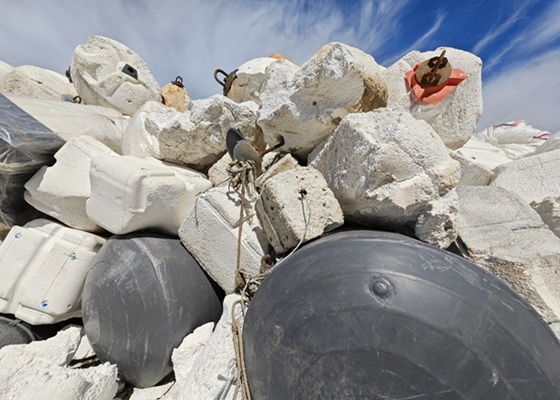
2. Large floats and buoys. Many floats and buoys are large, bulky, and irregularly shaped. They are not well suited for direct feeding into compression equipment or standard shredding machines. That is why how to recycle EPS buoys has become a real challenge for many coastal recyclers.
3. Material melting during processing. Unlike some other Styrofoam packaging that can be processed with high-temperature melting methods, wet fish boxes and EPS buoys generally require pure screw-compression equipment. During continuous screw extrusion, the discharge area may become too hot, causing slight material melting. This can make it harder for the foam to move forward smoothly and reduce overall operating efficiency.
Coastal Applications Require Specialized Equipment Upgrades
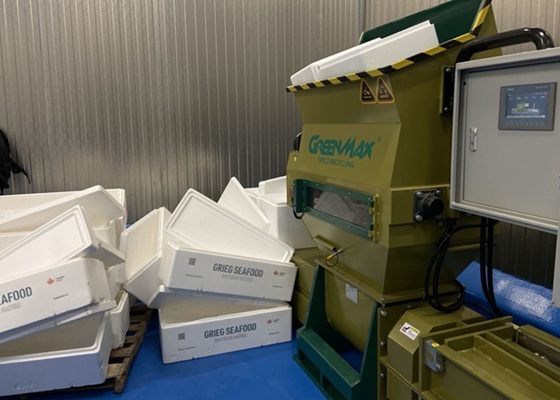
To address these issues, GreenMax made targeted upgrades to its foam recycling machine Apolo series. The overall design is built around real coastal Styrofoam recycling conditions rather than simply applying a standard EPS processing solution.
1. High-moisture waste. The GreenMax Styrofoam compactor Apolo Marine series is upgraded with stainless steel construction to reduce the effects of humidity and salt on machine components and the compression chamber. This makes it more suitable for long-term use in coastal environments.
2. Large floats and buoys. The compaction system can be paired with a hot wire cutting unit to cut large EPS pieces into smaller sections before they enter the compression stage. The hot wire is a consumable part and, under normal conditions, usually needs to be replaced every two to three days. If the material is wetter than usual, replacement may be needed once a day. Even so, replacement is simple and only takes a few minutes. This cutting method is an efficient way to solve one of the most common issues in how to recycle EPS buoys: oversized material.
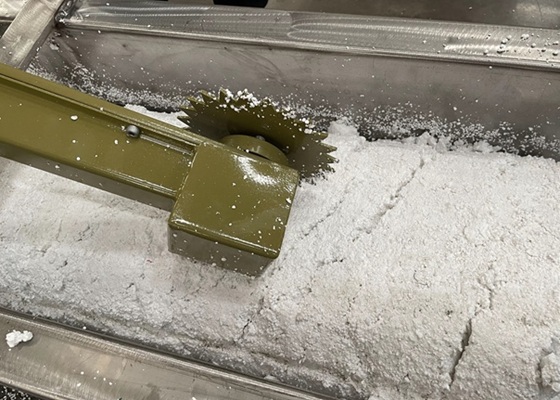
3. Material melting. The equipment can also be fitted with a circulating water-cooling system to help control the temperature in areas where melting is likely to occur, making the entire compression process more stable. In addition, the machine includes a melt-detection device. Under normal operation, the compressed material is pushed forward continuously by the screw, and a small disc above the machine rotates at the same time. If the disc stops rotating, it means the foam is no longer discharging normally and melting may have occurred, signaling the operator to stop the machine and inspect the system.
A Real Recycling Case from Chile
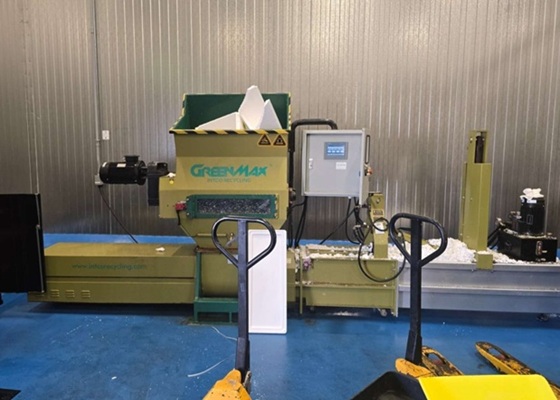
GreenMax once provided a how to recycle EPS buoys solution to Ecologica, an environmental company in Chile. The company specializes in recycling industrial waste, marine plastics, and foam materials, and it operates branches in several coastal cities across Chile.
This customer mainly handles two types of Styrofoam: one is regular-density foam used for packaging, and the other is softer material from floats and buoys. In the end, the customer selected the Styrofoam compactor A-C200MS. These two types of waste can be processed together, but in general, it is recommended to keep clean foam separate from contaminated EPS in order to avoid affecting the resale value of the compressed material.
The compressed blocks measure about 380 × 380 mm, with a length of about 1 meter, and each block weighs around 40 to 50 kg. This makes loading, handling, and selling much easier. For coastal recyclers, EPS waste along the coast is not just “difficult trash” to deal with. It is also a recyclable material with resale value. At present, the selling price of compressed foam is about 450 euros per ton, although this may vary depending on market conditions.
Coastal Foam Recycling Can Also Be a Long-Term Business
For coastal recyclers, how to recycle EPS buoys is no longer an unsolved problem. The key is to establish a foam recycling machine solution that is better suited to coastal conditions, one that can turn scattered and hard-to-handle foam waste into saleable recycled material. At the same time, the system must match the actual characteristics of coastal waste, including moisture resistance, the ability to handle large buoy materials, and stable control of material melting during compression.
With the right setup, recycling fish boxes, floats and buoys is not only a way to improve the coastal environment. It is also a recycling business with long-term value.