 Select Language
 English
 Spanish
 Polish
 Japanese
 Italian
 French
Styrofoam Compactor: What Information Should You Prepare Before Requesting a Quote?
Many companies looking for a Styrofoam compactor begin with a simple request: they send a photo of the material, ask for the machine price, and want to know which model would be suitable.
This is a natural starting point, but a photo and a general description are usually not enough to determine the best recycling solution.
Identify the Foam Type and Volume Before Selecting a Foam Recycling Machine
When planning an EPS recycling project, equipment selection should not be based only on an estimated price or a brief description of the material. To develop a practical Styrofoam recycling solution, several details about the actual operation must first be confirmed.
The more clearly a company explains its waste stream and working conditions, the more accurate the technical evaluation will be. This also helps prevent the purchase of an undersized or unsuitable machine.
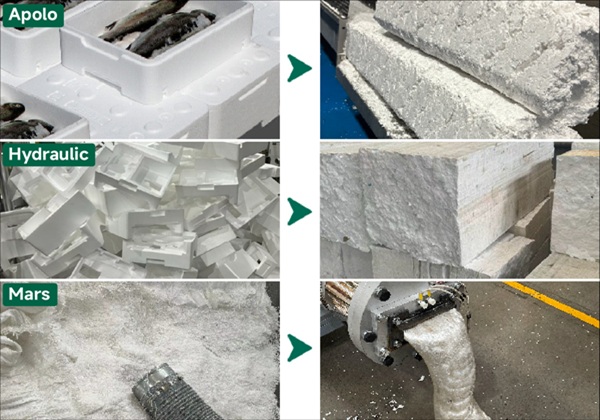
The first detail to confirm is the type and form of Styrofoam being processed. Not all EPS waste is generated in the same shape or density.
Some businesses handle lightweight and clean protective packaging, while others generate fish boxes, appliance packaging, large molded foam parts, or irregular production scraps. The shape of the material directly affects how it should be collected, crushed, and compacted.
EPS density is also important. Low-density packaging foam and high-density molded EPS may require different crushing systems or cutter designs. These details should therefore be confirmed before selecting a foam recycling machine.
The second key factor is the actual volume of foam waste. Descriptions such as “a lot” or “a small amount” are not specific enough.
Before choosing a Styrofoam compactor, it is necessary to determine whether the waste:
· Accumulates only occasionally
· Is generated at a stable daily rate
· Appears in large volumes during certain production periods
This information directly affects machine capacity, model selection, and the internal collection process.
Evaluate the Waste Location and Available Floor Space
The location where the EPS waste is generated is equally important. In some facilities, most foam is produced when products are unpacked in a warehouse. In others, it is concentrated near packaging lines, shipping areas, receiving docks, or several different points throughout the plant.
Identifying the main waste generation points helps determine whether the company should use a centralized collection system or install the equipment closer to the source.
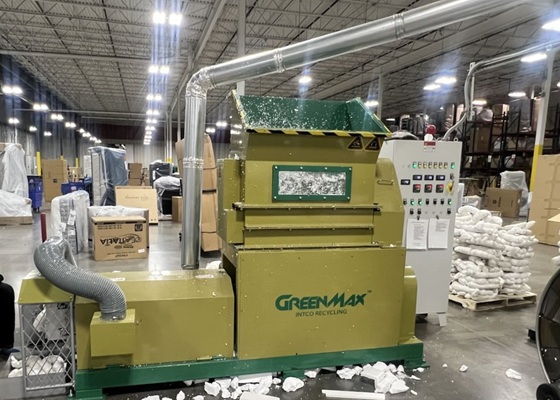
Available floor space must also be evaluated in advance. In many facilities, the challenge is not only the volume of foam waste but also the limited space available for equipment and material handling.
If a foam recycling machine is selected without considering the facility layout, it may interfere with forklift traffic, loading operations, production lines, or daily warehouse activities.
Before starting an EPS recycling project, companies should confirm where the equipment will be installed and how it will fit into the existing workflow.
Tell us your EPS type, volume, and recycling goals for a suitable equipment recommendation.
Define the Recycling Goal to Avoid Repeated Investment
The intended use of the compacted material is another important factor in equipment selection. Different companies may have very different recycling goals.
Some businesses only want to reduce waste volume and free up warehouse space. Others want to replace expensive monthly dumpster pickups or waste hauling services. Some companies plan to prepare the compacted EPS for transportation or sale and develop Styrofoam recycling into a long-term revenue-generating program.
Different goals require different equipment solutions.
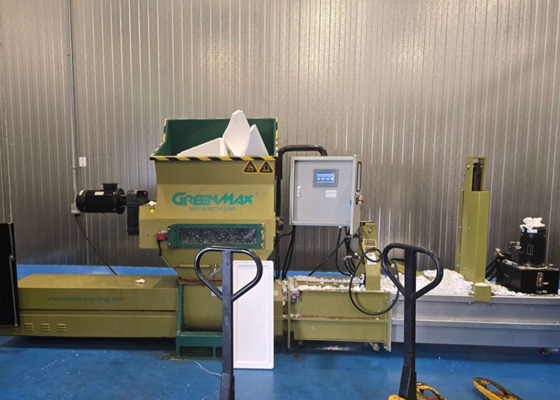
A lower-cost mini Styrofoam compactor may be suitable for small or occasional quantities of foam. However, if a company generates a large and stable volume of EPS every day, or expects its operations to expand, a small machine may quickly become insufficient.
This can result in the company having to purchase another machine later, increasing the total investment.
Companies should also clarify whether the Styrofoam is collected separately or mixed with other materials, whether it is clean or contaminated, and whether employees have previous experience operating recycling equipment.
The more complete this information is, the easier it will be to develop a realistic solution that matches the company’s actual operating conditions.
Evaluate the Requirements Before Comparing Equipment
Requesting a machine price should not be the first step. Before comparing quotations, a company should first evaluate its foam type, waste volume, available space, internal logistics, and final recycling goal.
Once these basic details are clear, comparing different EPS recycling solutions becomes more meaningful.
GREENMAX supports customers during this evaluation process. Our goal is not simply to recommend a foam recycling machine, but to identify a solution based on the customer’s waste stream, facility conditions, labor arrangements, and long-term processing requirements.
The clearer the information provided at the beginning, the easier and more reliable the final equipment selection will be. A proper evaluation also supports stable, efficient operation over the long term.
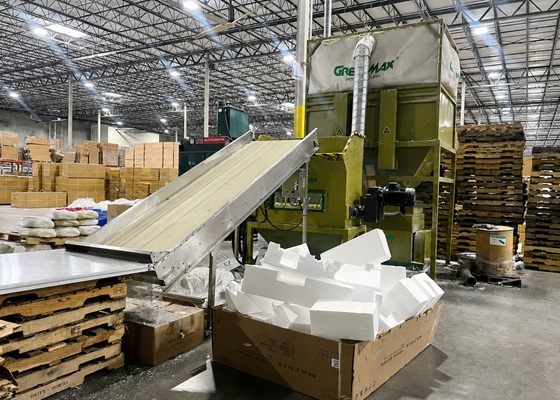
FAQ | Questions Before Starting Styrofoam Recycling
1. How can I determine whether my foam waste is suitable for recycling?
Clean foam with minimal contamination is generally easier to compact and can usually be sold at a better price. If the foam contains dirt, tape, labels, food residue, or other contaminants, its recycling value may be lower.
Companies should also consider whether they will continue generating foam waste for at least the next year. A stable and ongoing waste stream usually makes an EPS recycling project more practical.
2. How much volume can a Styrofoam compactor reduce?
A cold compaction machine can reduce loose foam volume by up to approximately 50:1 and produce compressed blocks with a density of about 200–400 kg/m³.
A hot-melt machine can reduce foam volume by up to approximately 90:1 and produce dense ingots with a density of about 600–800 kg/m³.
A Styrofoam compactor converts loose and bulky waste into uniform, high-density blocks or ingots. The processed material can be stacked neatly on pallets, reducing storage space and making transportation and resale more efficient.
3. How long does it take to recover the equipment investment?
The current market value of compacted EPS blocks can be approximately USD 640 per ton, although actual prices vary by location, material quality, buyer requirements, and market conditions.
Based on GREENMAX customer projects, many companies can recover their equipment investment within approximately one to two years. A GREENMAX foam recycling machine can typically remain in service for more than ten years with proper operation and maintenance.
To calculate a more detailed return on investment, companies should consider equipment power consumption, processing time per ton, labor costs, electricity rates, current waste hauling expenses, and the potential value of the compacted material.
For a customized ROI evaluation, contact GREENMAX via WhatsApp at +1 909 509 4388.