 Select Language
 English
 Spanish
 Polish
 Japanese
 Italian
 French
Styrofoam Recycling: A New Opportunity for Waste Recyclers
Styrofoam recycling is emerging as a real business opportunity for waste recyclers. More global manufacturers are purchasing recycled raw materials for reprocessing, and the reuse of waste Styrofoam is becoming an inevitable trend. With an EPS compactor, bulky waste can be transformed into a valuable commodity.
EPS foam, commonly known as Styrofoam, is widely used for product protection and cushioning. It is also fully recyclable. After pelletizing, recycled EPS can be used again to produce packaging, insulation boards, and other products, with many proven international applications.
For example, Soprema, a global manufacturer of waterproofing, insulation, and acoustic systems, strategically purchases cold-compacted and hot-melted EPS blocks worldwide. These materials are shipped to pelletizing plants in Europe, and the recycled PS pellets are then supplied to XPS factories for reuse.
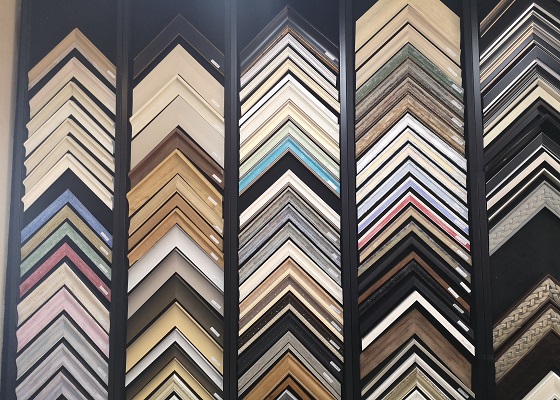
INTCO Recycling also continuously purchases recycled Styrofoam to manufacture eco-friendly products such as picture frames, outdoor decking, acoustic panels, and baseboards. For waste recyclers, this represents a market opportunity that should not be overlooked, with attractive economic returns through Styrofoam recycling.
Why EPS Recycling Must Be “Compacted First”
The market for recycled raw materials is real, demand is growing, and pricing is becoming more transparent. However, the biggest challenge for recyclers is that EPS foam is lightweight but extremely bulky. Without pre-treatment, transportation costs can quickly wipe out profit margins.
To scale Styrofoam recycling profitably, volume reduction is a critical first step. By installing an EPS compactor, recyclers can achieve a compression ratio of 50:1 or even 90:1 at the collection stage, turning EPS from hard-to-handle waste into a product with real market value.
GreenMax, an environmental equipment manufacturer under INTCO Recycling, specializes in foam recycling machines and pelletizing systems. At the same time, GreenMax purchases compacted EPS blocks, creating a true closed-loop recycling model. In addition to supplying equipment, GreenMax continuously buys back compacted EPS blocks from customers, making it one of the few EPS compactor manufacturers that also offers a clear material sales outlet.
Two EPS Recycling Solutions from GreenMax: Cold Compaction vs. Hot Melt
1. Apolo Series: Cold EPS Compactor
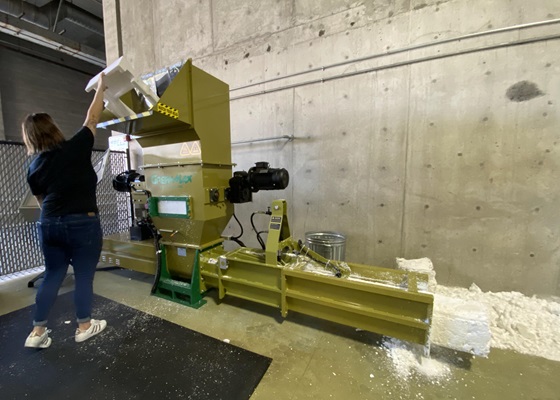
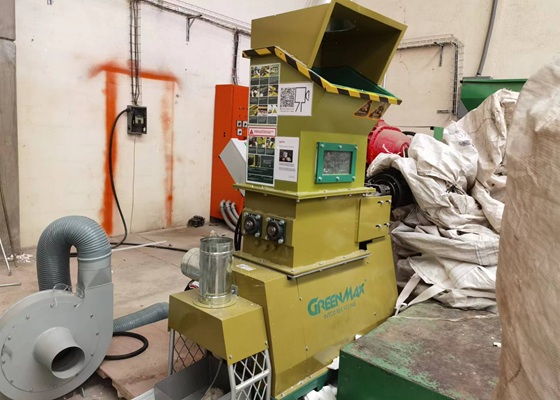
The Apolo Series uses purely mechanical screw compaction without heating, compressing loose EPS into high-density blocks at a 50:1 ratio. Energy consumption is low, and the 200 kg/h model operates at under 20 kW, with simple maintenance.
To address common issues with traditional cold compactors—such as friction heat causing material melting—GreenMax integrates a monitoring system that measures output length, enables automatic cutting, and detects potential melting. An optional water-cooling system further ensures stable and efficient Styrofoam recycling.
2. Mars Series: Hot-Melt Styrofoam Densifier
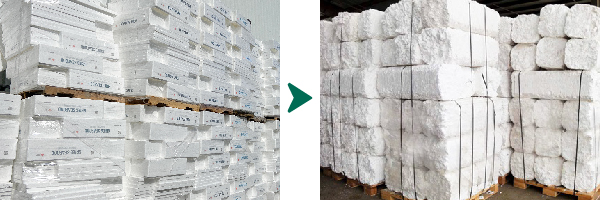
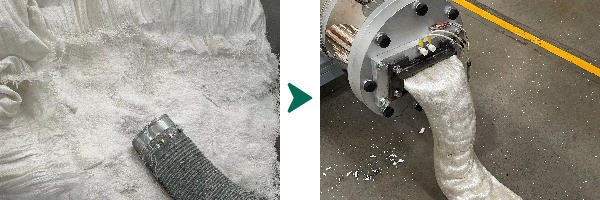
The Mars Series melts EPS at high temperatures and continuously extrudes it into denser material with lower air content, achieving a compression ratio of up to 90:1. Operation is simple, requiring only start/stop controls and three temperature settings.
Thanks to the high compression ratio and lowest transportation cost per unit, this solution offers higher profit potential and is favored by large recycling plants and end manufacturers. GreenMax offers mini, mid-size, and industrial Styrofoam densifiers. The mini M-C50 occupies about the footprint of a cardboard box and processes up to 50 kg/h.
For wet materials such as fish boxes, GreenMax uses an independent three-stage heating system. Each heating stage operates separately, and the final stage removes nearly all moisture to ensure stable hot-melt performance. Heating coils can also be upgraded to electromagnetic heaters for more precise and consistent temperature control.
Cold-Compacted vs. Hot-Melt Material: Market Acceptance
· Cold-compacted material: Lower density, better suited for local or regional markets, typically sold to small and mid-size pelletizing plants. Material quality is high and suitable for food-grade packaging.
· Hot-melt material: Higher density and more consistent quality. The price per ton is usually higher and preferred by international buyers and large manufacturers.
There is no single “best” choice for recyclers. The right solution depends on feedstock stability, target markets, and available capital and operating capacity. This is a key window of opportunity for Styrofoam recycling. For more market insights and guidance, feel free to contact GreenMax.
FAQ: Top 3 Questions from Recyclers
1. Is there long-term demand for recycled EPS?
Yes. International manufacturers such as Soprema and INTCO Recycling have established long-term purchasing systems. In addition, many pelletizing plants and recycled plastics companies worldwide continue to buy recycled EPS.
2. Which is easier to sell: cold-compacted or hot-melt material?
Cold-compacted material is more flexible and has a lower entry barrier, making it ideal for new recyclers. Hot-melt material is better suited for large clients and export markets. The choice should be based on waste volume and target customers.
3. Is it worth investing in equipment if EPS supply is unstable?
If volumes are small or inconsistent, it is recommended to start with a small Styrofoam densifier such as the A-C50 or M-C50. This requires lower investment and keeps risk under control.