
 Select Language
 English
 Spanish
 Polish
 Japanese
 Italian
 French
Truck-Mounted Styrofoam Compactor Helps Multiple Construction Sites Share One Waste-to-Revenue Solution
In the United States, Styrofoam waste is not limited to food packaging or appliance cushioning. The construction industry is also an important and often overlooked source of EPS waste.
In residential, commercial, and infrastructure projects, EPS / Styrofoam is commonly used for wall insulation boards, roof insulation, EIFS systems, Geofoam lightweight fill, foundation insulation, and architectural foam components. These materials are lightweight and thermally efficient, helping reduce structural load and improve jobsite efficiency.
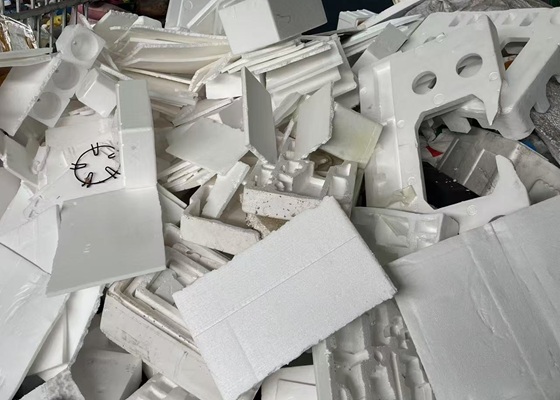
However, during cutting, installation, resizing, replacement of damaged pieces, and project closeout, job sites can generate large amounts of Styrofoam scrap. Because EPS is bulky, lightweight, and expensive to transport, many contractors simply throw it into dumpsters and send it to landfill as ordinary construction waste.
For example, in large commercial roofing projects, warehouse construction, residential developments, or EIFS installation projects, EPS insulation boards are often delivered in large volumes. Even a small percentage of offcuts, damaged boards, or size-adjustment waste can quickly fill dumpsters and corners of the jobsite, increasing hauling frequency and disposal costs.
The Value of Styrofoam Scrap Is Often Underestimated
In the past, many construction companies handled Styrofoam scrap in the simplest way: throw it away or pay a third-party hauler to remove it. If contractors use their own trucks, transportation may cost around $100 per trip. If waste removal is outsourced, the cost may reach around $200 per ton. As a result, many builders assume that EPS scrap has little value because it takes up too much space and weighs very little.
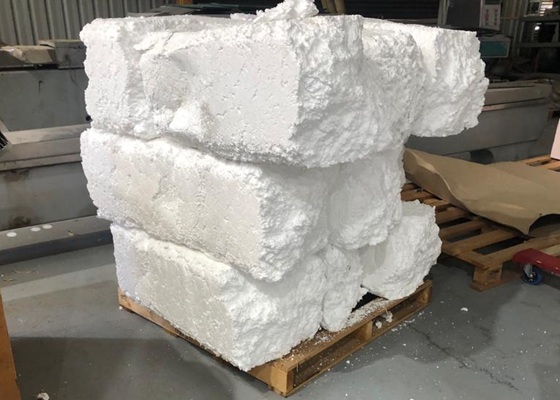
In reality, compacted Styrofoam blocks can reach a value of around $650 per ton in the U.S. EPS recycling market, depending on supply, demand, and material quality. If contractors continue paying to haul away clean EPS scrap, they may be giving up a recoverable material income.
Styrofoam accumulation also affects jobsite management. Because the material is extremely light, loose pieces can be blown into walkways, drainage areas, rebar zones, or mixed construction debris piles. This increases cleanup work and can make the site look disorganized.
Styrofoam Recycling Turns Construction Waste into a Resource
In the U.S. construction industry, waste management and material recovery are receiving more attention. Construction and demolition materials are increasingly managed through reduction, reuse, recycling, and diversion practices. Many states, cities, and project owners also set requirements for construction waste diversion and recyclable material handling.
For construction companies, building a complete recycling chain is not necessary. The key steps are simple: separate EPS waste, compact it, and send it to downstream pelletizing plants or recycling companies such as GreenMax.
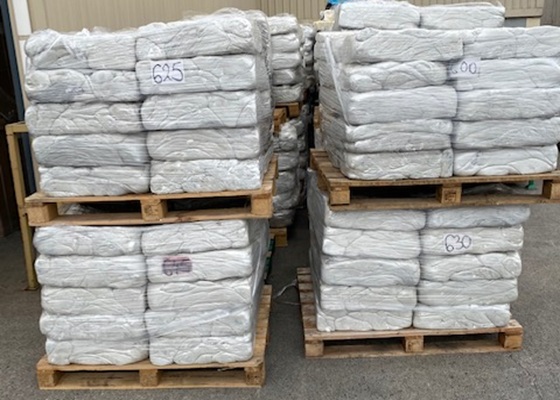
In practice, a professional Styrofoam compactor compresses bulky foam waste into dense blocks. These blocks can then be sold to downstream reuse or recycling facilities, helping contractors reduce disposal costs and create a new revenue stream from material that would otherwise be treated as waste.
Why Truck-Mounted Equipment Fits EPS Recycling in Construction
Construction projects are usually scattered across different locations and have clear timelines. Once a project is completed, that site may no longer generate large volumes of Styrofoam waste. If a fixed machine is installed at only one jobsite, equipment utilization may become too low after the project ends.
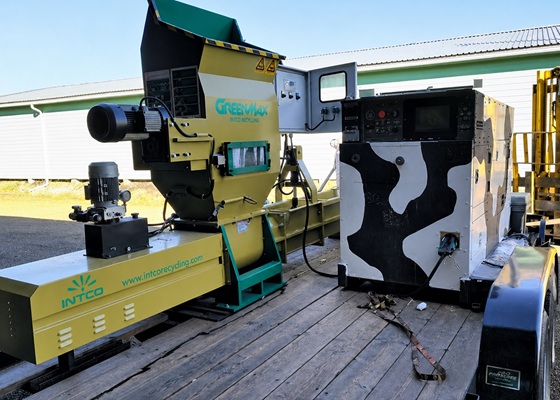
A truck-mounted foam recycling machine is more suitable for this type of work. Once the equipment is installed on a truck or trailer, it can move from one jobsite to another and process scattered EPS waste on-site. After one project is completed, the machine can be driven to the next location.
For contractors that manage multiple projects, a mobile system allows several jobsites to share one recycling solution. This improves equipment utilization and lowers the waste handling cost for each individual project.
In addition, much of the Styrofoam used in construction comes from insulation suppliers, EIFS contractors, foam fabricators, roofing material distributors, or building material suppliers. These companies can also upgrade their business model from “material supply only” to “material supply plus recycling service.” After a project ends, they can collect leftover or damaged Styrofoam, compact it, and sell the blocks. This helps strengthen customer relationships while creating a stable source of recyclable material.
A-C50 vs. M-C50: How to Choose a Truck-Mounted Solution
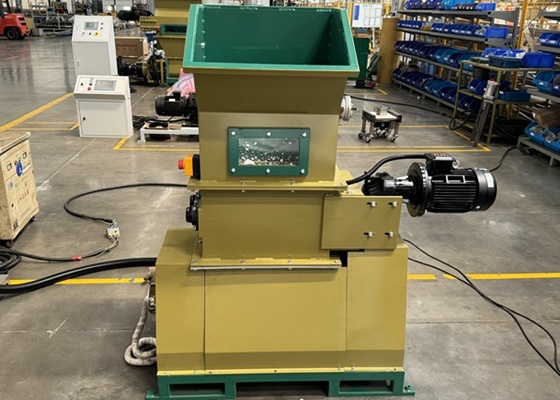
For mobile EPS recycling, contractors often choose compact GreenMax equipment such as the A-C50 or M-C50 Styrofoam compactor.
The A-C50 is a cold compaction machine. It shreds foam and compresses it by screw extrusion, achieving a volume reduction of about 50:1 with lower energy consumption. Since it does not use high-temperature melting, the physical properties of the material are better preserved. This can help downstream recyclers produce higher-quality recycled products during pelletizing.
The M-C50 is a hot-melt machine. It melts and densifies Styrofoam waste at high temperature, achieving a volume reduction of about 90:1. The operation is simple, using temperature control and start / stop buttons, which makes it suitable for construction workers or drivers with limited mechanical experience.
Because of its higher volume reduction ratio, the M-C50 can be a good choice when compacted blocks need to be transported over long distances or sold for export, where freight efficiency is especially important.
Better Block Quality Starts with Sorting at the Source
Since construction sites contain many different materials, Styrofoam scrap should be sorted before recycling. Contractors should avoid mixing EPS with soil, cement, metal pieces, wood chips, tape, or other contaminants.
Cleaner and more consistent Styrofoam waste is easier to compact and produces more stable blocks. This improves storage, transportation, and downstream acceptance, making the compacted blocks more competitive in resale.
GreenMax not only provides different types of Styrofoam compactor equipment and customized recycling solutions. It also has clear foam reuse channels, turning recovered foam into products such as outdoor flooring and picture frame materials. By connecting compaction, recycling, and reuse, GreenMax helps customers build a more complete EPS recycling process.
From Construction Waste to Material Revenue
Styrofoam waste from construction sites does not have to remain a landfill cost. With a mobile truck-mounted foam recycling machine, contractors can compact scattered jobsite waste into high-value blocks and sell them to downstream recyclers for around $650 per ton, depending on market prices.
This approach helps reduce hauling costs, improve jobsite cleanliness, and create a more stable green investment return from a waste stream that has long been overlooked.