 Select Language
 English
 Spanish
 Polish
 Japanese
 Italian
 French
Can Wet or Contaminated EPS Fish Boxes Be Recycled?
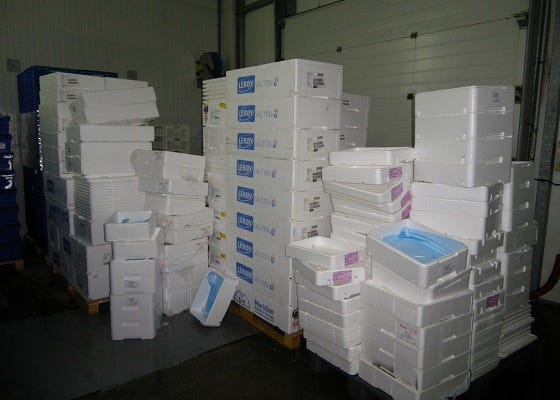
EPS fish boxes are widely used to transport fresh and frozen seafood because they are lightweight, insulated and resistant to moisture. Once emptied, however, the boxes can quickly fill storage areas at fish markets, ports, processing plants and distribution centres. These boxes are recyclable, but their condition affects whether a recycling company will accept them. Water alone is usually manageable. Fish residue, oil, labels and other contaminants require more attention because they can reduce the quality of the recovered polystyrene.
Can Wet EPS Fish Boxes Be Recycled?
EPS does not absorb much water into its cellular structure, so a box that is simply wet may still be suitable for recycling. The main issue is the water remaining inside the box or trapped among stacked material. Excess water adds unnecessary weight, creates odours during storage and may interfere with compaction. Before processing, the boxes should therefore be emptied and allowed to drain. Where possible, storing them under cover also prevents rainwater from entering the recycling stream. The boxes do not always need to be completely dry, but they should not contain standing water when they enter an EPS fish box compactor.
Reducing EPS Fish Box Volume with EPS Compactor
Even when the boxes are clean enough to recycle, transporting them loose is rarely economical. EPS consists mainly of air, so a vehicle filled with unprocessed fish boxes carries relatively little plastic by weight.
GREENMAX EPS compactor crushes the boxes and compresses the material into dense blocks. Cold compaction can reduce the original volume by up to 50:1 without melting the foam. The compacted blocks require much less storage space and are more practical to load and transport to a recycling facility.
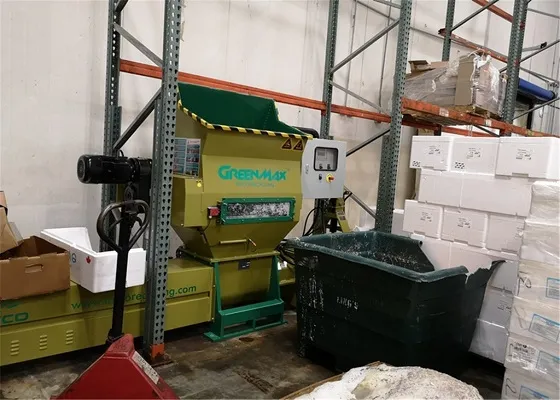
For seafood processors and fish distribution centres producing EPS waste regularly, onsite compaction can reduce collection frequency and prevent loose boxes from taking over working areas. The suitable equipment configuration depends on the volume generated, box dimensions, operating schedule and condition of the material.
It is important to note that an EPS compactor reduces volume; it does not clean contaminated boxes. Sorting and any necessary rinsing should take place before the material enters the machine.
What Happens After EPS Fish Boxes Are Compacted?
The compacted EPS blocks are sent to a specialist recycler, where they can be crushed again, melted, filtered and converted into recycled polystyrene pellets. These pellets are commonly used to manufacture rigid plastic products such as picture frames, decorative mouldings, profiles and other non-food-contact items.
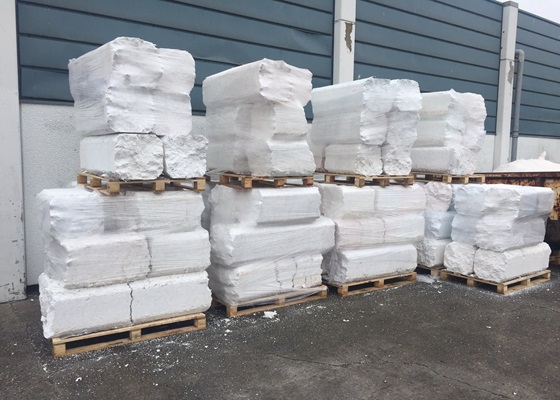
By separating preparation from volume reduction, seafood businesses can create a practical recycling route: drain and sort the boxes, compact the acceptable EPS onsite, and send the dense blocks to a confirmed downstream recycler.
FAQ
1. Do EPS fish boxes need to be completely dry before compaction?
Not always, but they should be drained and free of standing water. The downstream recycler may set additional moisture requirements.
2. Can EPS boxes with fish residue go into a compactor?
Boxes with minor residue may be accepted after suitable cleaning. Boxes containing significant organic waste should not enter the machine without confirmation from the equipment supplier and recycler.
3. Why compact EPS fish boxes before transportation?
Loose EPS takes up considerable space but weighs very little. Compaction reduces its volume, making storage, collection and transportation more economical.