 Select Language
 English
 Spanish
 Polish
 Japanese
 Italian
 French
7 Years of Real-World Use: GREENMAX M-C300 Styrofoam Recycling at a Furniture Warehouse
As Furniture Sales Grow, What Happens to All the EPS Packaging?
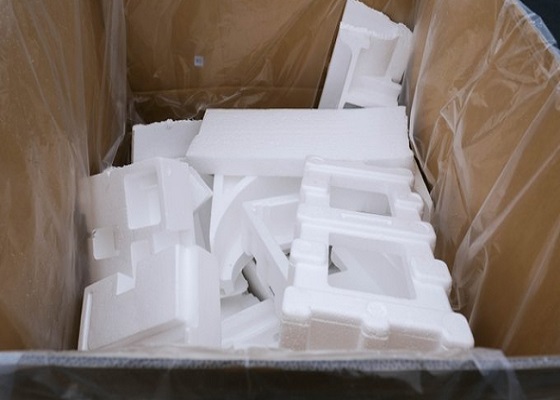
Living Spaces is a U.S. furniture retailer that combines brick-and-mortar stores with e-commerce. As its store network and online business continue to expand, furniture distribution generates large amounts of EPS packaging foam.
Sofas, tables, chairs, mattresses, and other furniture products often require EPS cushioning during transportation. EPS is lightweight but extremely bulky, so loose material can quickly take over valuable warehouse space.
Years ago, Living Spaces began looking for a more practical Styrofoam recycling solution for its warehouse operations and established a long-term partnership with GREENMAX.
Today, Living Spaces has purchased five GREENMAX M-C300 hot-melting EPS densifier units, installed at different warehouse locations to reduce the volume of EPS packaging directly on site.
Recycling Equipment Plus EPS Block Buyback
The partnership between GREENMAX and Living Spaces goes beyond the sale of a foam hot-melting machine.
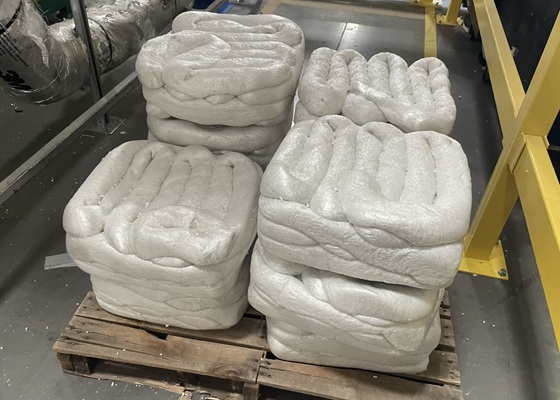
After processing through the M-C300, loose EPS foam is converted into smaller, high-density melted blocks. GREENMAX, a recycling equipment brand under INTCO Recycling, also provides an EPS and EPP block buyback service and purchases compacted foam blocks worldwide.
These materials then enter INTCO Recycling’s downstream recycling system, where they can be used to manufacture recycled picture frames, baseboards, outdoor decking, and other products.
For Living Spaces, this creates a cycle of “on-site processing – consolidated transportation – recycling and reuse.” Instead of simply paying to haul away bulky EPS waste, the company can reduce disposal pressure, generate ongoing revenue from the recovered material, and gradually offset the investment in its EPS densifier.
What Does the Operator Say After 7 Years With the GREENMAX M-C300?
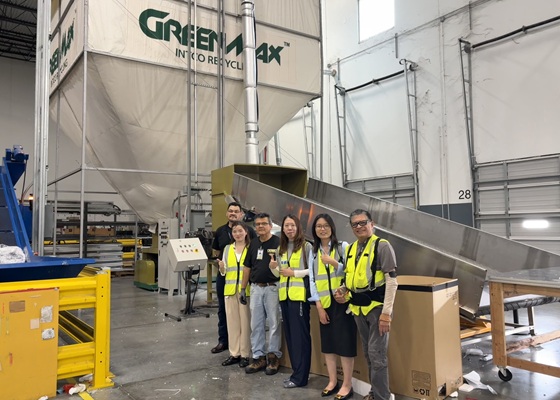
At a Living Spaces warehouse in the United States, GREENMAX interviewed machine operator Lawrence about his experience using the M-C300.
The machine has been in operation for about 7 years. When asked about its condition, Lawrence gave a straightforward answer: over the years, the machine has operated well without any major problems.
There was only one internal repair during that time. The on-site team completed the repair and restarted the machine in about 30 minutes.
For Lawrence, ease of use is just as important as reliability. He explained that the M-C300 is not complicated and operators can learn to use it after basic training. The instructions for the foam hot-melting machine are clear, while routine inspections and basic maintenance are also easy to carry out.
This is especially useful for warehouse operations with multiple shifts and different employees rotating between equipment.
When it comes to actual operating time, Lawrence believes the machine runs more than originally estimated:
“My maintenance guy said sixteen hours a week, but I think we run it more than that. On a light day, we run it about four hours. On a heavier day, it can run eight hours, and that’s basically seven days a week.”
For a furniture warehouse that continuously generates large volumes of EPS packaging, the EPS densifier is not an occasional piece of equipment. It has become part of the daily waste management and Styrofoam recycling process.
At the end of the interview, GREENMAX asked Lawrence what he would like the engineers to improve.
He smiled and said, “Maybe make it a little quieter.”
Other than that, he said the machine runs very well and has no problems.
When asked what advice he would give to companies looking for a new foam recycling machine, his answer was even more direct:
“I would choose GREENMAX machine.”
After 7 years of real-world operation, feedback like this can say more than a long list of technical specifications.
How Does the GREENMAX Mars Foam Hot-Melting Machine Process EPS?
The GREENMAX Mars series uses a process of “crushing + high-temperature melting + extrusion and volume reduction.”
EPS first enters the crushing system, where it is reduced into uniform pieces. A screw then feeds the material into the melting chamber, where it is heated, melted, and continuously extruded into high-density blocks. The volume reduction ratio can reach up to 90:1.
This process is especially suitable for businesses that generate large quantities of EPS, have limited storage space, or need to transport material over long distances. Melted EPS blocks are easier to store and can also reduce the risks associated with large piles of loose foam.
The processed EPS blocks can be sold to recyclers or plastic manufacturers. GREENMAX can also purchase qualified blocks and route them into downstream recycling, completing another step in the Styrofoam recycling process.
A hot-melting system is generally better suited for relatively dry EPS foam and can help separate some impurities during processing. If the material contains a high level of moisture or significant contamination, GREENMAX can recommend a more suitable pretreatment and equipment configuration based on the actual waste stream.
Service Continues After the Equipment Is Delivered
For GREENMAX, a complete EPS recycling solution includes more than the machine itself. It also includes operator support, technical service, and EPS block buyback assistance.
1. Faster Startup and Easier Employee Training
· Equipment installation, commissioning, and operator training;
· Operating manuals and machine operation videos.
2. Ongoing Maintenance and Technical Support
· Routine maintenance videos to support basic equipment care;
· Industry 4.0 remote technical support for online diagnostics and troubleshooting;
· Regular on-site customer visits to review equipment performance and answer questions;
· Local agent support in selected regions, plus 24/7 WhatsApp response.
3. A More Complete Styrofoam Recycling Loop
· EPS block buyback and support connecting recovered material with downstream recycling and reuse channels.
From the installation of the EPS densifier, to 7 years of continued operation, and finally to the reuse of compacted EPS in new recycled products, the Living Spaces case demonstrates a more complete EPS recycling model: reducing waste volume while turning bulky packaging foam back into a valuable material.