 Select Language
 English
 Spanish
 Polish
 Japanese
 Italian
 French
Is It Better to Densify Styrofoam Before Transportation?
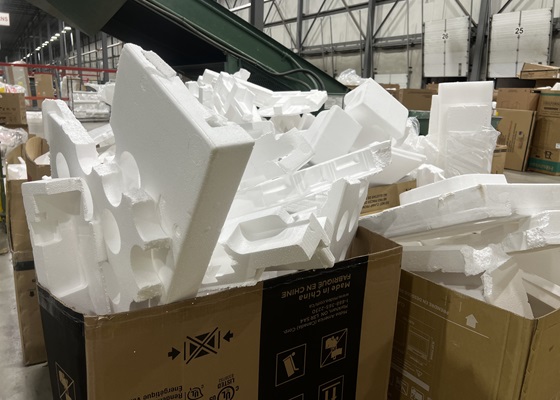
Loose Styrofoam is one of the least efficient materials to transport. It occupies a large amount of space but contributes very little weight, so a dumpster or trailer can appear full while carrying only a small quantity of polystyrene. For businesses generating EPS packaging regularly, this often means frequent collections, high transport costs and limited storage space.
Densifying Styrofoam before transportation can solve this problem by converting loose foam into compact ingots. Whether it is worthwhile depends mainly on how much EPS the business produces, how often it is collected and how far it must travel to the recycling outlet.
When Densification Is Worth Considering
On-site densification is most useful when Styrofoam is generated consistently. Appliance retailers, furniture warehouses, electronics recyclers and manufacturers may receive large molded corners, protective inserts and packaging blocks every day. Even when the material is clean and recyclable, its volume can quickly overwhelm the waste area. If loose foam requires several collections each month, densification can reduce the number of loads and allow more material to be stored before collection. The benefit becomes greater when the recycler is far from the site, since transporting a dense load is generally more practical than moving a trailer filled mostly with air.
Smaller businesses with occasional foam waste may not need their own equipment. If a nearby recycler accepts loose EPS or several locations can share a collection point, consolidation may be more economical. The decision should therefore be based on actual weekly volume and current collection arrangements rather than the number of foam pieces alone.
Foam Densifier Changes Styrofoam Transportation
A foam densifier crushes loose EPS, heats it and extrudes it into dense ingots. GREENMAX foam densifier has a processing capacity of up to 300 kg/h and can reduce suitable EPS volume by up to 90:1, depending on the material and operating conditions.
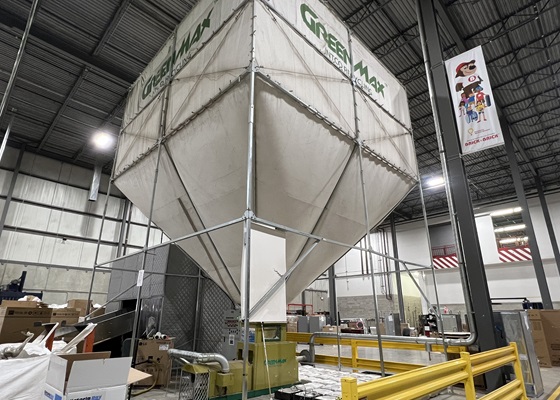
Once densified, the EPS takes up far less space and can be stacked, weighed and loaded more easily. Instead of arranging frequent collections for loose packaging, a business can store the ingots until it has enough material for a more economical shipment.
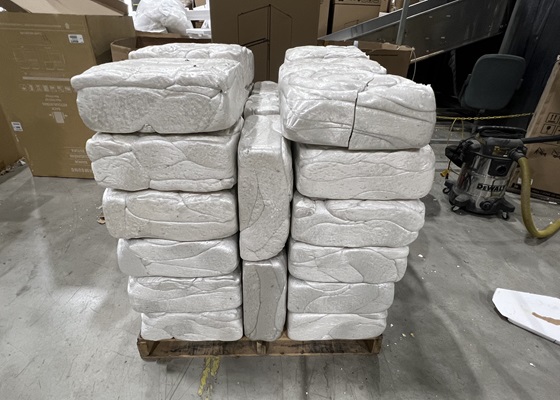
The main advantage is not simply a smaller waste pile. Densification changes the way the material is transported. A vehicle can carry substantially more polystyrene per trip, reducing the transport cost associated with each tonne of recovered material.
USA Appliance Business Reduces Loose-Foam Collections
A US appliance e-commerce business operates two locations and provides white-glove delivery services. Its delivery teams remove packaging from customers’ homes and return the material to the company’s facilities, generating approximately three 30-yard dumpsters of EPS packaging each week.
The company had relied on a recycling partner to collect the foam. As disposal and landfill costs increased, the service changed from free collection to a paid arrangement and eventually stopped altogether. The business still needed to remove packaging for customers, but storing and disposing of the loose foam was becoming increasingly impractical.
The company used GREENMAX foam densifier M-C200 to process the EPS on site. The packaging is crushed and converted into dense ingots, allowing the business to replace several dumpsters of loose material with a smaller, stackable output. At the time of the project follow-up, the machine had been operating for approximately eight months and remained in good condition.
For this business, densification supported both waste management and customer service. The company could continue taking packaging away after appliance deliveries without sending repeated loads of loose EPS for disposal.
INTCO Recycling purchase qualified EPS ingots according to their quality, quantity, location and current purchasing requirements. The recovered material can be processed into recycled polystyrene pellets and used to manufacture picture frames, mirror frames, decorative mouldings and other suitable plastic products.
1. Is it better to densify Styrofoam before transportation?
It is usually beneficial when a business generates EPS regularly, pays for frequent collections or transports the material over a longer distance. Occasional or low-volume waste may be better suited to shared collection.
2. Why is loose Styrofoam expensive to transport?
Loose EPS fills the available vehicle space long before the vehicle reaches its weight limit. This results in a high transport cost for a relatively small amount of plastic.
3. How much can a foam densifier reduce EPS volume?
A GREENMAX hot-melt foam densifier can reduce suitable EPS volume by up to 90:1. Actual performance depends on the material and operating conditions.