
 Select Language
 English
 Spanish
 Polish
 Japanese
 Italian
 French
Automated PE Foam Recycling With Minimal Operator Supervision in Automotive Assembly Plants
Before a finished vehicle leaves the production line, critical components such as dashboard assemblies, front-end frames, safety modules, and interior door panels must first be transported to automotive assembly plants in Europe.
Many of these components are manufactured in China, South Korea, Japan, and other Asian countries, requiring long-distance overseas shipping.
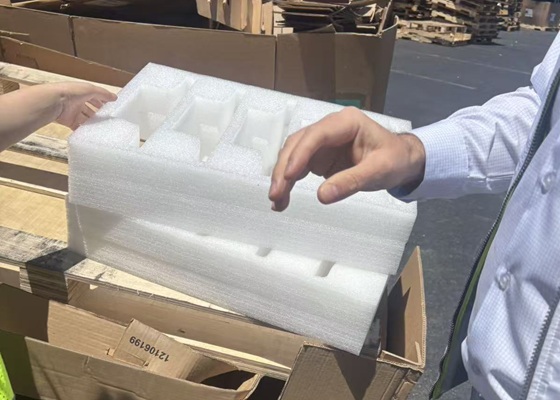
To prevent scratches, deformation, and broken clips during ocean transportation, container transfers, loading, and unloading, each component is typically protected with multiple layers of EPE, or expanded polyethylene foam.
Common protective packaging includes:
· EPE corner protectors;
· custom-fit inserts and slot liners;
· top and bottom cushioning pads;
· shock-absorbing foam blocks;
· custom-shaped PE foam packaging.
Once the components arrive at the plant, they are unpacked and transferred to the assembly line. At that point, the PE foam packaging has completed its protective function and is moved to the waste-storage area.
A midsize automotive component manufacturer may generate several thousand—or even tens of thousands—of EPE packaging pieces each month. A GREENMAX PE foam recycling system can automate the process with limited operator involvement while supporting the waste-tracking requirements of OEM supplier ESG audits.
Cost and Environmental Audit Pressure From PE Foam Packaging
For manufacturers of automotive interiors and front-end safety modules, the challenge is not whether EPE can be recycled.
The real issue is how to process thousands of bulky foam packaging pieces every month without disrupting assembly operations, while also reducing labor, floor-space requirements, and waste-hauling costs.
1. Limited Floor Space and Rising Hauling and Labor Costs
Floor space inside an automotive assembly plant is usually planned carefully. However, loose EPE foam is lightweight and extremely bulky, so it can quickly fill temporary storage areas, material cages, dumpsters, and trailers.
Third-party waste companies often charge by pickup, vehicle, trailer, or container. Because loose PE foam has very low density, each load contains relatively little actual material. This leads to frequent pickups and creates a recurring waste-management expense.
At the same time, most employees at automotive component plants are assigned to production lines. It is difficult to dedicate a worker to continuously feed foam waste into a machine.
Even when a separate operator is assigned, repetitive manual feeding can significantly increase the operating cost of the recycling program.
2. Higher Supply Chain Audit Requirements
Automakers such as Volkswagen, Stellantis, and Renault are placing greater emphasis on how suppliers manage packaging waste. During supplier audits, they may request records showing the amount recycled, the processing method, and the final destination of the material.
The European Union’s Packaging and Packaging Waste Regulation, or PPWR, also introduces requirements covering the full packaging life cycle, including packaging design, waste prevention, recovery, and waste management.
If a supplier cannot provide clear recycling records, weight tickets, or documentation showing where the material was sent, it may receive a lower score during an ESG or annual supplier audit. In some cases, incomplete documentation may also affect the evaluation of future projects.
An Automated System That Reduces Labor Requirements
Many plants have considered establishing an in-house PE foam recycling program but are concerned that purchasing a PE foam densifier could create an additional labor burden.
They do not want to install a machine that requires an employee to stand beside it and feed foam continuously throughout the shift.
This is the key difference between a conventional compactor and an automated expanded polyethylene recycling system.
An effective solution should adapt to the plant’s existing production schedule rather than force the production team to reorganize its workforce around the recycling equipment.
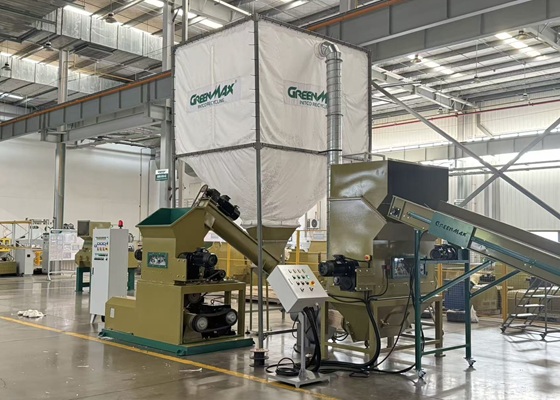
For the high-volume, low-density EPE packaging waste continuously generated by the automotive industry, GREENMAX recommends a system consisting of:
· a midsize GREENMAX MARS foam recycling machine;
· a shredding system for bulky EPE packaging;
· a large-capacity silo for shredded foam;
· an automatic feeding system;
· an automatic cutter;
· a water-cooling system;
· bulk bags or collection containers for the finished material.
Three Automated Steps With Limited Operator Involvement
The complete system is divided into three stages. Manual work is mainly limited to scheduled shredding, system startup, routine inspections, and replacement of full collection bags.
During the densification process, an operator does not need to remain beside the equipment continuously.
· Step 1: Centralized Shredding and Silo Storage
Plant employees can schedule half a day or one full day each week to process the accumulated EPE packaging waste.
Before shredding, adhesive tape, cardboard, paper labels, metal parts, plastic film, and other non-foam materials should be removed whenever possible.
The bulky packaging is fed into the shredding system and reduced to smaller, more uniform pieces. A blower then automatically transfers the shredded EPE into a large-capacity storage silo.
The silo capacity can be customized according to the customer’s weekly waste volume. Depending on the project, it may hold several weeks or up to one month of shredded EPE material.
After shredding is completed, the employee can stop that section of the system and return to other responsibilities. No continued machine operation is required at this stage.
· Step 2: Automatic Silo Feeding and Thermal Densification
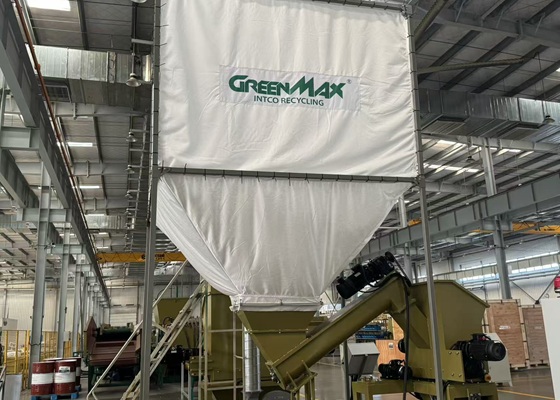
The large silo is installed between the shredder and the foam recycling machine. It functions as both a buffer-storage unit and an automatic feeding system.
When the silo reaches the planned material level, the plant can start the densification cycle according to its production and maintenance schedule.
The shredded EPE is continuously discharged from the silo and transferred into the heated melting chamber. The foam is heated, densified, and steadily pushed toward the discharge outlet by the screw.
The silo allows shredding and densification to take place at different times:
· employees periodically feed accumulated packaging into the shredder;
· the system automatically feeds and processes the stored foam during densification.
This arrangement eliminates the need for an operator to stand beside the machine for hours, manually loading one piece of foam after another.
· Step 3: Automatic Cutting, Water Cooling, and Bagging
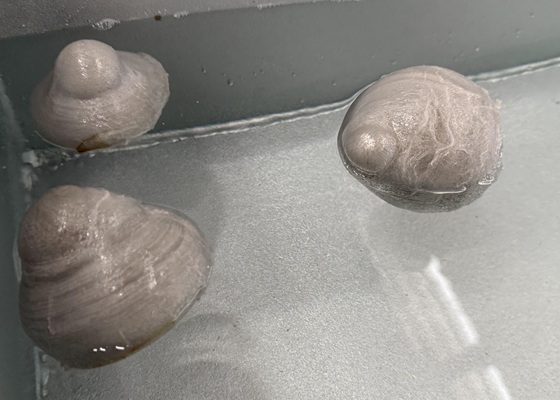
When the shredded material enters the GREENMAX MARS PE foam densifier, the EPE is melted and densified at a controlled temperature.
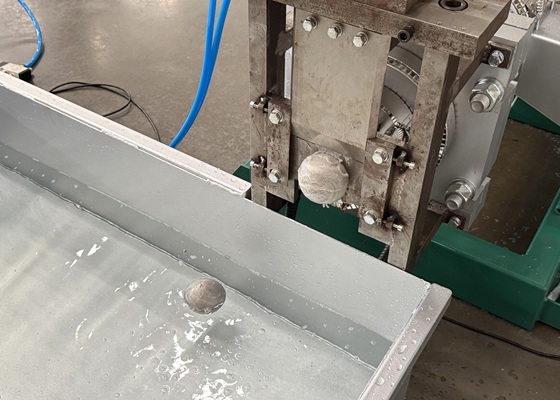
The screw continuously pushes the high-density PE melt toward the discharge outlet. An automatic cutter divides the extruded material into uniform, rounded pieces.
The material then passes through a water-cooling system, which lowers its temperature and stabilizes its shape before it drops directly into a bulk bag or collection container.
After cooling, the material is less likely to stick together, has a more consistent shape, and occupies significantly less space.
The filled bags can be placed on pallets for storage or prepared for shipment to a downstream plastics recycler.
Generating large volumes of EPE packaging? Ask about an automated PE foam recycling system.
Less Labor and Greater Layout Flexibility
This solution does not completely eliminate operator involvement. Instead, it concentrates labor into a few necessary tasks and eliminates long periods of repetitive manual feeding.
The routine densification process can run automatically without requiring a dedicated employee. This makes the system particularly suitable for automotive component plants where most personnel are assigned to production operations.
The operator is mainly responsible for:
· shredding accumulated PE foam packaging on a scheduled basis;
· starting or pausing the system;
· checking the silo material level;
· inspecting the water-cooling system;
· replacing and moving full collection bags.
GREENMAX MARS equipment uses straightforward start, pause, and temperature-control functions. Operators do not need advanced mechanical knowledge to run the system.
After approximately 15 minutes of basic training, plant personnel can independently complete routine shredding and system-startup procedures.
GREENMAX can also customize the complete PE foam recycling system around the plant’s existing layout.
If floor space is limited, the shredder and silo can be installed near the area where packaging waste is generated, while the PE foam densifier can be positioned in another available section of the facility.
The equipment can be connected by ductwork and a pneumatic conveying system. This arrangement simplifies waste collection and storage without requiring major changes to the production layout or extensive building modifications.
Supporting ESG Waste Traceability
EPE packaging from automotive assembly lines is not an occasional waste stream. It is generated continuously as imported components are unpacked and transferred to production.
The real challenge is establishing an automated expanded polyethylene recycling system that can operate within a fast-paced production environment, with limited labor availability and increasingly detailed ESG reporting requirements.
For EHS managers, another important advantage is the ability to document the amount processed and the final destination of the material.
When the densified PE material is sold or delivered to a downstream recycler, the plant may retain scale tickets, shipping records, receiving confirmations, recycling certificates, and other supporting documents.
These records can support packaging-waste recycling documentation during OEM supplier ESG audits, reducing reliance on vague disposal statements from third-party hauling companies.
FAQ | Automated PE Foam Recycling Systems
· What is the primary advantage of an automated recycling system?
The main advantage is that it significantly reduces manual labor while allowing the plant to recycle its EPE packaging waste in-house.
The large silo, automatic feeding system, thermal densification, automatic cutter, and water-cooling system allow the equipment to match the plant’s actual rate of waste generation.
Employees do not need to stand beside the machine and continuously feed foam into it.
· Does PE foam waste need to be shredded every day?
No. If the plant has adequate temporary storage space, shredding can be scheduled once a week or based on the amount of material generated.
The shredded foam is stored in the silo, and the densification process begins after the planned processing volume has been reached.
Storing shredded packaging in the silo also frees up floor space previously occupied by full-size foam pieces and helps prevent bulky packaging from accumulating throughout the plant.
· Does an operator need to remain beside the machine during densification?
No. The silo automatically feeds shredded material into the PE foam densifier.
The operator only needs to start the system, check the operating parameters, and perform periodic inspections. Continuous manual feeding is not required.