 Select Language
 English
 Spanish
 Polish
 Japanese
 Italian
 French
EPP LOOP Accelerates EPP Recycling in Europe: How Should Different Companies Build Their Strategy?
EPP LOOP is a Europe-wide system for the collection, recycling, and reuse of EPP, also known as expanded polypropylene. Its main goal is to bring more EPP waste back into the material cycle instead of sending it to incineration or landfill.
The initiative was voluntarily launched by companies across the industry, including raw material suppliers, EPP processors, end users, recyclers, and logistics partners. Its goal is to collect and recycle at least 75% of the EPP waste placed on the German market by 2030. In 2024, the system collected more than 7,000 tons of EPP waste through over 15 collection points in 10 European countries, and 95% of that material was recycled.
At the policy level, the EU Packaging and Packaging Waste Regulation (PPWR) is setting clearer requirements for packaging recyclability, recycling rates, and recycled content. As a result, expanded polypropylene recycling is no longer just a voluntary environmental action. It is becoming an important issue shaped by regulation, customer audits, and supply chain expectations.
What Types of EPP Waste Does EPP LOOP Cover?
The scope of EPP LOOP is clear. It mainly focuses on the following EPP waste streams:
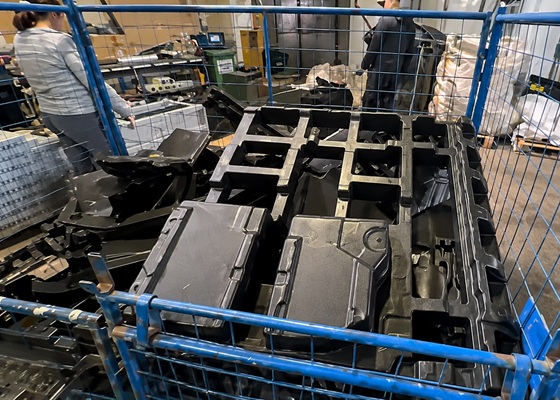
· Automotive parts packaging: EPP is widely used in the automotive supply chain as protective packaging, inserts, trays, pallet liners, container covers, and cushioning components. This is one of the largest EPP recycling sources in Europe.
· Reusable logistics boxes: EPP boxes and insulated containers are commonly used in large logistics centers, e-commerce warehouses, automated storage systems, and 3PL operations.
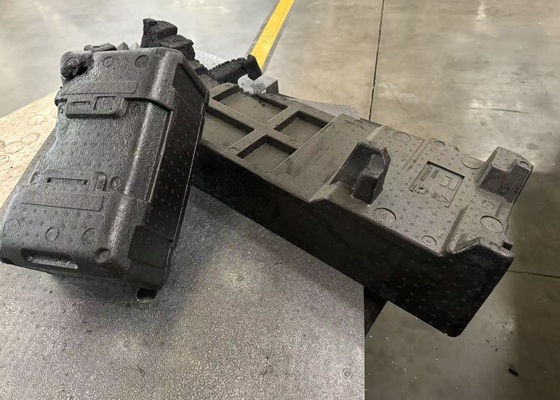
· Other EPP products: These include EPP helmets, sports equipment, child safety seats, toolboxes, thermal packaging, and other molded EPP products.
The companies involved in these waste streams include EPP foam molding manufacturers, automotive OEMs, Tier 1 and Tier 2 suppliers, packaging service providers, industrial end users, logistics companies, and recycling businesses. These companies are also key players in the development of EPP recycling.
How Should Different Companies Plan Their EPP Recycling Strategy?
1. EPP Manufacturers: Compaction + Pelletizing to Improve Internal Recycling
For EPP manufacturers, two common options are usually suitable: compaction and pelletizing.
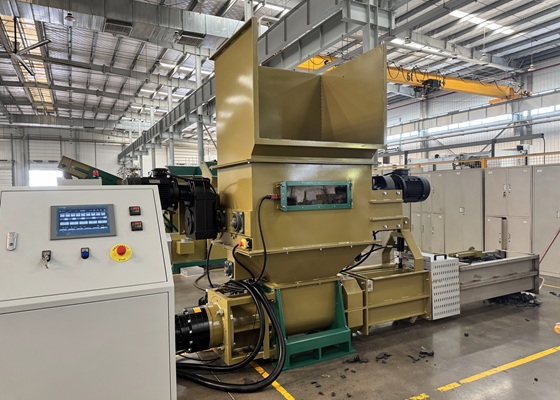
With the compaction route, companies can use an EPP foam compactor to compress EPP production scraps, edge trims, and defective parts into dense blocks. This reduces storage and transportation costs. The compressed blocks can then be sold to downstream recyclers or pelletizing companies.
If a manufacturer has a large and stable supply of clean EPP waste, or wants to build an internal expanded polypropylene recycling loop, it can further invest in a pelletizing line. In this way, EPP waste can be processed into recycled pellets and reused in part of production or sold to compounding companies.
The advantage of the compaction-and-sale model is that it is simple, requires lower investment, and offers faster payback. The advantage of pelletizing is that it helps manufacturers build an internal material loop and secure a more stable recycled material supply.
2. End Users: Compact First, Then Sell the Material
For end users, the most practical model is usually “compact and resell.” This means using equipment to process used EPP packaging and then selling the compressed blocks to downstream recyclers.
This group includes automotive plants, parts suppliers, electronics manufacturers, assembly plants, logistics centers, and warehouses. These companies do not produce EPP themselves, but they generate large volumes of used EPP packaging during daily operations, such as automotive part inserts, reusable boxes, cushioning parts, and transport packaging.
These materials are lightweight but bulky. They take up space quickly, increase hauling frequency, and raise disposal costs. Since end users usually do not need to convert EPP waste directly into recycled material themselves, their main goal is to reduce waste volume, improve on-site management, and increase the resale value of the material.
A polypropylene compactor designed for EPP packaging can compress used EPP into blocks that are easier to store, bale, load, and sell to professional recyclers. Compared with shipping loose EPP waste, this model greatly reduces transportation and storage pressure while turning a disposal cost into a recoverable value.
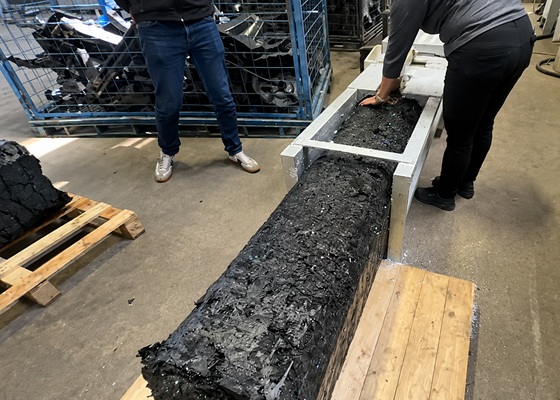
The GreenMax Zeus Series EPP foam compactor is well received in the European market because it produces stable blocks with strong downstream acceptance. The machine uses screw compaction and slight surface melting to keep the block shape stable while helping preserve the original material properties as much as possible. This makes the material more suitable for higher-value recycling applications later.
For companies that need a higher compression ratio and better container loading efficiency, a hot-melt foam densifier can also be a suitable option.
For automotive plants, electronics manufacturers, and assembly companies, the core value of this expanded polypropylene recycling model is simple: reduce on-site handling pressure and turn used EPP packaging from a cost center into a new profit source.
3. Recyclers: Pelletizing and Modification to Complete the Closed Loop
For recyclers, the key to EPP recycling is not just collecting material. The real competitive advantage lies in whether they can turn waste EPP into higher-value recycled raw materials in a stable and consistent way.
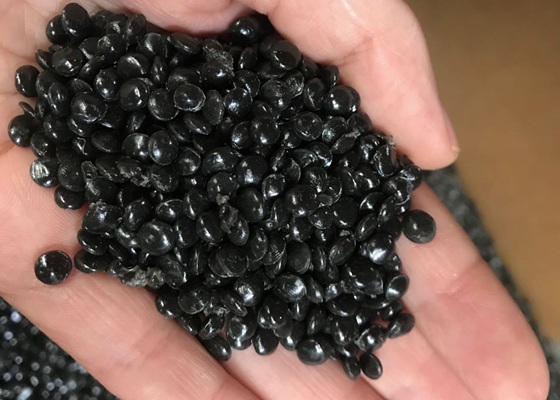
Recyclers can further invest in melt pelletizing, PP modification, and recycled material application development. By doing so, waste EPP can be converted into recycled pellets for EPP bead production, PP compounds, or injection-molded parts. These materials can then be sold to packaging manufacturers, automotive suppliers, and industrial product manufacturers.
Compared with selling compressed blocks directly, recycled PP pellets usually offer higher profit potential. As European policies continue to promote the use of recycled materials, the demand for high-quality recycled pellets is also expected to grow.
For small and mid-sized recyclers that are not ready to invest in a full pelletizing project, starting with a polypropylene compactor can be a practical first step. They can collect EPP packaging waste from nearby companies, compact it, and sell it into the recycling chain.
In the future, recyclers will compete more on pellet purity, performance consistency, and customized modification capability. This is also the direction promoted by EPP LOOP: expanded polypropylene recycling should not stop at collection and compaction. It should move toward true closed-loop recycling.
What Support Can GREENMAX Provide?
As the EPP recycling system in Europe becomes more mature, GREENMAX can provide solutions for different companies, from front-end volume reduction to downstream recycling support.
1. Cold compaction: GREENMAX provides an EPP foam compactor with a compression ratio of up to 50:1, suitable for companies that want to reduce EPP waste volume and sell compressed blocks.
2. Hot-melt densification: For customers that need a higher compression ratio and better container loading efficiency, GREENMAX offers a foam densifier with a compression ratio of up to 90:1.
3. EPP pelletizing and modification experience: GREENMAX can support customers with EPP pelletizing equipment and recycled material modification know-how.
4. EPP block buyback support: GREENMAX can help customers connect compressed EPP blocks with recycling channels.
5. Localized service in Germany: GREENMAX provides local after-sales support, fast online response, and regular on-site visits for European customers.
Whether a company is an EPP manufacturer, an end user, or a recycler, early planning is becoming increasingly important. By sorting, compacting, pelletizing, and reusing EPP waste, companies can reduce disposal costs, improve material value, and participate more actively in the circular economy.
In this process, Foam recycling is no longer just about waste treatment. It is becoming part of a broader material strategy for modern packaging, logistics, and industrial manufacturing.