
 Select Language
 English
 Spanish
 Polish
 Japanese
 Italian
 French
EPS Dust Recycling: Recovering Value from Fine Foam Waste
EPS dust recycling turns the finest, dustiest fraction of a plant's waste into the same saleable ingot as its offcuts, and the material is not the obstacle. Handling is. An EPS building products producer in Mexico, ran into that distinction when the dust from its recycling system could not be reused and could not be given away: local rules treated the powdery, bulky EPS as hazardous waste, and neither recyclers nor waste disposal companies would collect it. The company ended up ordering a machine configured for that one stream, and the dust now leaves the plant as hot-melt ingots that pelletize into grade A particles.
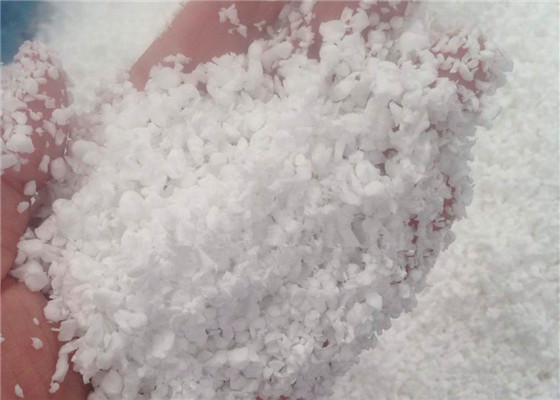
That sequence is common. Buyers already pay for dense blocks and pay less for anything loose or dusty, so the value in fine EPS was never in question. What decides the outcome is how the powder is captured, fed, and contained between the collection point and the machine.
Which Process Fits EPS Dust Best
Cold compaction handles scrap EPS well, but it is a poor fit for fines on their own. Screw and hydraulic compactors weld material together with friction and pressure, and a loose, powdery feed can produce blocks that stay soft in the middle. Blocks like that still need ton bags, still hold a low payload per container, and can shed dust again once a pelletizer starts working on them.Hot melting avoids that outcome, which is why it is the usual direction for dust. The machine heats the fines until they fuse, and the result is a solid, uniform ingot that keeps its shape, stores without shedding, and ships at a density buyers will pay for. Because the same machine can be configured to take offcuts as well, a plant does not have to run two lines to deal with both.
Choosing between them comes down to a short list of questions: how much dust the plant produces per hour, how that dust is currently captured, whether dust and scraps will share one machine, what power is available, and what the buyer's specification allows. A plant with a modest, steady dust stream that wants one machine for everything is in a very different position from one that already pelletizes in house and needs a predictable feedstock.
How GREENMAX Solution for EPS Dust Works
GREENMAX builds dust handling around the collection point a plant already has, rather than asking the plant to rework its line. The inlet and screw feeder are sized to the existing dedusting system, so powder moves from bag, bin, or silo into the machine without a manual transfer, and the unit can be configured as an EPS dust densifier or as a hot melting machine depending on where the ingots will go next.
The engineering effort goes into keeping that feed steady, because bridging in the hopper is the usual reason a dust machine stops performing. Anti-bridging hardware and level sensing keep the feed matched to the output, so the machine runs without an operator standing over it, and the ingots that come out are dense enough to sell rather than store. INTCO Recycling also purchases the densified material, which turns the same dust a plant used to pay to remove into a line on the revenue side.
What EPS Dust Recycling Delivered for TECNOLOSAS
TECNOLOSAS had the problem in its purest form: dust that could not be reused and could not be given away, because local rules classed it as hazardous waste. The company ordered a customized EPS dust densifier. GREENMAX team visited the plant after foam densifier M-C50 went in and found roughly 8 tons of hot-melt ingots already accumulated. The material met the buyer's specification, and TECNOLOSAS went on to complete its first container sale to INTCO Recycling, which shipped it to a plant in Malaysia and produced grade A particles from it. The company has been expanding its EPS recycling business since.
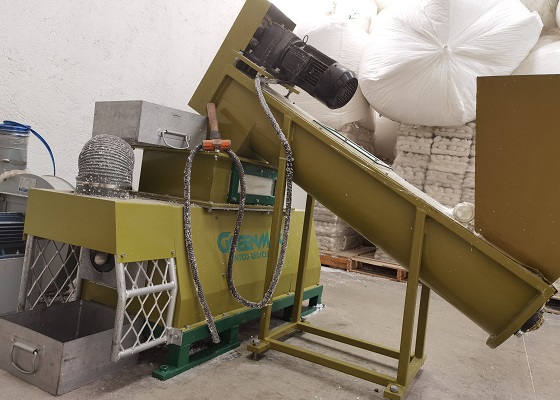
What changed for TECNOLOSAS was the machine setup and the containment around it, not the waste stream. The same dust that no local hauler would touch became a grade A feedstock once it was captured properly and fused into a consistent ingot, which is the practical test for any plant weighing whether to recycle its own fines.
Fine EPS dust is less a waste problem than a handling problem, and handling is solvable. Plants that solve it stop paying to move air, stop losing floor space to bags, and start shipping a material buyers accept on the same terms as their scrap. The first useful step is usually a simple one: measure how much dust the line really produces, then let that number size the machine.