 Select Language
 English
 Spanish
 Polish
 Japanese
 Italian
 French
EPS Recycling & PET Bottles Baling During Christmas Peak | Volume Reduction Solutions
As Christmas approaches, retailers, fulfillment centers, warehouses, and distribution hubs across the United States enter the busiest period of the year. Higher order volumes, faster inventory turnover, and promotional campaigns all lead to one inevitable result: a sharp increase in packaging waste.
Among the most challenging materials are lightweight but bulky plastics—especially EPS (expanded polystyrene foam), protective foams such as EPE and EPP, as well as large quantities of PET bottles, cardboard, and plastic film.

Holiday “Unboxing” Should Not Create Warehouse Chaos
Frequent unboxing and rapid outbound shipping should not translate into cluttered backrooms or unsafe warehouse conditions. Most businesses understand waste generation is unavoidable. The real issue is that packaging waste arrives too quickly, takes up excessive space, and requires structured handling.
During the weeks leading up to Christmas, waste volumes surge due to:
- Increased inbound shipments and restocking
- Higher use of cartons, fillers, and insulated packaging
- Protective packaging for long-distance transportation
EPS foam is particularly problematic because it:
- Weighs very little but occupies significant space
- Breaks easily and spreads throughout the facility
- Disrupts internal traffic flow and safety
- Becomes costly to transport when shipped loose
At the same time, PET bottles accumulate rapidly from beverages, employee areas, promotional events, and holiday gift packaging.
For U.S. operations facing rising landfill fees and hauling costs, organizing waste streams and preparing materials for recycling becomes critical.
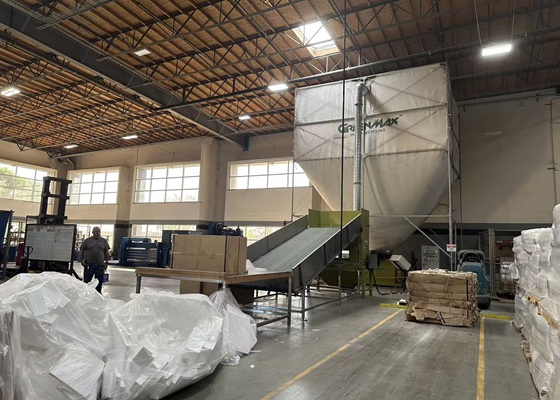
EPS Recycling Starts with On-Site Volume Reduction
The first step toward effective EPS recycling is reducing volume at the point of generation.
Instead of storing loose foam or oversized bags, many U.S. companies now rely on an EPS compactor to densify foam on-site.
Once compacted, EPS is transformed into dense blocks, delivering clear benefits:
- Frees up valuable warehouse space
- Reduces mess and airborne foam debris
- Lowers hauling and transportation costs
- Improves material consistency for downstream recyclers
This approach applies not only to EPS but also to other packaging foams. If EPE or EPP waste is generated, the same rule applies: compact first, transport later.
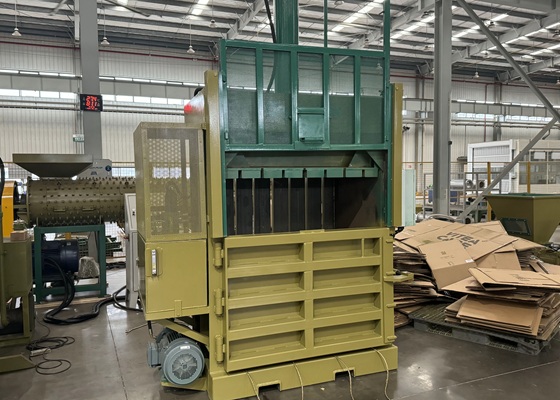
PET Bottles Baler: Cleaner Operations, Faster Recycling
Another key waste stream during the holiday season is PET bottles. Using a PET bottles baler allows loose bottles to be compressed into stable, stackable bales.
This solution is especially suitable for:
- Retail chains and store backrooms
- Fulfillment and distribution centers
- Manufacturing and packaging facilities
- Recycling operations and material brokers
Baling PET bottles is not just about visual cleanliness. It improves material handling, enhances safety, reduces transportation frequency, and increases acceptance by recycling partners.
The same baling logic can also be applied to cardboard and plastic film to maintain organized waste areas and improve material value.
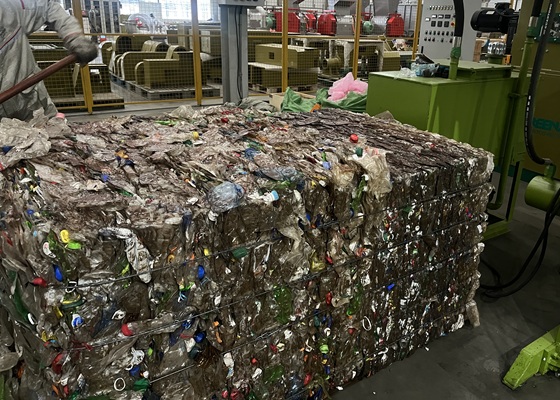
A Simple Holiday Peak Strategy: Sort + Compact + Bale
During peak seasons like Christmas, standardized processes outperform reactive solutions.
An efficient waste management flow typically includes:
- Source separation: EPS foam, PET bottles, cardboard, and film
- EPS recycling using an EPS compactor
- PET bottles baling with a baler
- Scheduled pickups to control hauling costs
- Material standardization for cleaner streams and better pricing
What Are the Results?
Reduced operational pressure during peak season, better space utilization, improved workplace safety, and measurable savings in logistics and waste handling costs.
The spirit of Christmas—efficiency, responsibility, and sustainability—can also be reflected in daily operations through reduced waste and greater participation in the circular economy.
If your U.S.-based operation is struggling with accumulated EPS foam or PET bottles, start with two practical steps:
Volume reduction and baling.
This approach requires a manageable investment, delivers fast results, and provides measurable returns.
Looking for the right solution for your facility? Prepare the following information: waste type (EPS/PET), daily volume, available space, and hauling schedule. With this data, an effective and compliant solution can be defined.