
 Select Language
 English
 Spanish
 Polish
 Japanese
 Italian
 French
Foam Recycling for Solar and Energy Equipment Warehouses
Solar and energy equipment warehouses handle more than photovoltaic panels. Inverters, battery storage systems, electrical cabinets, monitoring devices and replacement components all need protection during long-distance transportation. Depending on the supplier and product, much of this equipment arrives with EPE foam sheets, pads, corners or protective inserts. Some shipments may also contain rigid EPS, commonly known as Styrofoam, but this should be identified and separated.
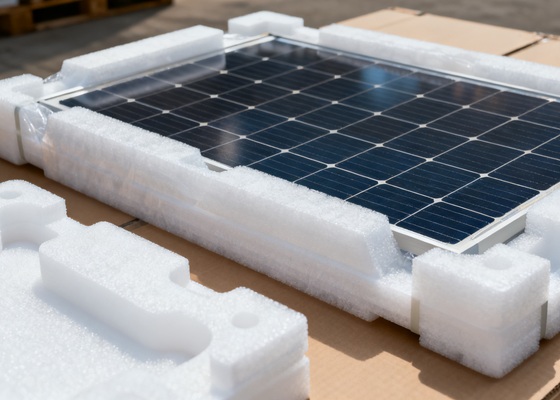
Once the equipment is unpacked, the cardboard is usually flattened and the pallets are stacked for collection. EPE foam is less straightforward. It weighs very little, occupies considerable space and tends to rebound after compression. For warehouses processing regular project deliveries, handling loose foam as general waste can lead to repeated collections and poor use of valuable floor space.
Loose EPE Foam Is Expensive to Move
The main obstacle is not the weight of EPE foam but the space it occupies. A truck or waste container can appear full while holding only a small quantity of actual polyethylene. Its elasticity also means that the material may expand again after conventional compression, making loose EPE difficult to stack and transport efficiently.
The problem can become more noticeable during large solar projects. A warehouse may receive several concentrated shipments, creating a temporary rise in packaging waste even if its average weekly volume is moderate. Equipment capacity should therefore be based on peak delivery periods as well as average generation.
Before choosing a recycling system, the warehouse should record the approximate weight of EPE received each week, the number of containers currently collected and the amount of space used for storage. These figures provide a clearer basis for evaluating on-site volume reduction.
Using Foam Densifier MARS at the Warehouse
GREENMAX Foam Densifier MARS crushes loose EPE, heats the material and extrudes it into dense ingots. The hot-melting process helps overcome the rebound of flexible PE foam and can reduce its volume by up to 90:1, depending on the condition of the material and the operating process.
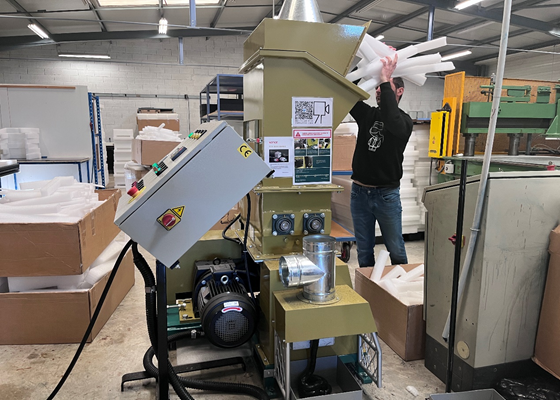
After densification, the EPE requires far less storage space and is easier to stack, handle and load for transportation. Instead of arranging frequent collections of loose packaging, the warehouse can accumulate dense ingots until it has an economical shipment for a downstream recycler.
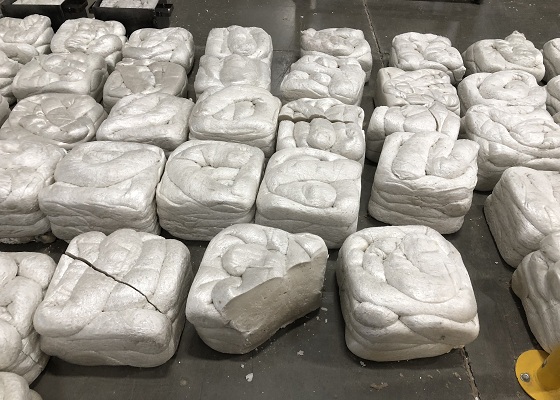
Dense EPE ingots can be processed into recycled polyethylene pellets and used in suitable plastic products. INTCO Recycling also purchases qualified compacted foam material according to its quality and current purchasing requirements, connecting GREENMAX equipment with a downstream recycling route.
Building a Practical Warehouse Recycling Process
A workable system begins with material identification and separation. Clean EPE is collected at the unpacking area, checked for contaminants and moved to the densifier. The resulting ingots are stored by material type and shipment batch until they can be transported to the recycler.
For solar and energy equipment warehouses, the purpose of this process is not simply to add another recycling bin. It is to keep bulky packaging from taking over the receiving area, reduce unnecessary waste collections and prepare the material for an actual downstream use.
GREENMAX can configure Foam Densifier MARS according to the warehouse’s foam type, weekly volume, peak delivery periods and available space. Material testing before equipment selection can also confirm how the EPE packaging behaves during crushing and hot-melt densification.
FAQ
1. Can EPE packaging from solar equipment be processed in Foam Densifier MARS?
Yes, clean EPE foam can be processed by Foam Densifier MARS. The packaging material should still be identified and checked for tape, labels, metal parts and other contaminants before feeding.
2. Can EPS, EPE and EPP packaging be mixed together?
They should normally be collected separately. Even if the densifier can process more than one foam type, mixed output may not meet the quality requirements of the downstream buyer.
3. Does a warehouse need a large amount of EPE to justify a densifier?
The decision depends on more than weight. Collection frequency, occupied floor space, peak delivery volumes, labor, transport costs and the availability of a buyer should all be considered.