 Select Language
 English
 Spanish
 Polish
 Japanese
 Italian
 French
Focusing on the Automotive and Electronics Industries: GreenMax Promotes Closed-Loop Foam Recycling at IFAT Germany
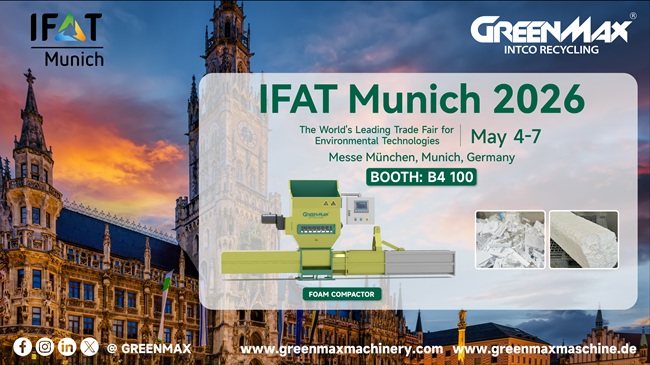
IFAT Germany has successfully concluded. As one of the world’s leading trade fairs for environmental technologies, IFAT 2026 brought together about 3,400 exhibitors from around 60 countries and regions, showcasing innovative solutions in recycling, circular economy, and environmental protection.
During the exhibition, GreenMax mainly received customers from Europe and South America. Through on-site discussions, we found that many customers’ foam waste processing needs were focused on two areas: EPP foam packaging in the automotive supply chain and PE foam packaging used for transporting electronic equipment.
Especially as the European PPWR regulation is expected to be generally applied in August 2026, requirements for recyclable packaging design and higher recycled content are encouraging automotive and electronics supply chains to actively seek more suitable foam packaging recycling solutions.
GreenMax Provides a More Complete Foam Recycling Solution
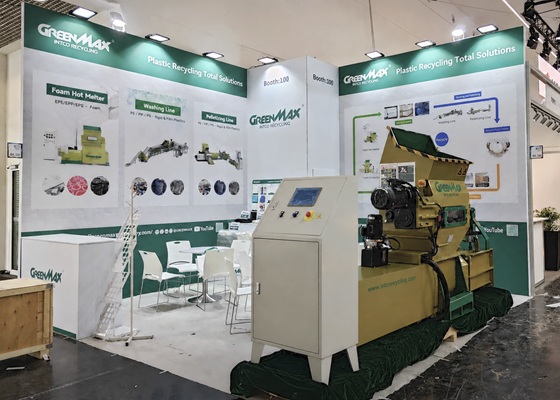
As a full-scope foam recycling solution provider, GreenMax offered preliminary recycling recommendations to different customers at IFAT. These solutions help customers build a more practical closed-loop recycling path, including foam volume reduction equipment, downstream pelletizing systems, and the purchase of compressed foam blocks and recycled pellets.
This means customers can not only solve the problem of “how to process foam waste,” but also plan ahead for how the compressed material can be reused, sold, or returned to a circular recycling system.
Automotive Industry: Growing Demand for EPP Foam Recycling
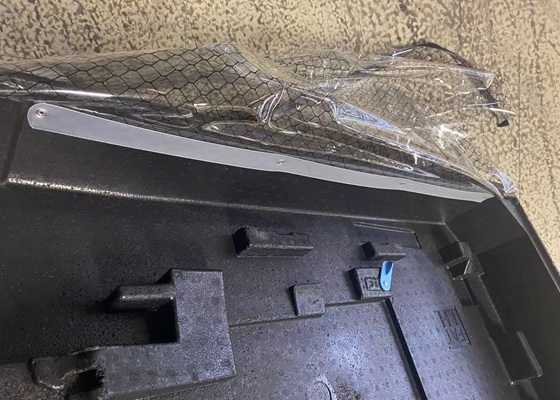
In recent years, the amount of EPP waste in the European market has increased significantly. On one hand, the export of batteries and automotive parts from China to Europe has brought more EPP packaging into the market. On the other hand, some automotive parts packaging is gradually shifting from EPS to EPP because EPP offers better cushioning performance and higher reuse value.
However, EPP is denser and tougher than traditional Styrofoam materials. Machines originally designed for processing EPS foam may not be able to handle EPP waste stably. Based on similar processing needs seen in battery manufacturing facilities such as CATL’s German plant, the main challenges in EPP foam processing include high moisture content, high density, and limited downstream applications.
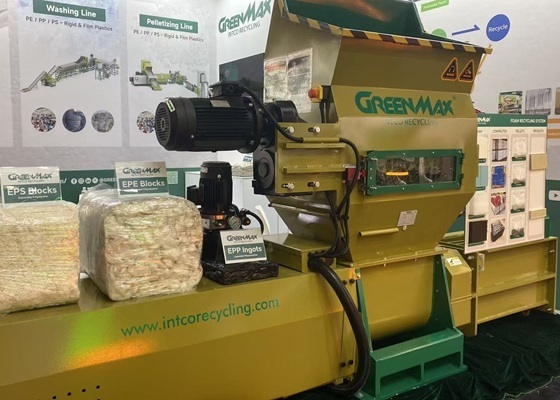
For this type of material, GreenMax recommends cold-pressing technology. The EPP foam compactor processes EPP waste through screw-based physical compression and can be upgraded with stainless steel components to better handle high-moisture waste that has been stored outdoors.
During compression, moisture can be continuously discharged. At the same time, an independent heating device and control system can be added at the discharge end to slightly heat the surface of the compressed foam blocks, helping the EPP blocks form more stably.
For high-density EPP, GreenMax can also configure a double-shredding system. This makes the waste smaller and more uniform before entering the compression chamber, improving the final compaction result.
In addition, GreenMax’s parent company, INTCO Recycling, has deep experience in the modification and application of recycled PP pellets. GreenMax can therefore provide customers with practical suggestions for downstream EPP applications. We also offer EPP compressed block buyback services, using the material to produce new PP products.
As the price of virgin EPS material in Europe continues to rise, packaging manufacturers are paying more attention to waste recycling and reuse. The GreenMax EPP foam compactor can process both EPP and EPS, helping customers reduce equipment investment costs.
Electronics Industry: PE Foam Packaging Recycling Becomes a New Focus
The South American electronic equipment recycling market is expected to reach USD 12 billion by 2030, with a compound annual growth rate of about 12.5%. Brazil, as the core regional market, accounts for approximately 45%. Driven by policy support, rising environmental awareness, and increasing e-waste recycling demand, the need for related recycling equipment is growing rapidly.
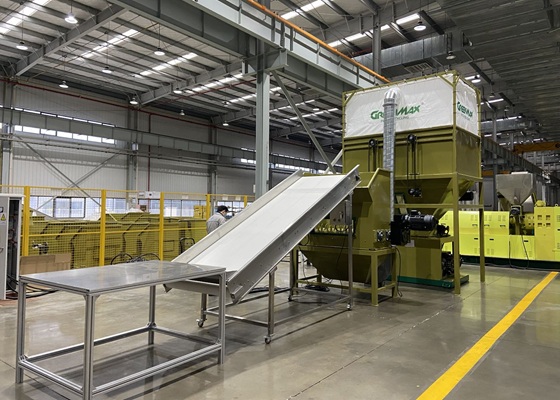
At this IFAT exhibition, GreenMax successfully signed an order for a PE foam densifier M-C300E. This is a large foam volume reduction machine that can efficiently process EPS, PE foam, EPP, and other foam materials.
Electronic devices and components are high-value products, so soft and shock-absorbing PE foam is often used during transportation. However, PE foam is lightweight, soft, and bulky. Without volume reduction, it creates high transportation costs and makes centralized recycling more difficult.
For electronics manufacturers, assembly plants, and recycling companies, installing a foam volume reduction machine can significantly reduce foam waste volume, ease storage and transportation pressure, and create better conditions for downstream reuse.
PE Foam Densifier M-C300E: Optimized for PE Foam Recycling
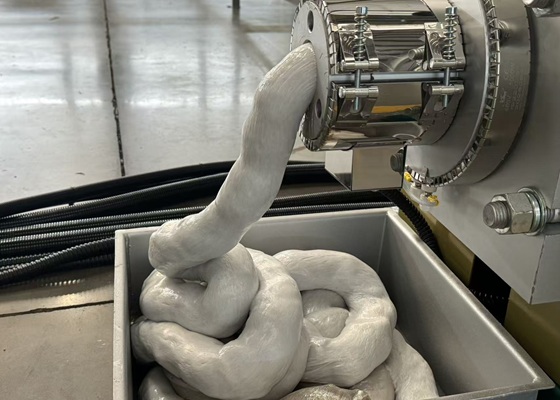
The PE foam densifier M-C300E reduces foam waste volume to about 90:1 through shredding and high-temperature hot melting. Unlike standard models, this machine has been specially optimized for PE foam recycling.
· An agitator is added between the shredding blades and the compression chamber to prevent soft PE pieces from accumulating at the chamber inlet and forming material bridging.
· The moving shredding blades are enlarged and lengthened, and the material is upgraded to Q45 carbon steel with higher hardness to improve cutting performance and wear resistance.
· A screen is added inside the shredding chamber to ensure that only sufficiently small pieces enter the melting stage, allowing the material to be fully melted during heating.
· The silo for storing shredded foam pieces is upgraded to a metal structure and equipped with five agitators to promote stable feeding of PE foam pieces.
The Exhibition Has Ended, but Cooperation Has Just Begun
This IFAT exhibition made it clear to GreenMax that customers in Europe and South America are shifting their focus in foam recycling from simple waste disposal to compliance, volume reduction, reuse, and closed-loop recycling.
Whether it is EPP foam recycling in the automotive industry or PE foam packaging recycling in the electronics industry, GreenMax can combine EPP foam compactor, PE foam densifier, downstream pelletizing, and buyback services to provide customers with a more complete foam recycling solution.