 Select Language
 English
 Spanish
 Polish
 Japanese
 Italian
 French
Get Styrofoam Packaging Out of the Backroom: A Practical Styrofoam Recycling Solution for Appliance and Furniture Retailers
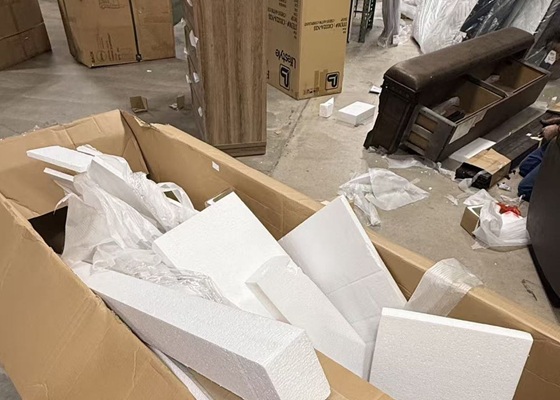
Walk into the loading area of an appliance or furniture store, and the same scene appears again and again: cardboard boxes are flattened, wood pallets are neatly stacked, but white EPS foam—commonly called Styrofoam in the U.S.—is scattered across the backroom.
Corner protectors, cushioning blocks and appliance bases pile up quickly. Some pieces may even blow into the parking lot shortly after employees finish cleaning.
This material can be managed more efficiently. A GREENMAX EPS compactor helps appliance stores, furniture retailers and regional distribution centers establish a cleaner Styrofoam packaging recycling process.
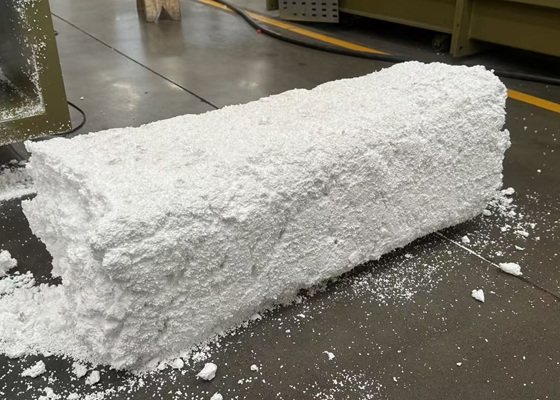
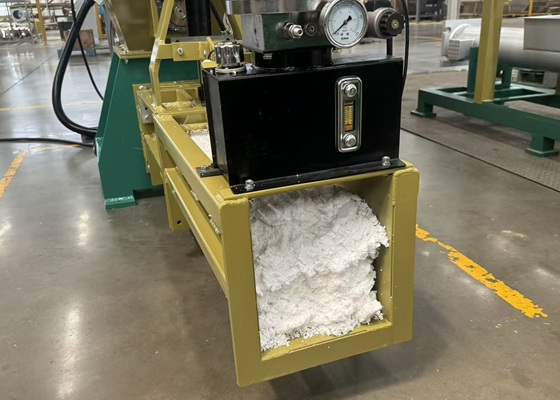
After unpacking, employees feed dry EPS packaging into the machine. The foam is shredded and mechanically compressed into dense, uniform blocks that can be stacked on pallets and periodically collected by a recycling partner.
For U.S. retailers, this is one of the most practical ways to make Styrofoam recycling part of routine backroom operations.
Why Does EPS Packaging Become a Long-Term Problem?
Loose EPS is recyclable when a suitable end market is available, but its extremely low weight-to-volume ratio makes storage and transportation inefficient. The material quickly consumes space while increasing handling and hauling costs.
1. It Creates a Poor Backroom Appearance
Retailers invest heavily in attractive showrooms and customer experiences. However, customers picking up an order, delivery teams and brand auditors may still see piles of foam and loose fragments in the loading area.
For national chains and premium furniture or appliance brands, a disorganized backroom can weaken the professional image created on the sales floor.
2. It Adds Housekeeping and Safety Concerns
Loose EPS is a combustible material. Large quantities stored around electrical equipment, loading docks, forklift aisles or emergency routes can make the work area harder to manage.
OSHA requires workplace aisles and passageways to remain clear and states that exit routes must remain unobstructed. Reducing bulky foam into stackable blocks helps facilities maintain cleaner traffic areas, although each business must still follow applicable fire codes and local safety requirements.
3. It Consumes Valuable Storage Space
EPS is lightweight but bulky, so it can quickly fill dumpsters, storage rooms and loading areas.
Compacting the material at the source frees up working space, keeps forklift routes clear and reduces the time employees spend breaking foam by hand, filling bags and cleaning loose pieces.
4. It Makes Packaging-Waste Management More Consistent
An EPS recycling machine allows stores to manage foam packaging in a process similar to cardboard and wood pallets:
Separate the material → reduce its volume → store it in one location → document pickup → send it to a qualified recycler
This creates a more consistent Styrofoam packaging recycling program and makes it easier for retailers to track how packaging waste leaves the facility.
Why Is a Cold-Compaction EPS Compactor Suitable for Stores and Distribution Centers?
An effective retail recycling process begins with sorting and on-site volume reduction:
Separate EPS → remove tape and cardboard → shred and compact → palletize the blocks → schedule recycler pickup
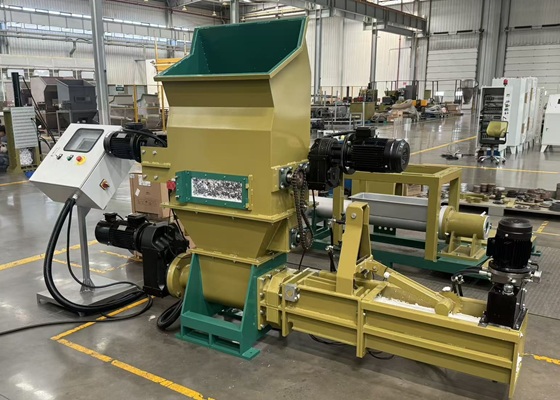
The GREENMAX Apolo EPS compactor does not melt the material. It shreds and mechanically compresses clean, dry EPS packaging, reducing its volume by up to 50:1.
1. No melting odors: The machine uses mechanical screw compression rather than a hot-melting process, helping reduce the impact on the warehouse environment.
2. Low energy demand: A model processing approximately 220 lb of EPS per hour has an installed power rating of about 10 kW.
3. No high-temperature melting section: The cold-compaction EPS recycling machine avoids the hot surfaces, smoke and burn concerns associated with melting equipment.
4. Clean, stackable blocks: Cold-compacted EPS blocks have a uniform shape and can be placed directly on pallets. Because the foam is not fully melted, it remains suitable for downstream grinding and pelletizing.
5. Training and service support: GREENMAX provides operating videos, manuals and routine maintenance guidance. On-site installation and operator training are also available in supported regions of the United States.
Flexible EPS Recycling Systems for Different Store Sizes
GREENMAX can configure the equipment according to available space, foam volume and the facility’s operating process.
· Compact Solution for Individual Stores
A smaller store with limited storage space and moderate EPS volume can use a compact cold compactor.
The equipment requires less than approximately 22 square feet of floor space and can be installed near a loading dock or in a warehouse corner. Employees can process accumulated foam on a scheduled basis and convert it into stackable blocks.
· Standard Solution for Retail Chains and Distribution Centers
Higher-volume stores and regional distribution centers can use a standard EPS compactor combined with a large hopper or storage silo.
After shredding, the EPS can be temporarily stored and then compacted in batches. The finished blocks are palletized and prepared for shipment to a recycler.
This configuration creates a more automated Styrofoam recycling system with less manual handling and enough capacity for a continuous flow of appliance and furniture packaging.
The GREENMAX Apolo EPS compactor turns space-consuming EPS into a standardized recyclable material that is easier to store, track and transport.
For appliance and furniture retailers, the result is a cleaner backroom, more organized safety inspections and a clearer Styrofoam packaging recycling process.
What Do U.S. Packaging and Recycling Policies Mean for Retailers?
The United States does not currently have one nationwide packaging regulation equivalent to the European Union’s PPWR. Recycling requirements, accepted materials and reporting practices vary by state, municipality and recycling provider.
However, packaging extended producer responsibility programs are expanding. California’s SB 54 establishes an EPR system for packaging and certain single-use plastic products, while Oregon and Colorado have also introduced statewide producer-funded recycling programs.
These programs primarily assign responsibility to producers, but they also increase attention on packaging design, collection, sorting and end-market documentation throughout the supply chain.
For furniture and appliance retailers, this makes it increasingly valuable to:
· separate clean EPS from tape, cardboard and other contaminants;
· confirm that a local recycler accepts compacted EPS;
· maintain pickup and weight records when required;
· keep bulky packaging away from aisles, exits and active work areas.
Cold-compacting EPS and delivering it to a qualified recycler can improve transportation efficiency, increase the material’s recycling potential and create a clearer Styrofoam recycling pathway.
Instead of treating EPS as a recurring hauling problem, retailers can manage it as a separated, compacted and traceable recyclable material.