 Select Language
 English
 Spanish
 Polish
 Japanese
 Italian
 French
GREENMAX EPP Recycling Equipment for Automotive Packaging Waste
EPP is widely used in automotive supply chains for molded trays, liners and reusable packaging. It protects components during transport, but damaged or end-of-life packaging quickly becomes difficult to manage.
The material is lightweight, bulky and resilient. It springs back after being crushed by hand, taking up warehouse space and filling trucks before they reach an economical load weight. For automotive suppliers, logistics centres and recyclers, reducing the volume on site is often the first step towards practical EPP recycling.
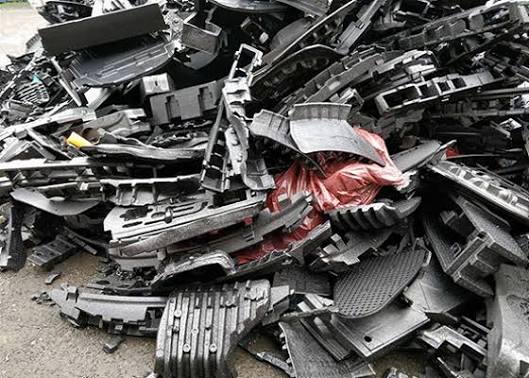
Automotive EPP Waste Needs On-Site Processing
Automotive EPP waste usually comes from protective packaging, reusable transport systems and production offcuts. Most of it is relatively clean, but it still needs to be separated from labels, tape and other foam types before processing. Transporting loose EPP directly to a recycler is rarely efficient because most of the truck is carrying air. Suitable EPP recycling equipment can crush and compact the material into dense blocks or ingots, making it easier to store and transport.
Cold Compaction or Hot Melting?
GREENMAX offers two main methods for processing EPP waste.
Hot melting machine crushes and heats the material before forming dense ingots. The GREENMAX MARS series can reduce foam volume by up to 90:1, making it suitable when maximum volume reduction is required and the downstream buyer accepts melted EPP.Cold compaction uses mechanical pressure and limited surface heating to form stable blocks without fully melting the material. GREENMAX Z Series can reduce foam volume by up to 50:1. This method generally uses less thermal energy and is suitable for continuous automotive packaging waste. The choice depends on the EPP density, monthly volume, available power and the form of material accepted by the recycler.
GREENMAX EPP Recycling in USA
A US logistics and packaging centre was handling large quantities of EPP protective packaging from automotive parts. Before installing dedicated equipment, the facility stored loose EPP in large containers and arranged frequent collections. Although the material was recyclable, its low density made storage and transport expensive. The company therefore introduced GREENMAX foam compactor Zeus Series to process the EPP on site.
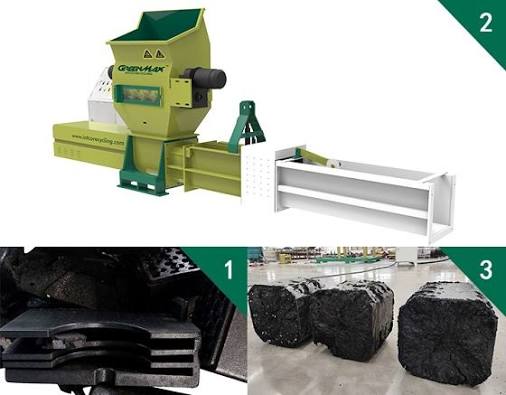
The machine first crushes the molded packaging and then compresses it into dense, stable blocks. Surface heating helps prevent the compacted EPP from expanding again, while the inside of the block remains mainly compressed by mechanical pressure.
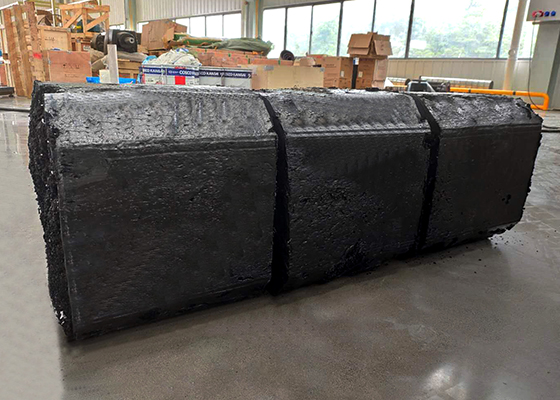
After compaction, the EPP required much less storage space and fewer transport loads. The blocks could then be delivered to a regional recycler that processes polypropylene-based materials. This gave the company a more practical recycling route for its automotive packaging waste.
Choose Recycling Equipment to EPP Foam Waste
EPP packaging can vary in size, density and expansion ratio. Automotive trays and rigid molded components may require stronger crushing than lightweight packaging inserts.
Before recommending a machine, GREENMAX can test customer samples to determine the required crusher configuration, screw speed and processing capacity. The output should also be checked against the requirements of the downstream recycler. The most suitable EPP recycling equipment is not simply the machine with the highest compression ratio. It is the system that matches the actual material, daily volume and local recycling outlet.
For companies handling regular volumes of automotive EPP packaging, on-site compaction can reduce storage pressure, lower transport frequency and make the material easier to send for further recycling.