
 Select Language
 English
 Spanish
 Polish
 Japanese
 Italian
 French
How a US Recycler Turns EPS Foam into Revenue
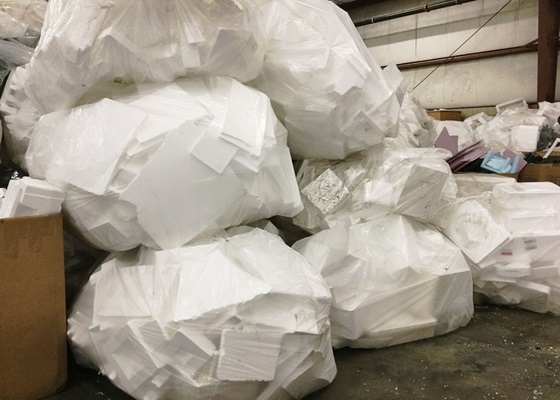
EPS foam is widely used for electronics and appliance packaging because it is light, rigid and effective at absorbing impact. The same low density becomes a problem after the packaging is discarded.
A truck filled with loose EPS carries little material by weight. Frequent collections are expensive, while storing the foam onsite takes space away from other recycling activities. In many areas, recyclers will not accept loose EPS for this reason. Volume reduction changes this calculation. Once the foam is processed into dense ingots, more material can be stored in the same area and transported in each load. The recycler is then moving polystyrene rather than paying to transport air.
GREENMAX Foam Densifier Processes EPS Foam
GREENMAX foam densifier is designed for businesses that generate or collect EPS regularly. Loose foam enters the machine through the feeding hopper and is broken into smaller pieces. A heated screw then melts and extrudes the material into dense ingots. The process can reduce the foam to approximately one-ninetieth of its original volume, depending on the material and operating conditions.
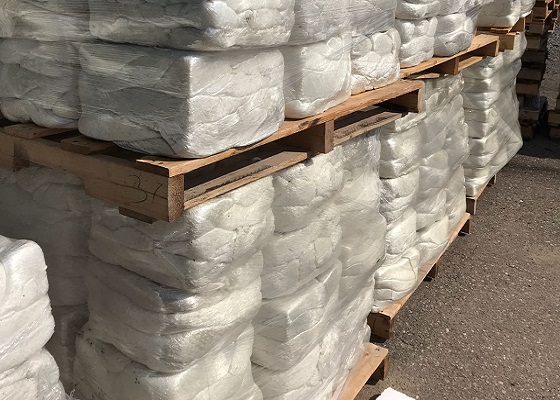
These ingots are easier to stack, weigh and load for transportation. Their higher density also gives downstream recyclers a more practical feedstock for granulation and further processing.
Maryland EPS Recycling with GREENMAX
Gold Circuit E-Recycling handles computers, general electronics and selected appliances in Maryland. As the company expanded its services, it began receiving increasing amounts of protective foam packaging from customers. Local recycling options for loose foam were limited. Refusing the packaging would make the company’s service less convenient, but accepting it without a recycling process would create additional storage and disposal costs.
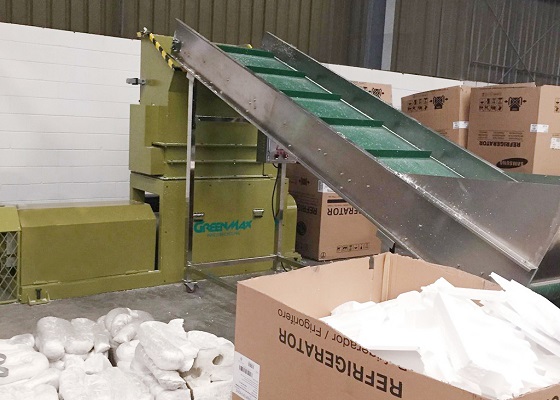
The recycler initially used a smaller foam machine while developing the service. As the volume increased and the company moved to a larger warehouse, the original capacity was no longer sufficient. It then added a GREENMAX foam densifier M-C200 to process the growing EPS stream. The larger densifier allowed the company to reduce packaging foam close to where it was collected. Loose pieces that had previously occupied warehouse space could be processed into dense ingots and accumulated for shipment.
The ability to accept foam also gave the recycler a point of difference. Many electronics recycling companies focus on the equipment itself and leave customers to find another outlet for the packaging. Gold Circuit could handle both, making foam recycling part of its customer service rather than a separate disposal problem.
As the business continued to grow, the company added another GREENMAX foam densifier M-C200. The equipment could be used for both EPS and EPE, with the materials handled separately. This gave the recycler more flexibility as the sources and volume of incoming packaging changed. For Gold Circuit, foam recycling developed into more than a way to avoid landfill costs. The densified material could be sold, adding a revenue stream to a service that also helped attract and retain customers.
From Densified EPS to Recycled Products
The dense EPS ingots can be granulated and processed into recycled polystyrene pellets. This material can then be used to manufacture products such as picture frames, decorative mouldings and other suitable plastic items.
INTCO Recycling may purchase qualified densified EPS based on material quality, available quantity and current purchasing requirements. Confirming the outlet before purchasing equipment helps a recycler understand how the ingots will be collected, priced and transported.
Material value can vary with colour, cleanliness and total shipment weight. A foam densifier makes the material economical to move, but the quality of the finished ingots still affects their downstream use.
FAQ
1. How much can the foam densifier M-C200 reduce EPS volume?
The foam densifier M-C200 can reduce EPS foam to approximately one-ninetieth of its original volume. Actual performance depends on the material and operating conditions.
2. Can the foam densifier M-C200 process both EPS and EPE?
Yes. The GREENMAX foam densifier M-C200 can process suitable EPS and EPE foam, but the two materials should be collected and processed separately.
3. Can densified EPS be sold?
Qualified EPS ingots can be sold to downstream recyclers. Their value depends on cleanliness, colour, quantity and current market demand.