
 Select Language
 English
 Spanish
 Polish
 Japanese
 Italian
 French
How Businesses Can Recycle Styrofoam More Efficiently
Furniture stores, appliance dealers, packaging companies, and warehouses often receive large quantities of Styrofoam with their daily shipments. Once products are unpacked, the foam quickly fills dumpsters and occupies valuable storage space, even though it weighs very little.
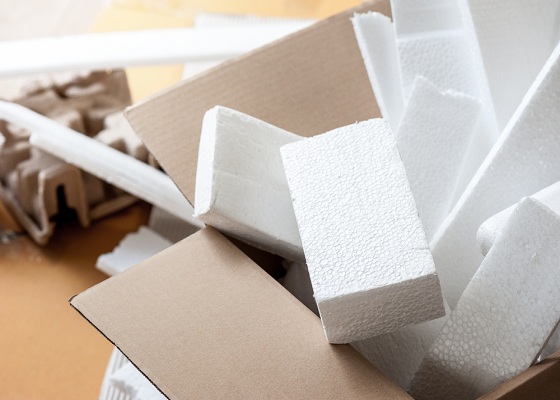
Many businesses pay waste contractors to collect the material several times a week. However, transporting loose Styrofoam is inefficient because most of each load is simply air. For companies that generate packaging foam regularly, processing it on site can be a more practical solution.
Choosing Suitable Styrofoam Recycling Machine
The right recycling method depends on how much Styrofoam a business generates and how the processed material will be handled.
Foam densifier crushes and heats the foam before compressing it into dense ingots. Depending on the equipment and material, the volume can be reduced by up to 90:1. These ingots are easier to store, load, and transport to a recycling facility.
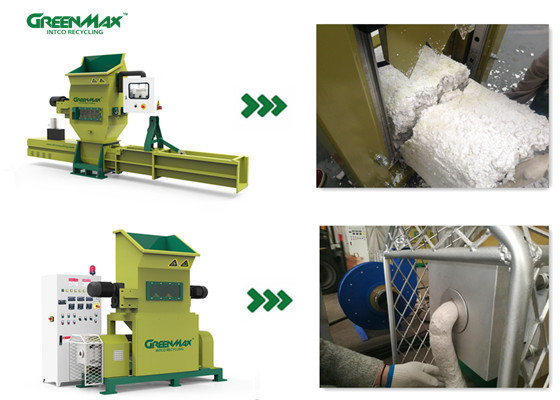
Foam compactor works without heat. They mechanically compress loose foam into solid blocks, offering a relatively simple process with lower energy consumption. This option may be more suitable for businesses that prefer cold compaction or generate moderate amounts of foam.
Before choosing equipment, a company should consider its weekly foam volume, available operating space, labor requirements, and access to a recycler or buy-back service.
Furniture Retailer Reduced Styrofoam Disposal Costs
A furniture retailer operating several stores generated increasing amounts of Styrofoam as its business expanded. Several dumpsters were filled with packaging foam every few days, and each collection cost between $200 and $300.
After comparing different recycling methods and visiting a local equipment installation, the retailer introduced a medium-capacity hot-melt densifier. This allowed the company to process loose Styrofoam directly at its facility rather than repeatedly paying to transport bulky waste.
The densified material took up far less storage space and could be sold to a recycling partner for further processing. As a result, the retailer reduced its disposal requirements and created value from packaging foam that had previously been treated as waste.
A More Practical Recycling Route
On-site processing gives businesses greater control over how Styrofoam is collected, stored, and transported. It can reduce dumpster use, simplify waste handling, and allow larger quantities of densified material to be transported at one time.
For companies dealing with packaging foam every week, an effective Styrofoam recycling solution for businesses is not simply about purchasing a machine. The equipment needs to match the actual waste volume and connect with a reliable downstream recycling route. With suitable equipment and a clear plan for the processed material, Styrofoam recycling can become a manageable part of daily business operations rather than a recurring disposal problem.