 Select Language
 English
 Spanish
 Polish
 Japanese
 Italian
 French
How to Choose the Right Foam Densifier Manufacturer
Furniture warehouses, appliance distributors, electronics plants and recycling centers all rely on foam densifiers to reduce bulky EPS and other foam packaging waste. Although the machine is important, the manufacturer behind it also affects how well the equipment performs after installation.
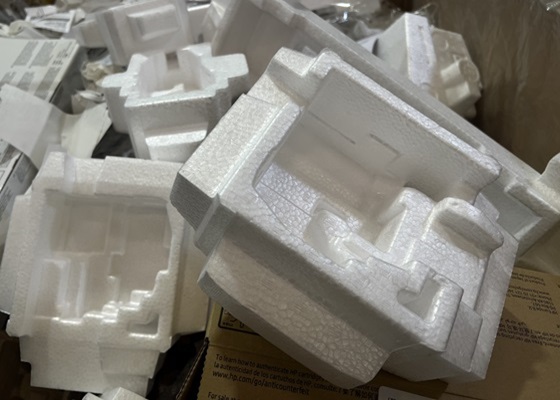
A suitable foam densifier manufacturer should understand the customer’s foam type, processing volume, site conditions and downstream recycling requirements. The right partner can help a business move beyond volume reduction and build a more efficient recycling process.
Evaluating Foam Type and Processing Requirements
Before comparing manufacturers, a company should clarify what type of foam it generates. EPS packaging from furniture and appliances is usually clean and relatively dry, while foam from seafood or food operations may contain moisture and organic residue. EPE and EPP packaging from electronics and automotive suppliers can also have different densities and expansion ratios.
The foam type affects the machine configuration. Some applications may need a cold-compaction process to preserve material characteristics, while others are better handled by a hot-melting system that produces denser ingots. Large molded pieces may require a stronger feeding or crushing section.
A reliable manufacturer should ask about the material before recommending equipment. If a supplier provides a machine quotation without reviewing the foam samples or waste volume, it may be difficult to evaluate whether the equipment will perform as expected.
Checking Equipment Performance
Compression ratio is one of the most commonly mentioned specifications when choosing a foam densifier. Cold-compaction systems can achieve volume reduction of up to 50:1, while hot-melting densifiers can reach up to 90:1 depending on the foam condition and operating method.
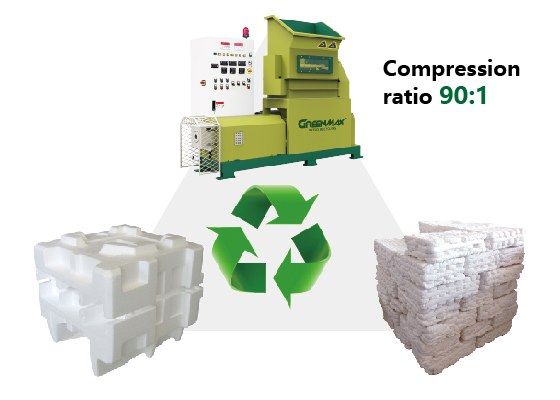
However, the compression ratio should not be the only factor. The daily foam volume, available operating hours, warehouse space and desired output all affect the appropriate machine capacity. A manufacturer should help the buyer match capacity to the actual working schedule instead of relying only on the machine’s maximum rating.
Additional configuration may also be required. Sorting tables, SILO storage, conveyor feeding, double crushing and exhaust systems can improve the efficiency of the overall recycling process. A manufacturer that provides a complete solution can be more useful than a supplier that only sells a single machine.
Reviewing Customization and Recycling Support
Some recycling operations require equipment that is tailored to the facility. This may include adjusting the feeding area, adding a silo, improving the exhaust system or designing a machine to handle a specific form of foam. A manufacturer with customization capabilities can make the equipment easier to integrate into existing operations.Recycling support is another important consideration. Processing foam is only the first step. Buyers also need to know where the compacted material will go and what quality requirements the downstream buyer will set. A manufacturer that offers material buy-back or connects customers with downstream recyclers can help create a longer-term recycling route.
When choosing foam densifier manufacturer, GREENMAX is a practical choice for businesses across industries such as furniture, appliances, automotive, food distribution, and manufacturing. With experience handling different types of foam and different operating conditions, GREENMAX can provide customized recycling solutions based on the material, processing volume, and facility layout rather than offering a one-size-fits-all machine. Its service also goes beyond equipment supply: GREENMAX provides technical support and can buy back the compressed foam blocks produced by its machines, giving customers a clear downstream recycling option and helping turn bulky foam waste into a more manageable and valuable resource.