 Select Language
 English
 Spanish
 Polish
 Japanese
 Italian
 French
Processing PE Foam: What Should Recyclers Look for When Choosing a Polyethylene Foam Densifier?
The Electronics Industry Keeps Generating PE Foam
In electronics assembly, contract manufacturing, and AI-related electronics production, servers, batteries, precision components, and other products often rely on soft EPE foam for cushioning and protection during long-distance transportation.
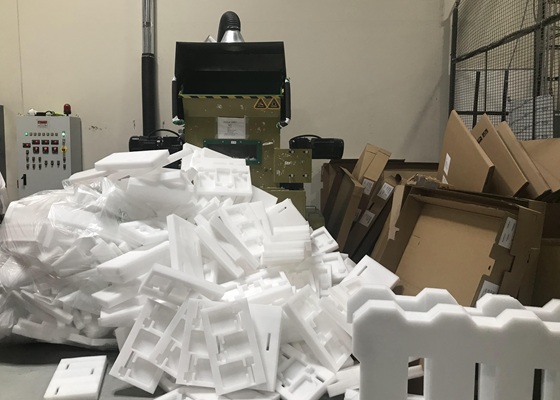
Once the products are unpacked, foam corner protectors, sheets, and cushioning blocks can quickly pile up in warehouses and loading areas.
Most electronics manufacturers do not process this bulky PE foam waste themselves. Instead, they turn to recyclers for collection and disposal. For recyclers, the business model is straightforward: charge electronics manufacturers for collection and processing, then compact the foam into dense blocks or process it into recycled pellets for resale. This creates two potential revenue streams from PE foam recycling.
Understand PE Foam Before Choosing Equipment
Recyclers familiar with EPS equipment sometimes assume that any machine capable of compacting EPS can also handle EPE foam. This is a common mistake.
EPS is rigid and brittle, making it relatively easy to crush and compress. PE/EPE foam is softer, more elastic, and tends to spring back. If the equipment is not designed for this type of material, flexible sheets and large foam pieces may wrap around the feeding system or cause blockages.
For this reason, whether a polyethylene foam densifier is specifically designed for PE foam can be just as important as its capacity or power rating.
Before selecting a machine, recyclers should consider several practical questions:
1. Is the feeding and crushing system designed for flexible sheets and large cushioning blocks?
2. Can the machine process EPE foam of different thicknesses consistently?
3. Does it use cold compaction or hot melting? What is the energy consumption, and can it operate continuously?
4. How many operators are required? Can employees with limited mechanical experience learn to operate it quickly?
Choose the Right Solution for Your Recycling Operation
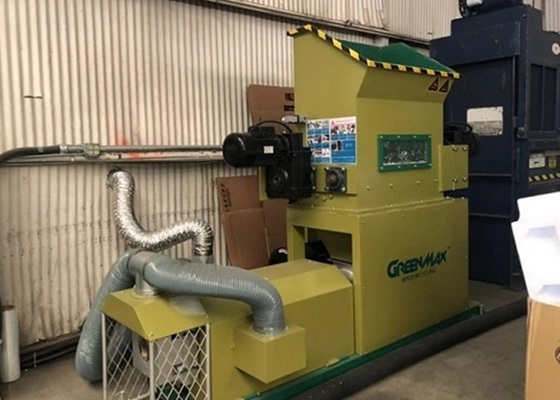
A cold-compaction EPE recycling machine is suitable for recyclers that want to preserve more of the foam's original physical properties while keeping odors low. It can reduce volume by up to 50:1 and produce uniform compressed blocks.
Hot-melt equipment can typically achieve a higher volume reduction of up to 90:1, producing denser material for transportation. During the melting process, some impurities in the waste may also be separated.
A pelletizing line provides a more complete downstream processing option. The PE foam is crushed, melted, extruded, and cut into uniform recycled PE pellets.
For recyclers shipping material over long distances or exporting it, higher-density hot-melt processing may be the better choice. For local resale, cold-compacted blocks are often more practical. Recyclers looking to further increase the value of PE foam recycling can also evaluate pelletizing as the next step.
Send GREENMAX your monthly PE foam volume and processing requirements, and we can help match the right recycling solution for your operation.
WhatsApp: +1 909 509 4388
How Should Recyclers Organize Daily Operations?
For most companies just entering polyethylene recycling, investing immediately in a complete pelletizing line may not be necessary. Starting with a small or standard polyethylene foam densifier is often a more practical approach.
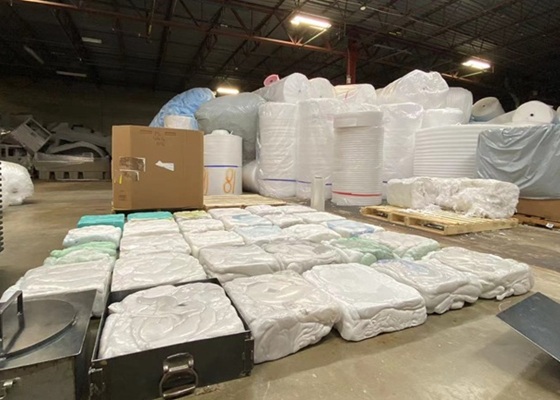
· Process a batch of PE foam packaging collected from electronics manufacturers every week or every two weeks.
· Stack compressed blocks on pallets and sell them once enough material has accumulated for shipment.
· Record the material source, processing volume, and final destination to provide recycling documentation to electronics customers when needed.
Once waste volumes and sales channels become stable, recyclers can consider adding a pelletizing line to convert compacted PE foam into recycled PE pellets with higher added value.
Common Questions from PE Foam Recyclers
PE foam is very soft. Can it really be compacted?
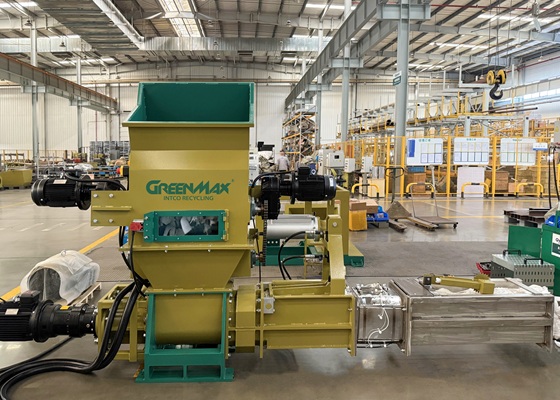
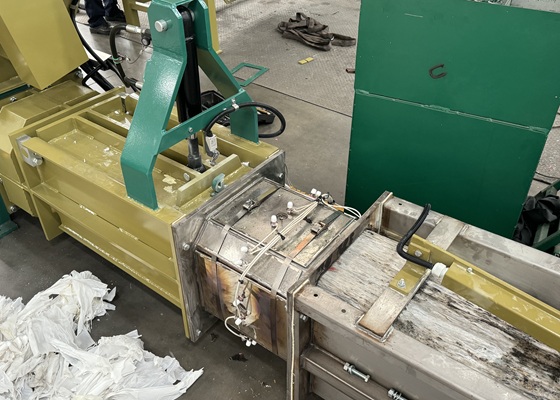
Yes. The GREENMAX ZEUS polyethylene foam densifier continuously crushes and compresses PE/EPE foam with a screw system. As the block forms, its surface is heat-treated so the outer layer softens slightly and quickly solidifies, helping the compacted block maintain its shape and reduce rebound.
The GREENMAX MARS hot-melt system works differently. It first crushes the PE foam, then melts it at high temperature into a semi-fluid state before continuously extruding the material through a screw system.
What if my employees have never operated this type of machine?
Before shipment, GREENMAX tests the equipment using materials similar to the customer's actual waste. Suitable processing parameters are identified during testing and can be preset in the control system, allowing operators to select the appropriate mode without starting every adjustment from scratch.
GREENMAX also works with local partners in selected regions who can provide installation and commissioning services. For recyclers that prioritize simple operation, MARS mainly requires operators to control start/stop functions and temperature settings, making it relatively easy to use after basic training.
Who can buy the compressed PE foam blocks?
Compressed PE foam can be sold to recycling pellet manufacturers, PE product manufacturers, or recycled plastics traders. GREENMAX can also assist with downstream recycling channels or evaluate buy-back options based on the specific project.
Why Start with a Densifier Instead of a Pelletizing Line?
A pelletizing line requires a larger investment, involves a more complex process, and generally requires operators with stronger mechanical knowledge.
For recyclers just starting PE foam recycling, or those whose waste volumes are not yet stable, beginning with a compaction solution is often more practical. Once processing volumes and sales channels are established, upgrading to pelletizing can better match the actual growth of the recycling business.
For recyclers, the real challenge in PE foam recycling is not simply finding the material. It is turning soft, bulky foam into a stable recycled resource that can be stored, transported, and sold efficiently. Choosing the right equipment, confirming material compatibility, and building a reliable chain from electronics manufacturers to downstream buyers are the key steps to making both revenue streams work.