 Select Language
 English
 Spanish
 Polish
 Japanese
 Italian
 French
Should Seafood Businesses Invest in a Styrofoam Compactor? 5 Questions About EPS Fish Boxes Recycling Costs and ROI
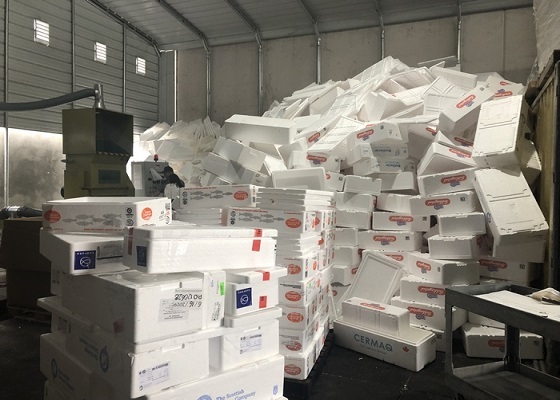
Seafood markets, fish processing plants, and cold-chain distributors handle large quantities of EPS fish boxes every day. After seafood is unloaded, empty foam boxes often pile up around loading docks, cold-storage facilities, wholesale markets, and processing areas, leading to rising storage and hauling costs.
Many seafood businesses know that EPS fish boxes can be recycled, but they are unsure how the process works or whether it is financially worthwhile. GREENMAX has answered five common questions about EPS fish boxes recycling to help U.S. seafood businesses evaluate a recycling project and select the right equipment.
Q1: Can EPS fish boxes really be recycled, or do they have to be thrown away?
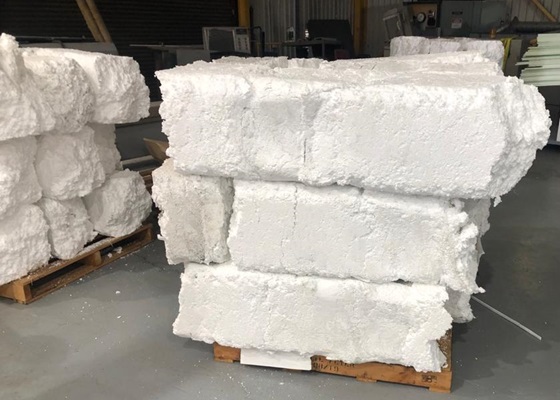
Yes, EPS fish boxes can be recycled. EPS, or expanded polystyrene, is a recyclable thermoplastic often referred to as Styrofoam. After compaction and pelletizing, it can be used to manufacture insulation products, picture frames, decorative molding, and other plastic products.
Rules for EPS food containers and refrigerated foam packaging vary by state and local jurisdiction in the United States. Seafood processors, fish markets, and distributors should follow local commercial waste sorting and collection requirements. Placing large volumes of EPS fish boxes in general waste may result in rejected loads, additional hauling charges, or corrective action from local authorities.
A more practical approach is to collect relatively clean fish boxes separately, reduce their volume with a professional Styrofoam compactor, and send the compacted material to a downstream recycler.
Q2: Will moisture and fish residue affect recycling?
This is one of the main concerns for seafood businesses. Used fish boxes often contain melted ice, fish residue, scales, and odors. Although they require more preparation than clean appliance packaging, they can still be recycled after basic cleaning and drainage.
Cleaner and properly sorted boxes improve Styrofoam recycling quality while reducing corrosion, odors, and residue buildup inside the machine.
Two steps are especially important:
1. Drain and clean the boxes before processing: Remove standing water, ice, seafood residue, and other contaminants. Boxes containing large amounts of water or ice should not be fed directly into a fish boxes foam compactor, as excess moisture may affect compaction performance, material quality, and long-term machine operation.
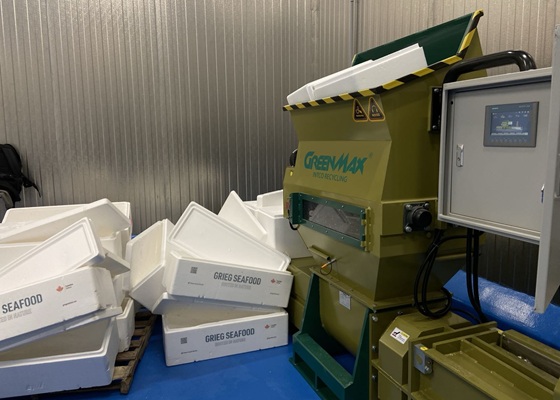
2. Select equipment designed for wet environments: A cold-press Styrofoam compactor with upgraded stainless-steel components is generally more suitable for fish boxes, produce boxes, and other moisture-containing EPS waste. Screw compression avoids the temperature instability associated with melting wet foam, while stainless-steel contact areas provide better corrosion resistance.
Q3: Is it more economical to buy a machine or continue using a waste hauler?
The answer depends on the amount of EPS generated and the current cost of storage, pickup, and disposal. GREENMAX can provide an ROI estimate for an EPS fish boxes recycling project by comparing an in-house recycling system with continued third-party hauling.
The main factors include:
· The number, weight, and storage volume of fish boxes generated each week or month
· Current pickup frequency and hauling charges
· Whether stored fish boxes interfere with warehouse space or daily operations
· The local selling price of compacted EPS blocks
A typical medium-sized fish box measures approximately 24 × 16 × 8 inches and may weigh around 1.3 lb. The following ranges can be used as a general reference:
· Fewer than 100 boxes per month: The volume is usually too low to justify purchasing equipment. Using a local recycler or delivering the boxes to a nearby EPS collection site is generally more practical.
· Approximately 1,500–3,000 boxes per month: A compact Styrofoam recycling machine with a capacity of around 55 lb per hour may be suitable. The machine occupies little floor space, reduces hauling frequency, and produces compacted material that can be stored and sold in larger batches.
· More than 3 metric tons per month: Large seafood wholesalers, cold-chain distribution centers, processing plants, and fish markets may benefit from an in-house recycling system. A fish boxes foam compactor can provide greater long-term savings than repeatedly paying to haul loose foam.
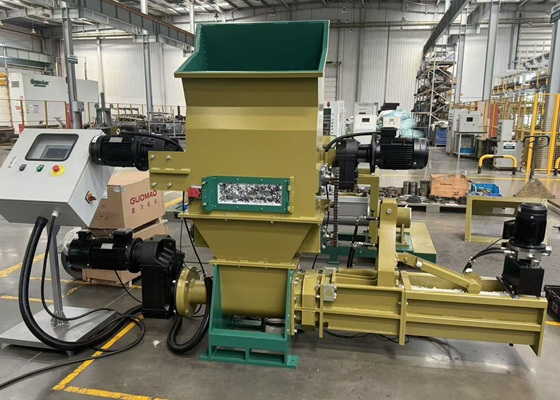
Q4: What type of Styrofoam compactor is best for fish boxes?
Fish boxes are often wet, bulky, and irregularly shaped. When selecting a machine, seafood businesses should focus on three factors.
1. Choose cold-press technology
Screw-based cold compression is generally more stable than hot melting when the material contains moisture. In a hot-melt system, evaporating water can lower the temperature inside the melting chamber, while maintaining a higher temperature increases energy consumption.
The standard GREENMAX A-C100 Styrofoam compactor has a total power rating of less than 10 kW and reduces foam volume through mechanical screw compression.
2. Use stainless steel in material-contact areas
Saltwater, fish residue, and moisture can accelerate corrosion. For seafood applications, the compression chamber, discharge section, and other high-contact components can be upgraded to 304 stainless steel to improve durability and extend machine life.
3. Match machine capacity to the actual waste volume
Small machines rated at approximately 55–110 lb per hour are suitable for small and mid-sized seafood businesses. Standard machines rated at approximately 220–440 lb per hour are better suited to large fish markets, seafood processing plants, and distribution centers.
For example, an A-C100 can process approximately 1 metric ton of EPS fish boxes in about 10 operating hours, while an A-C200 can process the same quantity in about 5 hours. Businesses generating around 1 metric ton per week, or more than 3 metric tons per month, should generally consider a standard-capacity system.
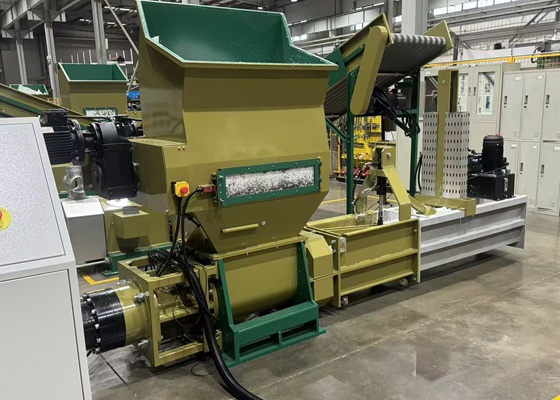
Q5: How much does a machine cost, and how long does it take to pay back?
This is the most frequently asked question. The answer depends on monthly EPS volume, local hauling charges, machine configuration, labor costs, and the selling price of compacted EPS.
Consider a mid-sized seafood wholesaler generating approximately 2 metric tons of EPS fish boxes per month:
· Third-party hauling for a 20-foot container may cost approximately $400–$500 per pickup, depending on location and disposal terms.
· One container may hold roughly 500 loose medium-sized EPS fish boxes.
· A small fish boxes foam compactor may require an investment of approximately $20,000–$40,000, depending on capacity and stainless-steel upgrades.
· Compacted EPS blocks may sell for approximately $500–$650 per metric ton, although pricing varies by region, material quality, and market conditions.
At approximately 1.3 lb per box, 2 metric tons equals roughly 3,300 fish boxes. If each container holds about 500 boxes, the business may require six to seven pickups per month. At an assumed cost of $450 per pickup, monthly hauling and disposal expenses could reach approximately $2,700.
If the business compacts and sells 2 metric tons of EPS at an assumed average price of $575 per ton, it may also generate approximately $1,150 in monthly material revenue.
In this example, the combined value of avoided hauling costs and material sales is approximately $3,850 per month before electricity, labor, and maintenance expenses. Depending on the final machine price and operating conditions, the estimated payback period could be around 12–18 months.
GREENMAX equipment is designed for long-term industrial use, with many machines operating for 10–15 years when properly maintained. After the equipment has paid for itself, continued savings and material revenue can provide ongoing financial value.
Seafood businesses may also collect EPS fish boxes from nearby fish markets, restaurants, docks, and smaller distributors. Increasing the processing volume can improve machine utilization and shorten the payback period.
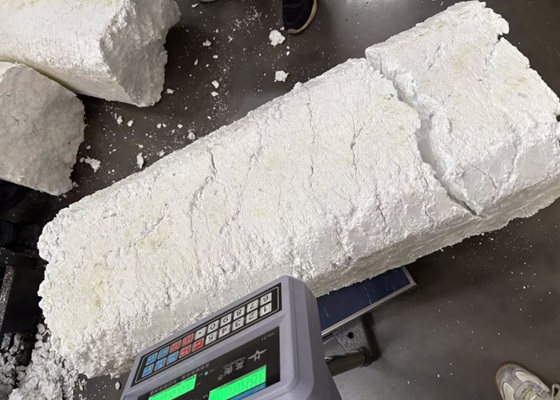
Turn EPS Fish Boxes From a Hauling Expense Into a Recyclable Material
EPS fish boxes recycling does not have to create additional work for seafood businesses. With the right system, it can reduce storage requirements, lower hauling expenses, support compliance with local waste rules, and create an additional source of revenue.
When a facility consistently generates at least 1 metric ton of EPS fish boxes per month, investing in a small Styrofoam compactor for on-site Styrofoam recycling may provide a practical financial return.
If you operate a seafood wholesale business, fish processing facility, cold-storage warehouse, or cold-chain distribution center in the United States, send GREENMAX your monthly EPS volume, current hauling frequency, and fish box dimensions. Our team can recommend a suitable machine and estimate the expected payback period for your project.