
 Select Language
 English
 Spanish
 Polish
 Japanese
 Italian
 French
Should Styrofoam Be Compacted Before Transportation?
Transporting loose Styrofoam rarely makes financial sense for businesses that generate it regularly. EPS packaging is extremely light, but its large volume can fill a truck before the load reaches a useful shipping weight. As a result, companies may pay for frequent collections while transporting mostly air.
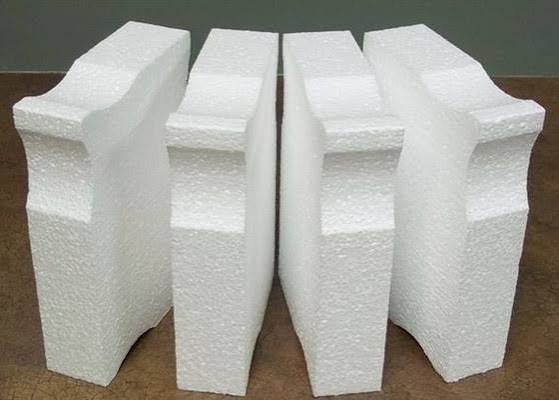
Compacting the material before transportation changes this situation. A Styrofoam compactor or foam densifier reduces loose EPS into dense blocks or ingots that are easier to stack, store and load. More material can then be moved in each shipment, giving recyclers a better chance of covering the transport cost.
How Compaction Changes EPS Foam Transportation
A Styrofoam recycling machine first crushes large foam pieces and then reduces their volume. The finished material has a much higher bulk density and can be stacked on pallets for collection.
GREENMAX provides several volume-reduction methods. Styrofoam compactor uses mechanical pressure to form EPS blocks without melting the material, reaching a compression ratio of up to 50:1. GREENMAX Styrofoam densifier heats and extrudes the crushed foam into dense ingots, with a volume-reduction ratio of up to 90:1.
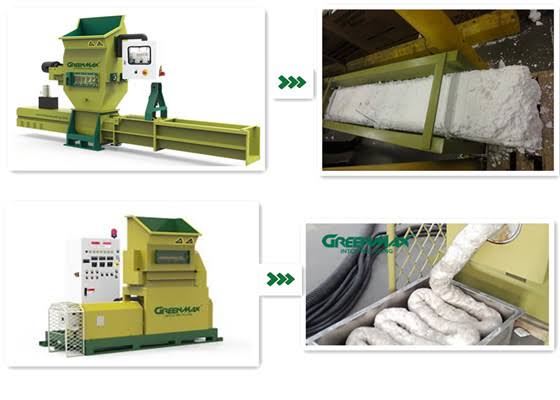
The higher density allows considerably more EPS to be placed in the same truck or container. Instead of arranging pickups whenever loose foam fills the storage area, a business can accumulate compacted material until there is enough for a more economical shipment.
Should Every Business Compact Styrofoam?
Compaction is most practical when Styrofoam is generated consistently and transportation has become a recurring cost. Appliance warehouses, electronics manufacturers, furniture retailers, foam manufacturers and recycling centres often produce enough material to process it onsite.
For a business handling only a few pieces each month, using a local drop-off or collection program may be more reasonable. The decision changes when loose foam begins to occupy working space, collections become frequent or the nearest recycler is some distance away.
The expected output should also be discussed with the downstream buyer. Some recyclers accept cold-compacted EPS blocks, while others prefer hot-melt ingots. Confirming the material specification before choosing equipment helps connect onsite volume reduction with the next stage of recycling.
GREENMAX Styrofoam Recycling Solution
A US electronics remanufacturer receives returned products from major retailers. The operation also generates a steady supply of EPS packaging, and transporting the material in loose form would require considerable storage space and frequent collection.
The company began using a GREENMAX foam densifier M-C300 to process its Styrofoam onsite. The machine converts loose packaging foam into dense ingots before the material leaves the facility. The operation processes approximately 10–15 tons of EPS each month. GREENMAX equipment has remained in service since 2017, showing how onsite densification can support a long-term recycling program rather than simply providing temporary waste storage.
After densification, the EPS is purchased for further recycling. In one year alone, the value of material purchased back from the customer exceeded US$100,000. The result comes from combining volume reduction with a confirmed downstream outlet: the foam is dense enough to transport efficiently and has a clear route into recycled-polystyrene production.
FAQ
1. How much can a Styrofoam compactor reduce foam volume?
A GREENMAX cold compactor can reduce EPS volume by up to 50:1. A hot-melt foam densifier can achieve a reduction ratio of up to 90:1.
2. Can compacted Styrofoam be sold?
Qualified EPS blocks and ingots may be purchased by downstream recyclers. Their value depends on material quality, colour, density, quantity and current purchasing requirements.
3. Is cold compaction or hot melting better for transportation?
Both methods make transportation more efficient. Cold compaction produces compressed blocks without heat, while hot melting creates denser ingots. The better option depends on the waste volume, transport distance and buyer’s material requirements.