 Select Language
 English
 Spanish
 Polish
 Japanese
 Italian
 French
Styrofoam Densifier Helps Packaging Cutters Turn EPS Scrap from Hauling Cost into Recycling Revenue
Foam scrap removal can cost packaging cutters tens of thousands of dollars each year. By using a Styrofoam densifier, companies can build an internal recycling system, sell compacted EPS blocks for about $500–$580 per ton, and even offer free foam collection services to their end customers. For packaging cutting companies, this is one of the most practical foam recycling options to reduce costs, improve customer retention, and create additional value from EPS scrap.
In the U.S. packaging cutting industry, EPS is commonly known as expanded polystyrene, and many customers also refer to it as Styrofoam. It is widely used for protecting appliances, electronics, medical equipment, furniture, and cold chain products. To match different product sizes and structures, packaging manufacturers often need to cut, slot, shape, and customize EPS sheets or foam blocks. As a result, large volumes of trim scrap, offcuts, and foam pieces are generated on a continuous basis.
At the same time, more U.S. states are moving forward with packaging EPR legislation, and some states and cities have restrictions on certain EPS foam food packaging and single-use foam products. This means packaging cutting companies that rely on third-party waste hauling may face ongoing disposal costs, as well as higher compliance pressure and customer sustainability expectations.
By comparison, building an internal foam recycling system allows companies to compact EPS scrap into transportable and sellable recycled material, which better fits the waste reduction, recycling, and resource recovery trends in the U.S. packaging industry.
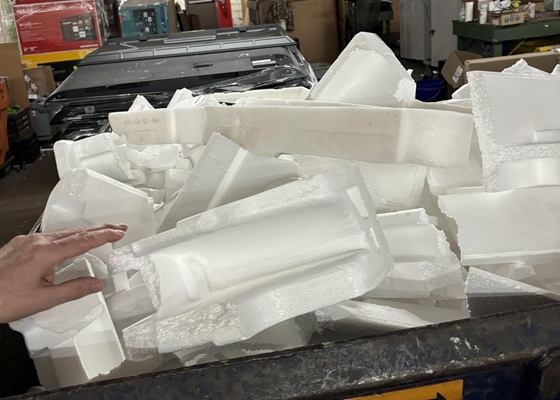
Paid Hauling vs. Internal Recycling: A Clear Cost Difference
Take a mid-sized packaging cutting company as an example. If it generates two full 40-foot high-cube dumpsters of EPS scrap per week, with a handling cost of about $300 per dumpster plus around $100 in transportation fees, the monthly cost can reach about $3,200. That adds up to more than $38,000 per year in pure disposal cost.
More importantly, this money is spent without creating any return. Once the foam scrap is hauled away by a third party, the company loses control over where the material goes and cannot benefit from its recycling value.
Internal recycling works differently. Packaging cutters do not need to deeply process EPS scrap themselves. They only need to use a professional Styrofoam densifier to reduce loose foam into high-density blocks, then sell those blocks to downstream buyers. In this way, a recurring hauling expense can be turned into recycling revenue.
Why Compact EPS Scrap Before Selling It?
The final buyers of EPS scrap are usually recycled product manufacturers, pelletizing companies, or packaging manufacturers that add a certain percentage of recycled material into their production. These buyers are more familiar with buy EPS blocks because compacted blocks are easier to store, transport, and process.
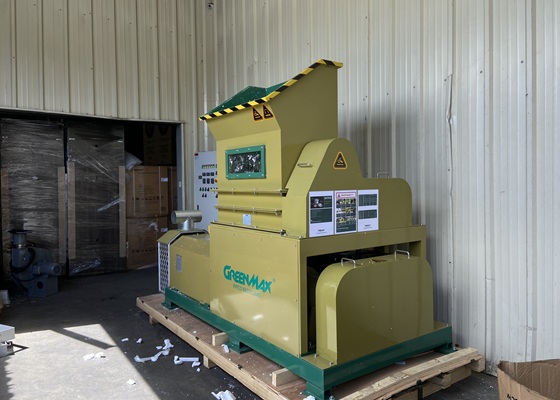
EPS scrap often needs to be transported over long distances or even exported. If loose foam is loaded directly into a container, the container fills up quickly but carries very little actual weight. Low loading efficiency and high freight costs can consume most of the profit.
By using an EPS compactor to reduce expanded polystyrene scrap to about 1/90 of its original volume, companies can significantly increase container loading weight, lower transportation cost per ton, and make the material more acceptable to downstream buyers. This is a key step in profitable foam recycling.
GreenMax Recommendation: Use a Hot-Melting Styrofoam Densifier for Packaging Cutters
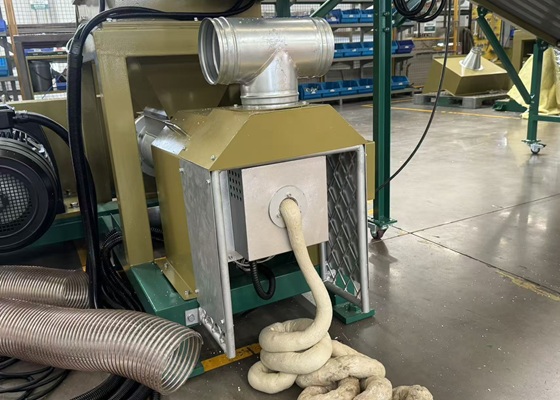
As an experienced solution provider in the Styrofoam recycling industry, GreenMax recommends hot-melting EPS compactor equipment for packaging cutting companies. This type of machine turns bulky EPS offcuts into high-density melted blocks, making the material more suitable for long-distance transportation, export sales, and downstream reprocessing.
1. The volume reduction ratio can reach up to 90:1, producing high-density blocks preferred by downstream buyers.
2. The machine is easy to operate, and regular workers can usually get started after 5–10 minutes of training.
3. Daily operation can be handled by one employee as needed. Maintenance costs are relatively low, mainly involving regular oil replacement, and GreenMax can provide maintenance support.
4. The machine can be customized to handle a wider range of foam materials, including EPS, EPE, EPP, and other foam waste.
5. For PE and other materials, customized equipment can also be equipped with an intelligent identification system to improve processing stability for different materials.
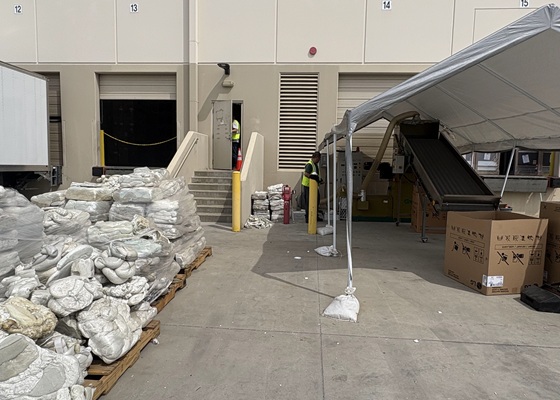
From Hauling Cost to Recycling Revenue
For packaging cutting companies, the value of internal recycling is not limited to reducing hauling costs. EPS scrap that once required thousands of dollars per month to be removed by a third party can become a recyclable resource worth about $500–$580 per ton after densification.
Companies can reduce disposal expenses, generate extra revenue by selling compacted blocks, and align earlier with U.S. packaging waste management and EPR trends, which also helps improve their environmental image.
GreenMax not only provides Styrofoam densifier equipment, but also offers a buy EPS blocks service. We purchase compacted EPS material and use it to produce recycled products such as acoustic wall panels, picture frames, and other recycled polystyrene products. This helps customers build a closed-loop system that includes equipment processing, compacted material recovery, and recycled product manufacturing.
Because GreenMax is also a user of compacted foam material, we care greatly about material quality. EPS scrap from packaging cutting plants is usually clean, low in contamination, and stable in supply, making it a preferred material for recycling. For customers, this foam recycling model helps solve the question of “who will buy the compacted blocks” while making recycling income more stable and predictable.
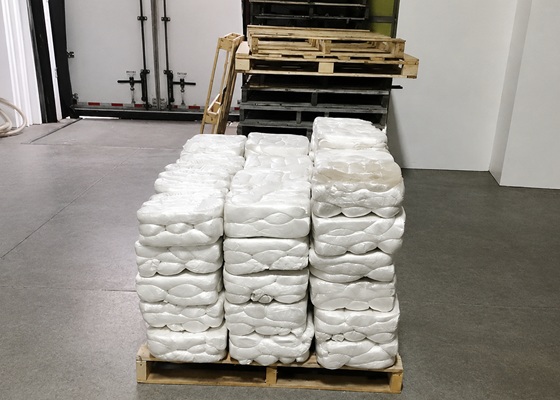
Extending Recycling Services to End Customers
In addition to processing EPS scrap generated inside their own facilities, packaging cutting companies can also offer foam waste collection services to their end customers. Customers in electronics, solar, medical, and other industries often generate PE, EPS, EPP, and other foam packaging waste during component unpacking, product assembly, and packaging disposal.
If a packaging company can help customers recover this foam waste, it can strengthen customer relationships and secure a more stable source of recyclable material. It also increases the packaging cutter’s service value and market competitiveness because customers no longer need to pay separately for foam disposal and can instead access a more convenient recycling channel.
One GreenMax customer near Frankfurt, Germany, is also a packaging cutting company. Its end customers come from electronics, solar, medical, and other industries. The company provides free foam collection services for some customers, then shreds and pelletizes the recovered material before selling the recycled pellets back to upstream suppliers.
For packaging cutting companies with enough waste volume and a desire to extend the recycling chain, GreenMax can also provide customized pelletizing solutions. This allows companies to process EPS scrap directly into high-quality recycled pellets, sell them at higher prices, and shift from being a company that pays for waste hauling to a supplier of recycled raw materials.
EPS scrap is not just waste that must be paid for and removed. It is a recyclable resource that can be compacted, sold, and reused. GreenMax provides equipment solutions and a buy EPS blocks service to help companies recover their equipment investment, secure stable downstream sales channels, and build a complete foam recycling loop.