
 Select Language
 English
 Spanish
 Polish
 Japanese
 Italian
 French
Styrofoam Packaging Containers Can Be Recycled Instead of Landfilled
Styrofoam packaging containers are widely used to protect electronics, appliances, medical products and other fragile goods during transportation. Molded EPS packaging is lightweight, absorbs impact and helps products arrive without damage. Once the packaging has been removed, however, these advantages become a waste-handling problem. Loose EPS occupies considerable space but adds very little weight to a collection load. In many areas, it is not accepted through regular recycling programs, so otherwise usable material may be discarded with general waste.
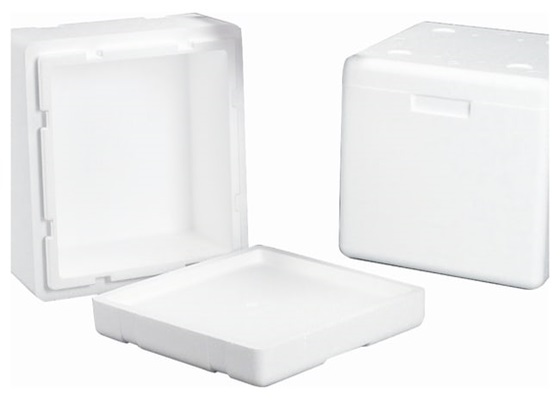
This does not mean EPS packaging cannot be recycled. The main issue is whether the material can be collected, reduced in volume and transported at a reasonable cost.
Many Styrofoam Packaging Containers Are Still Landfilled
A warehouse may fill several containers with EPS packaging while collecting only a small amount of material by weight. Sending this loose foam directly to a recycler requires frequent transportation, which can cost more than the material is worth. Some businesses also lack a nearby recycler that accepts loose EPS. Without another processing route, used packaging is often sent to landfill along with other commercial waste.Reducing the volume before transportation changes the calculation. Once the air has been removed, the EPS becomes easier to store, load and deliver to a downstream recycler.
Recycling Styrofoam Containers with GREENMAX Foam Densifier
GREENMAX Styrofoam densifier combines crushing and hot-melt processing in one system. The packaging containers are broken into smaller pieces and then moved through a heated screw. As the EPS softens, its cellular structure collapses and the trapped air is released.
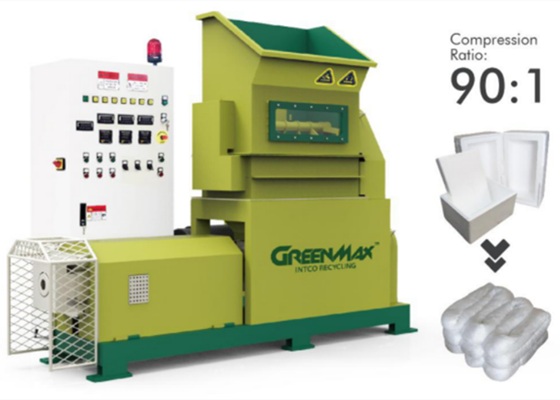
The machine produces compact EPS ingots and can reduce the original foam volume by up to 90:1. Instead of repeatedly removing loose packaging from the site, a business can accumulate dense ingots until there is enough material for an economical shipment. The ingots can then be granulated and processed into recycled polystyrene pellets. These pellets may be used to manufacture picture frames, decorative mouldings and other plastic products.
One Electronics Recycler Kept EPS Packaging Out of Landfill
A US electronics remanufacturer receives returned computers, appliances and other products from major retailers. Along with these products comes a steady supply of molded EPS protective packaging.
Because loose foam occupied too much warehouse space and was expensive to transport, the company introduced a GREENMAX foam densifier M-C300. The machine reduces the packaging onsite and converts it into dense EPS ingots.The facility now processes around 10–15 tons of EPS each month. The equipment has remained in regular operation for years, while INTCO Recycling purchases qualified ingots for further processing.
For this company, EPS packaging is no longer simply part of the disposal stream. Densification made the material practical to store and transport, while the downstream purchasing route gave the processed foam a stable destination.
It also shows why volume reduction is central to Styrofoam container recycling. The recyclable material was already present; the missing step was a practical way to move it from the warehouse to the recycler.
FAQ
1. Can Styrofoam packaging containers be recycled?
Yes. Molded EPS packaging containers can be reduced in volume, granulated and pelletized for use in new polystyrene products.2. How much can a Styrofoam densifier reduce EPS volume?
A GREENMAX hot-melt Styrofoam densifier can reduce EPS packaging volume by up to 90:1. The actual result depends on the density and condition of the material.
3.What products can be made from recycled Styrofoam?
Recycled polystyrene can be used to manufacture products such as picture frames, decorative mouldings and plastic profiles.