
 Select Language
 English
 Spanish
 Polish
 Japanese
 Italian
 French
Where Does Recycled EPS Actually End Up?
EPS foam is widely used for appliance packaging, electronics protection, seafood boxes and building insulation. Once discarded, it is often treated as low-value waste because it occupies considerable space while weighing very little. Yet EPS is made from polystyrene, a thermoplastic that can be processed again. When the foam is collected separately and reduced in volume, it can enter an established recycling route and become raw material for new products.
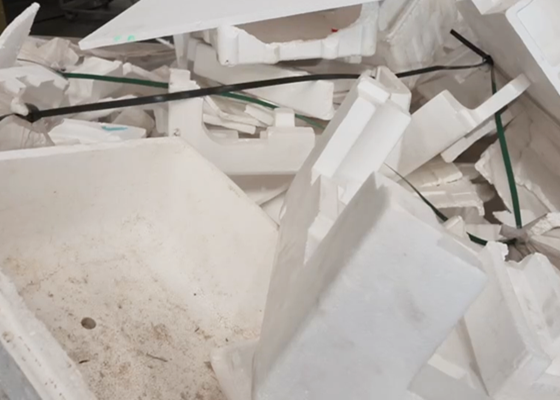
So where does recycled EPS actually go? The answer depends on how clean the foam is, how it is processed and what the downstream manufacturer needs.
EPS Recycling Process Starts with Volume Reduction
Loose EPS is more than 90% air. This makes it inefficient to store and transport in its original form. A truck can be filled with foam packaging while carrying relatively little polystyrene by weight.
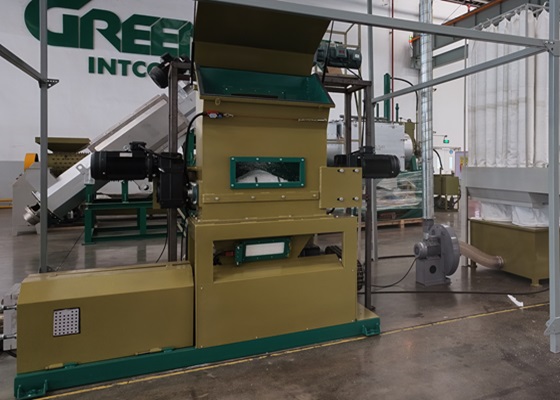
A hot-melt foam densifier crushes and heats the EPS before extruding it into dense ingots. GREENMAX foam densifier can reduce the volume by up to 90:1, making the material easier to stack, store and transport. At this point, the EPS has not yet become a finished product. Volume reduction prepares it for the next processing stage.
From Densified EPS to Recycled Polystyrene Pellets
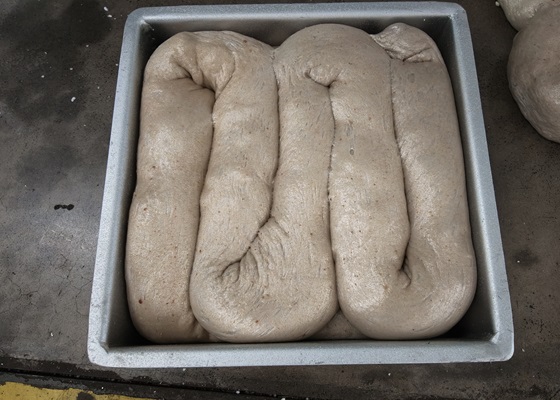
Compacted blocks or hot-melt ingots are delivered to a downstream recycling facility. The material is then crushed or granulated into smaller pieces. After further processing, the recycled polystyrene is filtered and formed into pellets. These pellets are much easier for manufacturers to handle than loose foam and can be fed into extrusion or moulding equipment.
The quality of the pellets depends on the incoming EPS. Clean, consistently sorted foam generally produces a more usable recycled material. Mixed colours, coatings and other plastics can limit where the finished pellets are used.
Products Made from Recycled EPS
Recycled EPS does not usually return directly to its original packaging shape. Instead, the recovered polystyrene is commonly used to make rigid plastic products such as picture frames, decorative mouldings, skirting boards, plastic profiles, hangers, household accessories and selected construction products. Picture frames and decorative mouldings are common applications because recycled polystyrene can be extruded into consistent profiles, which are then cut, coated and assembled into finished products.

GREENMAX Connects Foam Waste with Downstream Recycling
GREENMAX supplies EPS compactors and foam densifiers for businesses that generate or collect foam waste. These machines address the main obstacle at the beginning of the recycling process: the excessive volume of loose EPS. Once processed, the compacted material can be transported to a suitable recycling outlet for granulation and reuse. INTCO Recycling purchase qualified EPS blocks or ingots according to their condition, quantity and current purchasing requirements.
This connection between equipment and downstream recycling is important. Reducing the volume solves the storage and transport problem, but a complete EPS foam recycling plan should also consider where the material will go after processing.
FAQ
1.Is recycled EPS the same as recycled polystyrene?
EPS is a foamed form of polystyrene. After the air is removed and the material is processed into pellets, it can be used as recycled polystyrene resin.
2.What happens to EPS after densification?
Densified EPS is typically crushed, melted, filtered and pelletized. The recycled pellets can then be used to manufacture plastic profiles and other products.
3. Does an EPS densifier make finished products?
No. A foam densifier converts loose EPS into compact ingots. Further granulation, pelletizing and manufacturing are required before it becomes a finished product.